Aller au contenu principal
Profil culturel

Dawn Shores of Belize

A single Early Holocene individual from Mayahak Cab Pek illuminates fragile first chapters

10100 CE - 9400 BCE
Belize (Mayahak Cab Pek)

Le récit

A lone Early Holocene human from Mayahak Cab Pek (Belize, 10100–9400 BCE) offers a rare genetic and archaeological glimpse into post‑glacial coastal foragers. Sparse data make conclusions tentative; this specimen hints at deep Native American ancestries shaped by tropical landscapes and rising seas.

Time Period

ca. 10100–9400 BCE (Early Holocene)

Region

Belize (Mayahak Cab Pek)

Common Y-DNA

Not reported (single sample)

Common mtDNA

Not reported (single sample)

Chronologie

10100 BCE

Early Holocene occupation at Mayahak Cab Pek

A human individual dated within 10100–9400 BCE is recovered, offering rare Early Holocene genetic and archaeological evidence from Belize.

Origins & Emergence

Mayahak Cab Pek sits within Belize’s karst and coastal landscapes at the threshold of the Holocene, when retreating ice and rising seas reshaped shorelines and ecological niches. Archaeological data indicates human presence in this region during the Early Holocene (ca. 10100–9400 BCE), a time of rapid environmental change that favored mobile, adaptable lifeways. The single individual associated with the Belize_11700BP identifier was recovered from deposits dated to this interval, providing a rare biological snapshot from a period otherwise poorly represented in southern Mesoamerica.

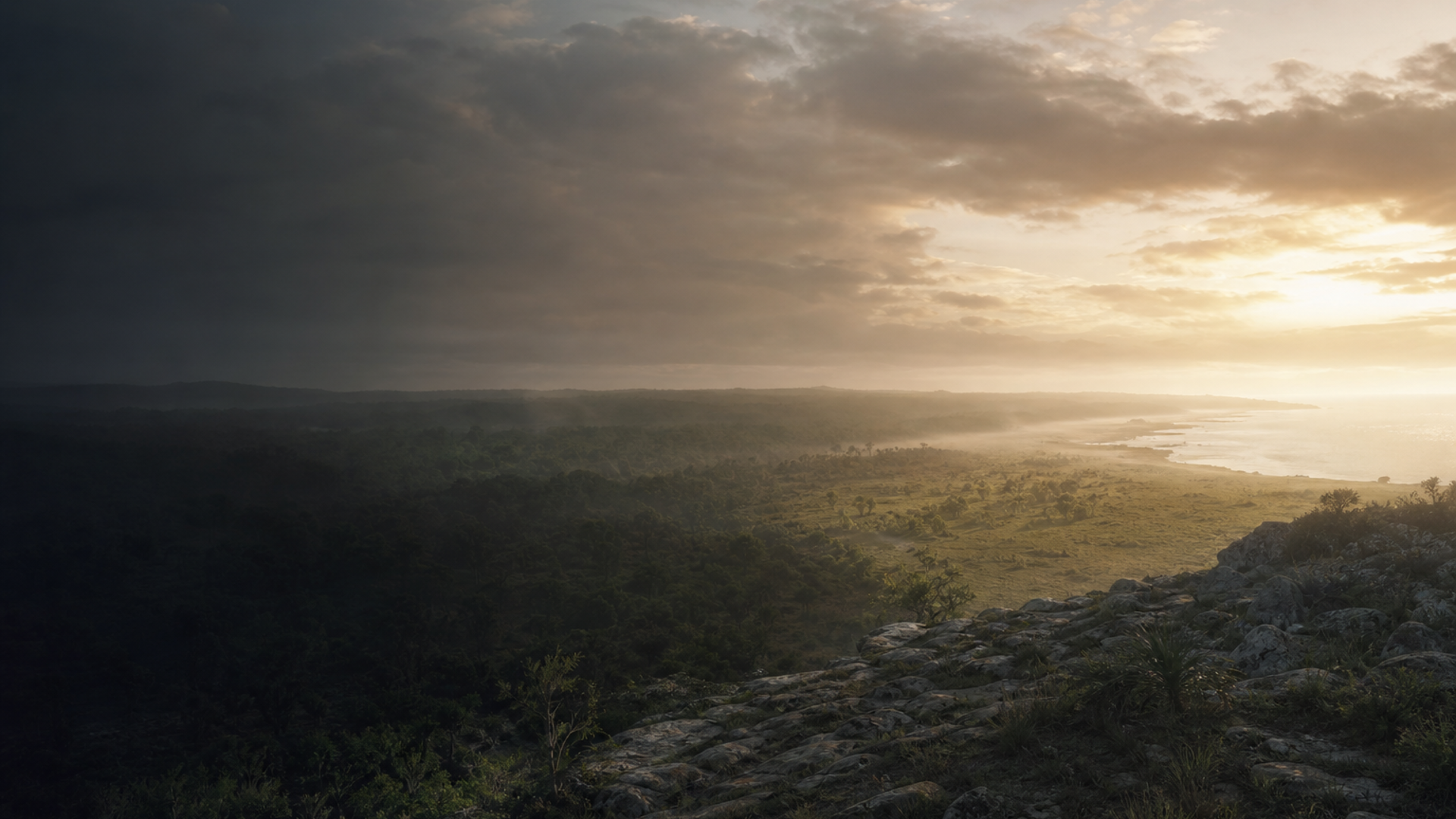
Limited evidence suggests these early people exploited a mosaic of inland freshwater and coastal resources as forests regenerated and mangrove systems reestablished. The cinematic image is of small bands following river corridors and coastal strandlines, carrying a light toolkit and deep ecological knowledge. However, because the dataset comprises only one sampled individual, interpretations about population origins, demographic size, or cultural behaviors remain provisional. Archaeological signals across Belize and neighboring regions hint at connections to broader Paleoamerican networks, but the precise pathways—coastal or interior—by which early peoples reached and adapted to this subtropical world are still debated.

  • Single Early Holocene human from Mayahak Cab Pek dated to 10100–9400 BCE
  • Site located in Belize’s karst/coastal transitional zone
  • Environmental change (sea-level rise, forest regrowth) shaped early settlement patterns

Daily Life & Society

Daily life for the people represented by Belize_11700BP was likely organized around high mobility, seasonality, and intimate knowledge of diverse ecosystems. Archaeological data from the region indicate Early Holocene groups in Mesoamerica relied on riverine fish, shellfish where coasts were accessible, and a suite of plant and terrestrial game resources as forests recovered from the Late Pleistocene. Sheltered caves, rock shelters, and temporary coastal camps would have served as nodes in seasonal rounds.

Social groups were probably small, kin‑based bands with flexible residential patterns. Toolkits were practical and transportable — flaked stone points, cutting implements, and perishable gear suited to foraging lifeways — though the specific artifact assemblage at Mayahak Cab Pek is sparse in the published record. The recovery of a human individual implies ritual behaviors or mortuary events in protected contexts, but with only one specimen, we must avoid broad generalizations about funerary practice. Cultural expression at this time was shaped by intimate, daily interactions with a changing tropical landscape rather than by large, sedentary infrastructures.

  • Small, mobile bands exploiting riverine and coastal resources
  • Seasonal rounds and use of caves/rock shelters for shelter and possibly ritual

Genetic Profile

The genetic data for Belize_11700BP derive from a single human sample from Mayahak Cab Pek, making any population-level inference highly provisional. Ancient DNA recovery in tropical settings is challenging due to heat and humidity, so successful sequencing of an Early Holocene individual is scientifically valuable but limited in scope. Reported results do not provide well-established Y‑DNA or mtDNA haplogroups for this specimen (these markers are not reported or are ambiguous), and nuclear genome coverage is limited. As a result, statements about specific maternal or paternal lineages cannot be robustly supported.

Contextually, other early Holocene and late Pleistocene genomes from the Americas show deep ancestry components related to founding Native American populations with ties to earlier Siberian/ Beringian sources and subsequent diversification within the continents. The Belize_11700BP individual may reflect one branch of that broader early Native American spectrum or local founder effects and drift in a tropical refuge. With n = 1, any observed affinities should be treated as hypotheses: further sampling from Belize and neighboring regions is essential to test whether this individual represents continuity into later Mesoamerican groups or an ephemeral, isolated lineage affected by post‑glacial demographic processes.

  • Single ancient genome — limited statistical power for population inferences
  • No reliably reported Y‑DNA or mtDNA haplogroups; conclusions tentative

Legacy & Modern Connections

The story of Belize_11700BP resonates in the deep time of Mesoamerica: it captures an early human response to rapid post‑glacial change and hints at the deep ancestry of later indigenous peoples of the region. Archaeological continuity in settlement locations, resource use, and landscape knowledge may have shaped cultural trajectories that ultimately contributed to Archaic and later Formative societies in Belize and adjacent areas. Genetic continuity is plausible but unproven; modern populations in Belize and Mesoamerica carry complex admixture histories shaped by millennia of migration, isolation, and interaction.

Given the single-sample context, the most responsible legacy statement is cautious: this individual is a valuable data point that illuminates possibilities rather than certainties. Continued archaeological survey, targeted excavations, and expanded ancient DNA sampling in Belize will be needed to trace direct links between these early foragers and contemporary genetic and cultural landscapes.

  • Potential, but unproven, genetic continuity with later indigenous groups in Mesoamerica
  • Represents an early human response to Holocene environmental change in Belize

Assistant IA

Assistant IA par DNAGENICS

Débloquer cette fonction
Posez des questions sur la culture Dawn Shores of Belize. L'assistant IA peut expliquer les résultats génétiques, le contexte historique, les preuves archéologiques et les liens génétiques avec les populations actuelles, dans les limites de l'interprétation.
Exemple d'analyse IA

La culture Dawn Shores of Belize représente un chapitre fascinant de l'histoire humaine…

L'analyse génétique met en évidence des similarités avec des populations antérieures et des signes d'adaptations propres. Les échantillons d'ADN ancien éclairent les schémas migratoires et les liens entre populations, avec des limites qui dépendent de l'étude et du contexte archéologique.

Il s'agit d'un aperçu de l'analyse IA. Accédez à l'assistant complet pour explorer :

  • Composition et similarité génétique
  • Schémas migratoires et origines
  • Vie quotidienne et pratiques culturelles
  • Contexte génétique actuel