Préparation du rapport

Chargement des informations et références disponibles

Connexion au corpus archéologique…

Collecte des archives antiques

Aller au contenu principal
Echoes Before Cities
Profil culturel

Echoes Before Cities

Pre-civilization hunter-gatherers of Western Eurasia, seen through archaeology and DNA

35466 CE - 5000 BCE
France, Belgium, Crimea, Germany, China
2 échantillons d'ADN antique
Faites défiler pour commencer
Chapitre I

Le récit

Comprendre la culture Echoes Before Cities

Pre_civilization encompasses 29 Upper Paleolithic–Mesolithic individuals (c. 35,466–5,000 BCE) from France, Belgium, Crimea, Germany and China. Archaeology and ancient DNA reveal deep European U lineages alongside unexpected paternal diversity, suggesting complex mobility and long-term continuity.

Time Period

35466–5000 BCE

Region

France, Belgium, Crimea, Germany, China

Common Y-DNA

L (4), M (1), C (1), F (1), V20 (1)

Common mtDNA

U (9 total; U5b 3, U8a 1), N1 (1), M (1)

Chapitre II

Chronologie

Moments clés de l'histoire de cette culture

35466 BCE

Oldest directly dated sample in the series

A deep Upper Paleolithic individual anchors the sequence near 35,466 BCE, marking one extreme of the group's temporal span.

Chapitre III

Origins & Emergence

The Pre_civilization grouping spans the late Upper Paleolithic into the Mesolithic (c. 35,466–5,000 BCE), a long corridor of climatic upheaval and cultural renewal. Archaeological sites associated with these individuals include Goyet Cave and Abri des Autours in Wallonia (Belgium), Fournol and La Rochette in southwestern France, Achères and Farman in Île-de-France, Hohle-Fels in southwestern Germany, La Marche in Nouvelle-Aquitaine, Hoëdic off the Brittany coast, and the eastern outlier of Buran-Kaya III in Crimea. These sites record toolkits and art traditions connected to Aurignacian, Gravettian and later Magdalenian horizons, followed by Mesolithic adaptations.

Sedentary settlements were rare; instead, populations moved across river valleys, coastal shelves and upland plateaus following game and seasonal plants. Radiocarbon dates cluster at distinct phases — deep Upper Paleolithic burials in the 30,000–20,000 BCE window and a dispersed Mesolithic presence approaching 5,000 BCE — reflecting both cultural continuity and episodes of population turnover during and after the Last Glacial Maximum. Archaeological data indicates continuity in some regions (for example, persistent use of limestone shelters in the Dordogne), while other areas show technological shifts tied to environmental change.

Limited evidence and uneven sampling across regions mean emergence patterns remain provisional: the long date range captures many lifeways rather than a single culture. As more sites are sampled, finer-grained models of migration, isolation, and local resilience should emerge.

  • Dates: c. 35,466–5,000 BCE, spanning Upper Paleolithic to Mesolithic
  • Key sites: Goyet Cave, Abri des Autours, Buran-Kaya III, Hohle-Fels, La Rochette
  • Evidence shows both continuity and episodic change tied to glacial cycles
Chapitre IV

Daily Life & Society

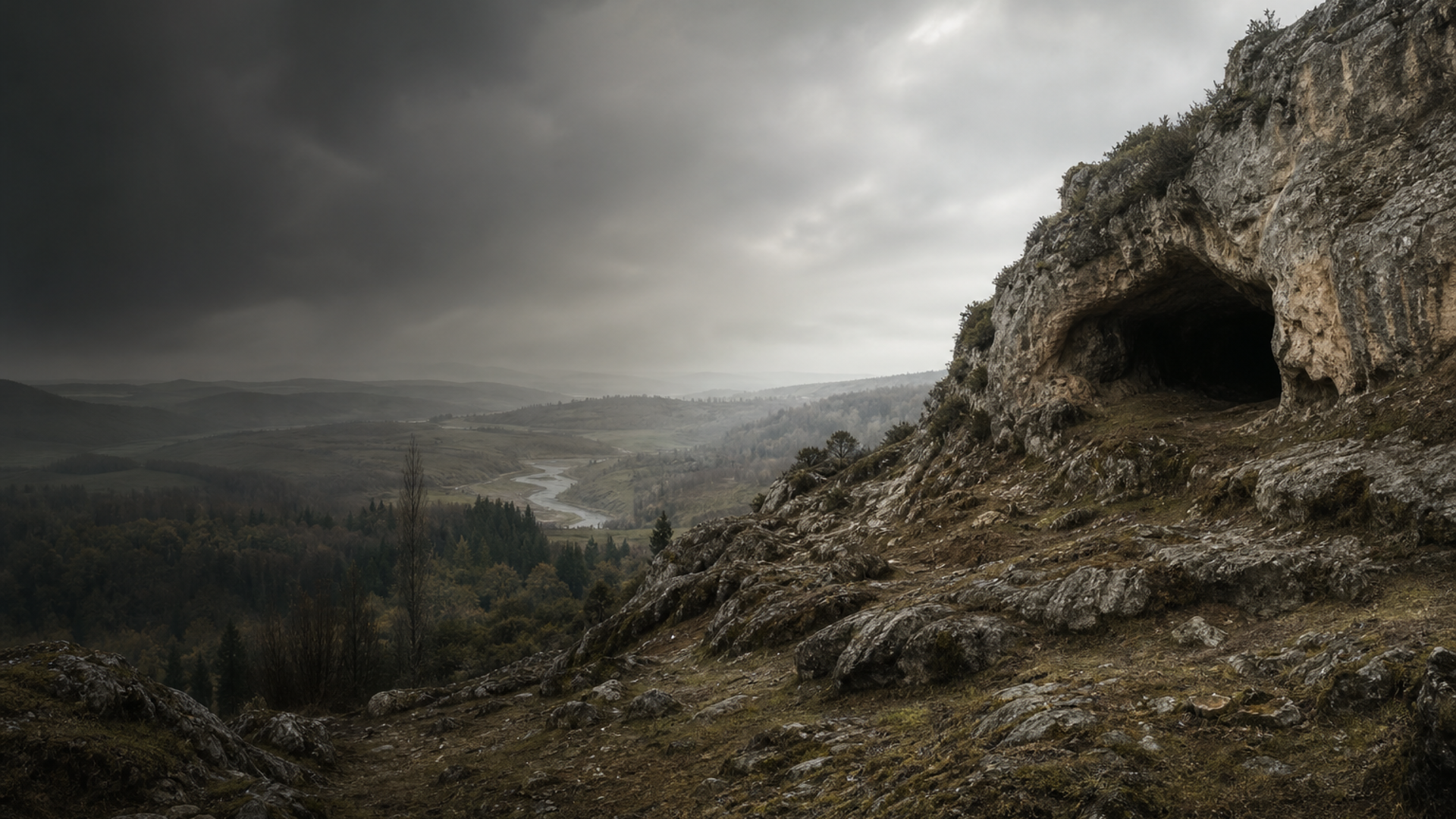
Life for these hunter-gatherer bands unfolded against a dramatic Pleistocene landscape: steppes, relict forests and rich riverine corridors. Material remains — stone bladelets, osseous points, personal ornaments and hearth contexts — suggest mobile foragers practicing seasonal rounds. Cave sites such as Goyet and Hohle-Fels preserve art, ochre use and curated tools implying symbolic behavior and long-distance exchange.

Subsistence combined large-game hunting (reindeer, red deer) with targeted fishing and shellfish collection at coastal or riverine locations (Hoëdic), and broad-spectrum plant use in warmer Mesolithic phases. Burials vary from isolated interments to more elaborate placements with grave goods; funerary variability implies differentiated social roles or changing mortuary practices over millennia. Craftsmanship is visible in microblade technology and bone points that adapt through time — a cinematic sequence of hands shaping flint under lamplight, repairing gear between seasonal migrations.

Archaeological data indicates relatively small group sizes, high mobility, and flexible social networks. Preservation bias and uneven excavation mean we reconstruct these behaviors from fragmentary deposits; interpretations must remain cautious and open to revision as new finds and aDNA results refine the picture.

  • Mobile hunter-gatherers exploiting rivers, coasts and uplands
  • Material culture includes blades, bone tools, personal ornaments and cave art
Chapitre V

Genetic Profile

Ancient DNA from 29 individuals provides a snapshot of deep Eurasian diversity linked to material cultures across Western and eastern outliers. Maternal lineages are dominated by mtDNA haplogroup U (9 individuals), including U5b (3) and U8a (1) — haplogroups commonly associated with European Paleolithic and Mesolithic populations and consistent with long-term maternal continuity in the region. Additional maternal markers include N1 and M, the latter more typically seen in Asian contexts; their presence highlights admixture or complex ancestry edges.

Paternal markers are unusually varied in this dataset: multiple individuals carry Y haplogroups labeled L (4), M (1), C (1), F (1) and a single V20. Today, some of these Y lineages are more frequent in South, Central and East Asia. Their detection here should be treated cautiously — possible interpretations include ancient long-distance gene flow, persistence of now-rare lineages in Pleistocene Europe, or technical issues (e.g., low coverage or contamination). Crucially, the mtDNA signal (U-dominant) aligns with broader European Palaeolithic patterns, while the Y-DNA diversity suggests a more complex paternal history.

With 29 samples, conclusions are informative but not definitive. Regional sampling is uneven (sites concentrated in France and Belgium with outliers in Crimea, Germany and China), so claims about population movements must note geographic gaps. Future increases in sample numbers and improved genomic coverage will sharpen models of migration, admixture and sex-biased processes in deep prehistory.

  • mtDNA dominated by U lineages (U, U5b, U8a) — typical of European Palaeolithic
  • Y-DNA shows surprising diversity (L, M, C, F, V20) — suggests complex paternal ancestry or sparse sampling
Chapitre VI

Legacy & Modern Connections

The genetic and archaeological echoes of Pre_civilization reverberate into later European prehistory. Maternal U lineages persist into Neolithic and later populations across Europe, forming a thread of continuity from Paleolithic foragers to the first farmers’ successors. The archaeological traditions preserved at rock shelters and caves informed later Mesolithic adaptations that, in turn, set the stage for Neolithic transitions.

Where unusual paternal haplogroups are found, they remind us that prehistoric population histories were not simple replacements but mosaics of movement and local survival. These genomes, paired with stratified sites such as La Marche and Buran-Kaya III, allow us to trace how climate, mobility and cultural transmission shaped human diversity before the rise of settled agriculture. Because the sample set is modest and geographically uneven, modern links should be framed as hypotheses: continuing sampling and higher-coverage genomes will determine which lineages contributed to the genetic landscape of later European populations.

  • Maternal U lineages indicate long-term continuity into later European populations
  • Paternal diversity hints at complex migrations but requires more data for firm links
Chapitre VII

Catalogue d'échantillons

2 échantillons d'ADN antique associés à la culture Echoes Before Cities offrent des repères génétiques sur les populations de cette période.

2 / 2 échantillons
Portrait Échantillon Pays Époque Date Culture Sexe Y-ADN ADNmt
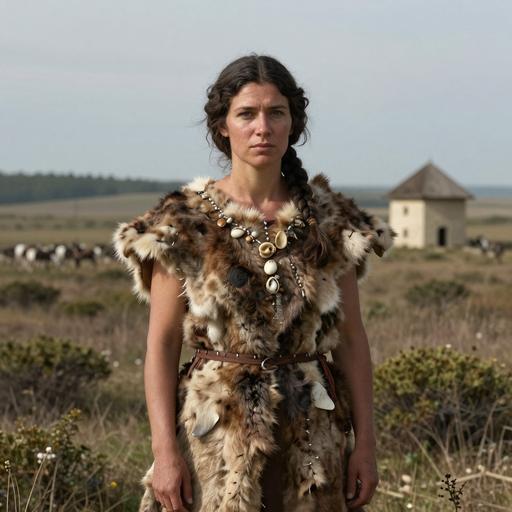
Reconstruction artistique de Magdalenian individual, France
Magdalenian individual, France
France France_Magdalenian 13410-13091 calBCE (12750±45 BP, ECHo-4520) Pre-civilization F - -
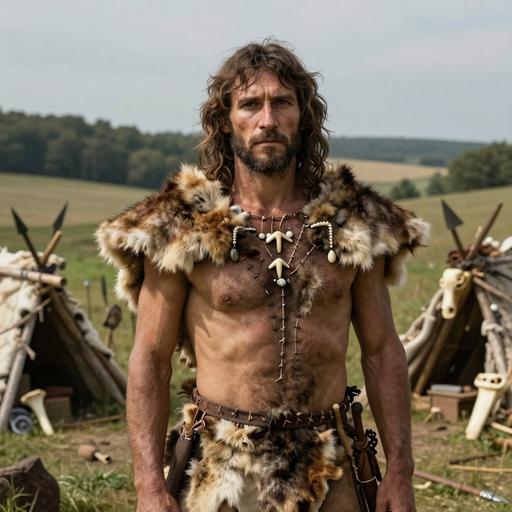
Reconstruction artistique de Pre-civilization individual, France
Pre-civilization individual, France
France France_Magdalenian 16273 BCE Pre-civilization M - U2'3'4'7'8'9
Propulsé par l'IA

Assistant IA

Posez des questions sur la culture Echoes Before Cities

Assistant IA par DNAGENICS

Débloquer cette fonction
Posez des questions sur la culture Echoes Before Cities. L'assistant IA peut expliquer les résultats génétiques, le contexte historique, les preuves archéologiques et les liens génétiques avec les populations actuelles, dans les limites de l'interprétation.
Exemple d'analyse IA

La culture Echoes Before Cities représente un chapitre fascinant de l'histoire humaine…

L'analyse génétique met en évidence des similarités avec des populations antérieures et des signes d'adaptations propres. Les échantillons d'ADN ancien éclairent les schémas migratoires et les liens entre populations, avec des limites qui dépendent de l'étude et du contexte archéologique.

Il s'agit d'un aperçu de l'analyse IA. Accédez à l'assistant complet pour explorer :

  • Composition et similarité génétique
  • Schémas migratoires et origines
  • Vie quotidienne et pratiques culturelles
  • Contexte génétique actuel

Explorez d'autres cultures antiques

Découvrez les récits de civilisations issues du monde antique