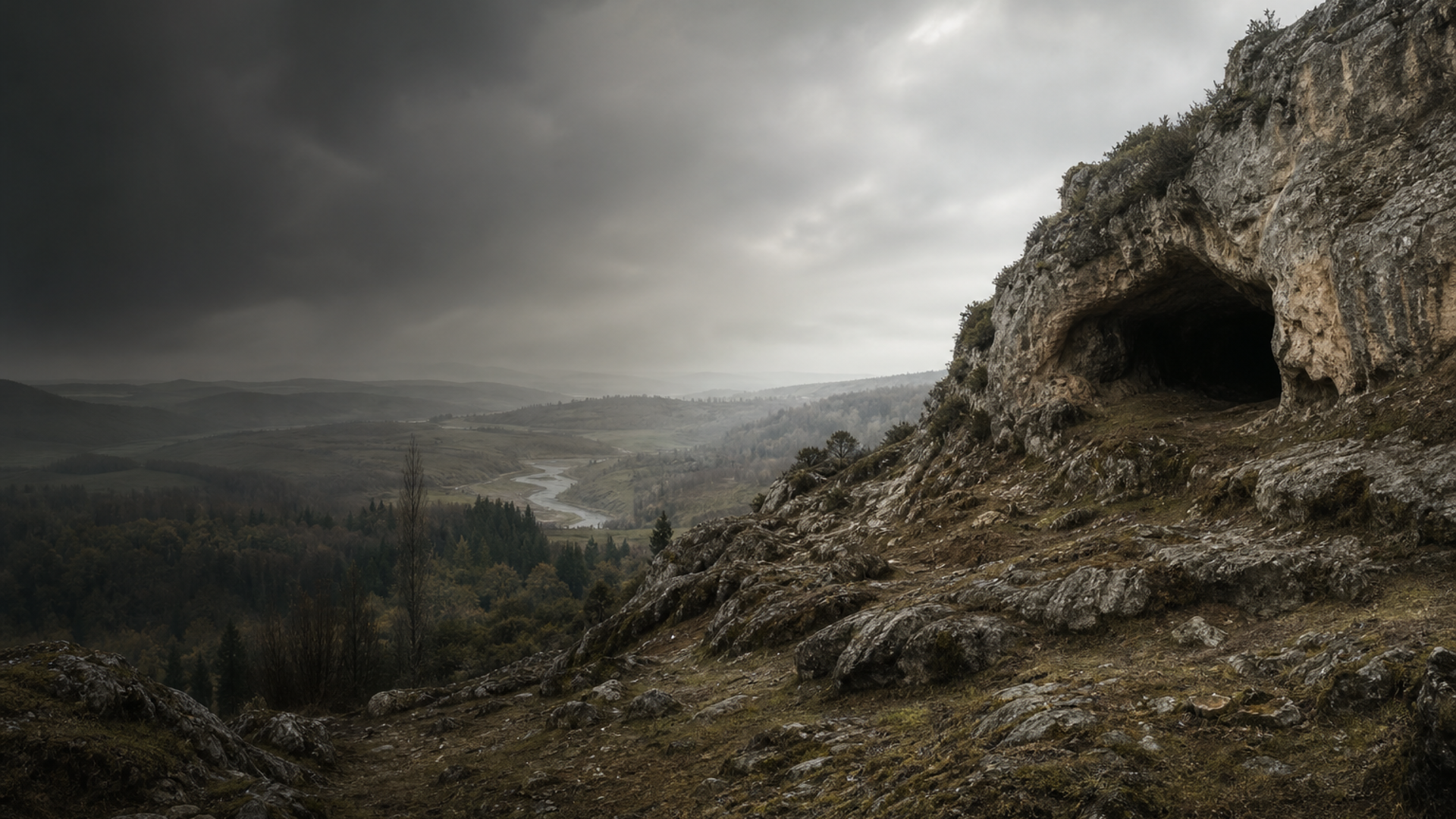
The Pre_civilization grouping spans the late Upper Paleolithic into the Mesolithic (c. 35,466–5,000 BCE), a long corridor of climatic upheaval and cultural renewal. Archaeological sites associated with these individuals include Goyet Cave and Abri des Autours in Wallonia (Belgium), Fournol and La Rochette in southwestern France, Achères and Farman in Île-de-France, Hohle-Fels in southwestern Germany, La Marche in Nouvelle-Aquitaine, Hoëdic off the Brittany coast, and the eastern outlier of Buran-Kaya III in Crimea. These sites record toolkits and art traditions connected to Aurignacian, Gravettian and later Magdalenian horizons, followed by Mesolithic adaptations.
Sedentary settlements were rare; instead, populations moved across river valleys, coastal shelves and upland plateaus following game and seasonal plants. Radiocarbon dates cluster at distinct phases — deep Upper Paleolithic burials in the 30,000–20,000 BCE window and a dispersed Mesolithic presence approaching 5,000 BCE — reflecting both cultural continuity and episodes of population turnover during and after the Last Glacial Maximum. Archaeological data indicates continuity in some regions (for example, persistent use of limestone shelters in the Dordogne), while other areas show technological shifts tied to environmental change.
Limited evidence and uneven sampling across regions mean emergence patterns remain provisional: the long date range captures many lifeways rather than a single culture. As more sites are sampled, finer-grained models of migration, isolation, and local resilience should emerge.