Saltar para o conteúdo principal
mtDNA · Materno linaje

C1C1B

mtDNA Haplogroup C1C1B

Um perfil de referência de um ramo de linhagem. Compartilhar haplogrupos não demonstra uma relação familiar ou uma identidade cultural.

Perfil de Referência

Contexto do ramo

Contexto histórico de la rama de linaje mtDNA C1C1B

Origins and Evolution

mtDNA haplogroup C1C1B is a subclade of the broader C1C/C1C1 lineage, which itself is one of the primary maternal lineages associated with the first human populations that entered the Americas via Beringia. Based on the phylogenetic position of C1C1B as a derived branch of C1C1 and the coalescence estimates for C1C lineages, C1C1B most likely originated in or shortly after the Beringian standstill phase and the initial southward spread into the Americas during the Late Pleistocene to early Holocene (roughly ~13–10 kya). The time depth given here (approximately 12 kya) reflects a plausible divergence shortly after the parent clade established in the Americas, consistent with rapid founder expansions and subsequent local differentiation.

Genetic drift, founder effects, and localized demographic expansions during the early Holocene likely shaped the diversity and geographic pattern of C1C1B. Limited sample sizes and uneven geographic sampling can make precise dating and phylogeographic reconstructions difficult; however, the presence of C1C1B in both modern Indigenous populations and several ancient DNA specimens supports an early arrival and subsequent persistence in the continent.

Subclades

As a downstream branch of C1C1, C1C1B may itself contain further internal structure (younger subclades) detectable only with high-resolution full mitochondrial genomes. Published population surveys and ancient DNA datasets sometimes report C1C1-level calls where deeper resolution is not available; where full mitogenomes are available, distinct sublineages within C1C1B can be resolved and used to track localized expansions (for example, lineages restricted to Amazonian or Andean regions). Continued sequencing of modern and archaeological mitogenomes is necessary to fully resolve and name internal branches of C1C1B.

Geographical Distribution

C1C1B is observed at low-to-moderate frequencies across the Americas, with a tendency toward higher representation in parts of South America (including Amazonian and Andean populations) and detectable but generally lower frequencies in Central America and some North American groups. Occasional occurrences in Arctic/sub-Arctic populations and rare low-frequency matches in Northeast Asia/Siberia may reflect either remnant ancestral ties to Beringia or later bi-directional gene flow.

The haplogroup has also been documented in multiple ancient DNA contexts (the dataset referenced here includes five archaeological samples assigned to C1C1B or its immediate parent), which supports an early Holocene presence and local continuity in at least some regions.

Historical and Cultural Significance

Because C1C1B is part of the founding maternal lineages of the Americas, it is informative for studies of early migration routes, demographic expansions, and regional differentiation after the initial peopling. In particular, C1C1B and its related lineages can help reconstruct:

  • The timing and routes of post-Beringian dispersal into South America.
  • Localized population histories in Amazonian and Andean regions where drift and founder events produced distinctive mitogenomic signatures.
  • Connections between ancient archaeological individuals and modern Indigenous communities, providing continuity evidence when haplogroups match in time and place.

Caution is warranted when interpreting cultural associations from mtDNA alone because maternal lineages represent a single genealogical locus and can be strongly affected by drift, founder effects, and sex-biased processes. Thus, mtDNA results are best interpreted alongside autosomal and Y-chromosome data and archaeological context.

Conclusion

C1C1B is a derived branch of the C1C1 maternal lineage tied to the early peopling of the Americas, likely emerging soon after the Beringian standstill and initial southward expansions around the early Holocene. It is most often detected in South American Indigenous groups, appears at lower frequencies elsewhere in the Americas, and is present in multiple ancient samples—making it a useful marker for studying early American demographic processes and regional continuity when integrated with broader genetic and archaeological evidence.

Pontos- Chave

  • Origins and Evolution
  • Subclades
  • Geographical Distribution
  • Historical and Cultural Significance
  • Conclusion
Perfil de Referência

Árvore e relações

Contexto filogenético e subclasse

Trajectória evolutiva

Sigue las ramas superiores registradas hasta C1C1B. Las fechas son estimaciones y pueden cambiar al revisarse los datos de referencia.

Passos Haplogrupo Antiguidade estimada Época arqueológica Tempo decorrido Subclasses imediatas Portadores modernos analisados Referências antigas
1 C1C1B Actual ~12,000 years ago Neolithic 12,000 years 0 1 5
2 C1C1 ~13,000 years ago Mesolithic 13,000 years 1 6 0
3 C1C ~15,000 years ago Mesolithic 15,000 years 6 111 60
4 C1 ~18,000 years ago Mesolithic 18,000 years 6 606 5
5 C ~35,000 years ago Paleolithic 35,000 years 5 806 75
6 CZ ~40,000 years ago Paleolithic 40,000 years 2 856 4
7 M8 ~42,000 years ago Paleolithic 42,000 years 2 873 5
8 M ~60,000 years ago Paleolithic 60,000 years 42 2,671 41
9 L3 ~70,000 years ago Paleolithic 70,000 years 7 30,162 6
10 L3'4 - - - 2 30,212 0
11 L3'4'6 - - - 2 30,216 0
12 L2'3'4'6 - - - 2 31,333 0
13 L2'3'4'5'6'7 - - - 2 31,349 0
14 L1'2'3'4'5'6'7 - - - 2 31,852 0
15 L ~160,000 years ago Paleolithic 160,000 years 2 32,236 5

Subclados (0)

Rama terminal: não há subclasses registrados

Perfil de Referência

No mundo

Distribuição geográfica e presença moderna

Origem registada

Beringia / Northeast Asia (early entry into the Americas)

Distribuição moderna

The populations where mtDNA haplogroup C1C1B is found include:

  1. Indigenous peoples of South America (Amazonian, Andean and other regional groups)
  2. Indigenous peoples of Central America (various Mesoamerican groups)
  3. Indigenous peoples of North America (select First Nations and Native American groups)
  4. Arctic and sub-Arctic populations (occasional, low-frequency occurrences among Inuit/Yupik-adjacent groups)
  5. Siberian and Northeast Asian populations (rare, low-frequency occurrences reflecting ancestral Beringian ties or later gene flow)
  6. Ancient archaeological populations across the Americas (multiple ancient DNA contexts confirming early presence)
Contexto Histórico

Uma ramificação através do tempo

Formação estimada em uma cronologia histórica ampla. Os marcadores temporais contribuem contexto e não implicam relação com culturas concretas.

  1. ~12k años de antigüedad

    Haplogrupo C1C1B

    Formação estimada deste ramo mtDNA; as datas e localizações são estimativas de referência.

    Este ramo
  2. ~10k años de antigüedad

    Revolução neolítica

    Início da agricultura e formação de comunidades sedentárias

  3. ~5k años de antigüedad

    Idade do Bronze

    Metalurgia, escrita e primeiras civilizações

  4. ~3k años de antigüedad

    Idade do Ferro

    Ferramentas de ferro e ampliação de redes comerciais

  5. ~2.5k años de antigüedad

    Antiguidades clássicas

    Desenvolvimento das civilizações grega e romana

  6. Actualidad

    Actualidad

    Idade moderna

Perfil de Referência

Contexto arqueológico

Asociaciones arqueológicas registradas para la rama mtDNA C1C1B

Associações registradas

Esses rótulos descrevem os contextos arqueológicos registrados para as amostras de referência vinculadas a C1C1B. Uma associação não demonstra que todos os portadores pertenceram a uma cultura ou seguiram uma rota migratória específica.

Archaic Belize Arroyo Seco Loma San Gabriel Ohlone Pericues Soro Mikaya Patjxa Trincheras
As atribuições culturais baseiam-se no contexto arqueológico das amostras de DNA antigo e podem representar associações regionais de períodos concretos.
Perfil de Referência

Catálogo de amostras

5 portadores directos del haplogrupo C1C1B

5 mostradas 5 amostras correspondentes

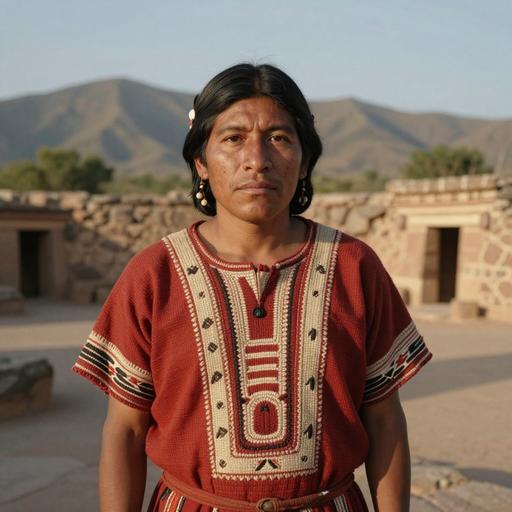
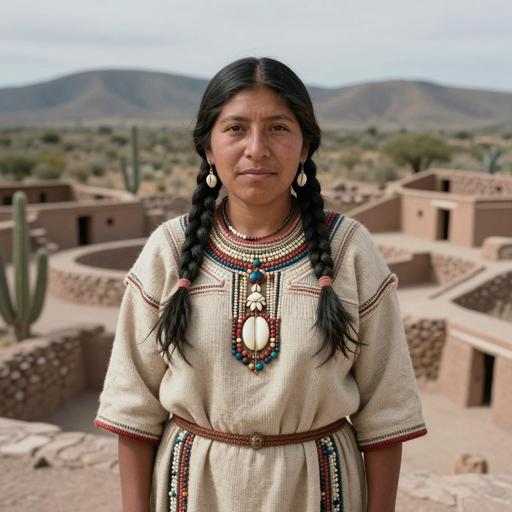
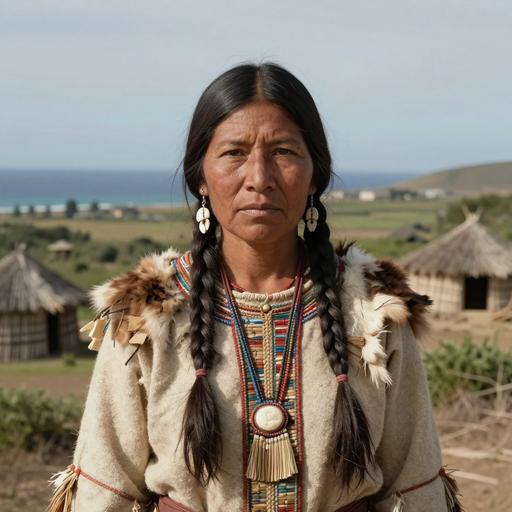
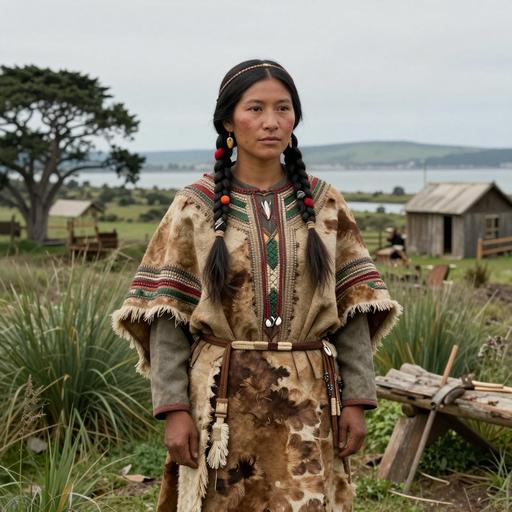
Os retratos são ilustrações geradas com IA. As etiquetas de amostra e os identificadores de acesso identificam os registros de referência.

Retrato Mostrar País Época Data Cultura mtDNA Corresponder
Retrato ilustrativo de Mogollon individual, Cueva DeLos Muertos Chiquitos (Rio Zape), Mexico (773-978 CE) gerado com IA
Identificador de amostra: I12572
Mexico Cueva de los Muertos Chiquitos 773-978 calCE (1150±20 BP, PSUAMS-12709) Loma San Gabriel C1c1b Direct
Retrato ilustrativo de Tradicion Trincheras individual, La Playa (Sonora, Cerro Trincheras, Terraza B11), Mexico (994-1,154 CE) gerado com IA
Identificador de amostra: I23711
Mexico Trincheras Culture La Playa 900 Before Present 994-1154 calCE (990±25 BP, PSUAMS-12583) Trincheras C1c1b Direct
Retrato ilustrativo de California individual, Carmel (California), USA (1,300-1,800 CE) gerado com IA
Identificador de amostra: I11259
USA Native American Culture of Carmel 1300-1800 CE Ohlone C1c1b Direct
Retrato ilustrativo de Ohlone individual, Síi Túupentak (ALA-565/H). San Francisco Bay, USA (1,400-1,900 CE) gerado com IA
Identificador de amostra: Ala1
USA San Francisco Bay Area, California, USA 1400 CE - 1900 CE Ohlone C1c1b Direct
Retrato ilustrativo de America North Ancient individual, Síi Túupentak (ALA-565/H). San Francisco Bay, USA (1,400-1,900 CE) gerado com IA
Identificador de amostra: Ala1
USA The First Peoples of North America 1400 CE - 1900 CE C1c1b Direct
MATERNAL LINHAGEM · DNA ANTIGO

Mapa de testes de linhagems antigos

Siga os clados superiores até este ramo e explora onde se encontraram portadores antigos.

A carregar as observações antigas...

Os marcadores são locais de achados arqueológicos. Uma linha de descontínua representa uma transição geográfica proposta e incerta entre ramos consecutivos, apoiada em várias observações fechadas; não é uma rota de viagem exata, um local de nascimento ou um teste de descendência direta. As amostras do clado parental podem pertencer a outros ramos descendentes. As datas das amostras são distintas das datas de formação dos haplogrupos são mantidas.

Perfil de Referência

Mapa de distribuição de portadores

Distribuição geográfica das amostras de DNA antigo (5), portadores directos ou de subclasses de C1C1B

Portador directo
Filtro de Período Temporária
Todos os períodos
Mostrar todas as amostras
Perfil de Referência

Distribuição temporária

Distribuição de portadores por períodos arqueológicos

Perfil de Referência

Distribuição geográfica

Recuentos por país registrado das amostras. Reflejam a seleção de referência disponível, não frequências de população.

Perfil de Referência

Distribuição por país e época

Compare as contagens de amostras registadas por países e períodos arqueológicos. Selecione uma célula com dados para examinar uma amostra.

Dados

Dados e proveniência

Informações sobre fontes e qualidade dos dados

Última actualização 2026-02-16
Pontuação de confiança 50/100
Cobertura Low

Fonte de Dados

A classificação, as datas estimadas e o contexto geográfico refletem os dados de referência registrados e podem mudar ao revisar os testes. A cobertura de amostras é desigual; os locais registrados e as associações arqueológicas não estabelecem a origem pessoal nem a identidade cultural.

Um haplogrupo acompanha uma única linhagem materna ou paterna. A previsão do ramo depende dos marcadores presentes no arquivo de DNA. Como analisamos o DNA