Saltar para o conteúdo principal
mtDNA · Materno linaje

L0A1B1

mtDNA Haplogroup L0A1B1

Um perfil de referência de um ramo de linhagem. Compartilhar haplogrupos não demonstra uma relação familiar ou uma identidade cultural.

Perfil de Referência

Contexto do ramo

Contexto histórico de la rama de linaje mtDNA L0A1B1

Origins and Evolution

mtDNA haplogroup L0A1B is a subclade of L0A1, itself part of the deep-rooted African macro-haplogroup L0. Based on phylogenetic placement and coalescence estimates for nearby L0 subclades, L0A1B most likely diversified in eastern Africa during the Late Pleistocene, around 25 thousand years ago (kya). Its emergence fits within the pattern of long-established, locally differentiated maternal lineages in eastern Africa that predate many Holocene demographic processes.

The lineage represents an intermediate clade connecting older L0 diversity with later daughter branches; its standing diversity and phylogeographic distribution indicate a long residence in the Horn/eastern African region, with later dispersal events spreading the clade into neighboring regions.

Subclades (if applicable)

L0A1B functions as a named internal branch within L0A1. Where sampling density is sufficient, researchers may resolve finer substructure below L0A1B (for example locally restricted sub-branches defined by additional private mutations). However, many published surveys report L0A1B as an intermediate clade without numerous well-characterized downstream subclades at broad continental scales. Continued mitogenome sequencing in eastern and central Africa is likely to reveal additional sub-branches and refine coalescence times.

Geographical Distribution

The highest frequencies and diversity of L0A1B occur in the Horn of Africa and adjacent eastern African populations—including Cushitic- and some Semitic-speaking groups—consistent with an eastern African origin. The haplogroup is also observed at moderate frequencies in some Nilotic and other eastern African groups and at lower frequencies in central and southern African populations where it arrived through Holocene movements (notably Bantu expansion and historical interactions).

Outside sub-Saharan Africa, L0A1B occurs sporadically in North Africa and the Near East due to historical movements and gene flow, and at low frequencies in the Americas within African-descended communities reflecting transatlantic slave trade ancestry.

Historical and Cultural Significance

L0A1B tracks important demographic layers in eastern Africa. Its Late Pleistocene origin places it among lineages associated with long-term regional continuity prior to Holocene cultural transformations. During the Holocene, the spread of pastoralism, the movements of Nilotic-speaking peoples, and later Bantu-related expansions redistributed L0A1B beyond its origin area. In archaeology and historical linguistics contexts, L0A1B can therefore be informative about maternal ancestry in the Horn and eastern Africa, and about admixture dynamics where eastern African populations interacted with migrating Bantu-speaking farmers and later groups.

Although not tied to a single archaeological complex in the same way some Eurasian haplogroups are tied to, L0A1B's distribution is associated with the demographic processes that created the modern ethnolinguistic landscape of eastern and parts of central/southern Africa.

Conclusion

mtDNA L0A1B is a regionally important, deep maternal lineage rooted in eastern Africa. It provides insight into long-term population continuity in the Horn and neighboring regions and into Holocene-era dispersals that redistributed eastern African maternal ancestry across sub-Saharan Africa and, via recent history, to the Americas and parts of North Africa and the Near East. Improved mitogenome sampling across Africa will continue to refine the branching pattern, age estimates, and microgeographic structure of L0A1B.

Pontos- Chave

  • Origins and Evolution
  • Subclades (if applicable)
  • Geographical Distribution
  • Historical and Cultural Significance
  • Conclusion
Perfil de Referência

Árvore e relações

Contexto filogenético e subclasse

Trajectória evolutiva

Sigue las ramas superiores registradas hasta L0A1B1. Las fechas son estimaciones y pueden cambiar al revisarse los datos de referencia.

Passos Haplogrupo Antiguidade estimada Época arqueológica Tempo decorrido Subclasses imediatas Portadores modernos analisados Referências antigas
1 L0A1B1 Actual ~25,000 years ago Paleolithic 25,000 years 1 11 0
2 L0A1B ~25,000 years ago Paleolithic 25,000 years 2 22 0
3 L0A1A ~8,000 years ago Neolithic 8,000 years 5 84 10
4 L0A1 ~20,000 years ago Mesolithic 20,000 years 2 109 0
5 L0A1'4 - - - 1 116 0
6 L0A ~50,000 years ago Paleolithic 50,000 years 2 210 13
7 L0A'G - - - 1 218 0
8 L0A'B'G - - - 2 265 0
9 L0A'B'F'G - - - 2 284 0
10 L0A'B'F'G'K - - - 2 287 0
11 L0 ~170,000 years ago Paleolithic 170,000 years 3 384 6
12 L ~160,000 years ago Paleolithic 160,000 years 2 32,236 5

Ramas hermanas (1)

Outros ramos do mesmo haplogrupo superior

Perfil de Referência

No mundo

Distribuição geográfica e presença moderna

Origem registada

Eastern Africa

Distribuição moderna

The populations where mtDNA haplogroup L0A1B is found include:

  1. Horn of Africa groups (e.g., Oromo, Somali, Amhara)
  2. Cushitic- and Nilotic-speaking populations of eastern Africa
  3. Bantu-speaking populations in central and southern Africa (via admixture)
  4. Central African forager groups (low-to-moderate frequencies)
  5. Khoe‑San and southern African groups (low frequencies, typically historical admixture)
  6. African-descended populations in the Americas (low frequency, via the transatlantic slave trade)
  7. Sporadic occurrences in North Africa and the Near East (historical/recent admixture)
Contexto Histórico

Uma ramificação através do tempo

Formação estimada em uma cronologia histórica ampla. Os marcadores temporais contribuem contexto e não implicam relação com culturas concretas.

  1. ~25k años de antigüedad

    Haplogrupo L0A1B1

    Formação estimada deste ramo mtDNA; as datas e localizações são estimativas de referência.

    Este ramo
  2. ~20k años de antigüedad

    Último máximo glacial

    Máxima extensão da última glaciação e isolamento de populações

  3. ~10k años de antigüedad

    Revolução neolítica

    Início da agricultura e formação de comunidades sedentárias

  4. ~5k años de antigüedad

    Idade do Bronze

    Metalurgia, escrita e primeiras civilizações

  5. ~3k años de antigüedad

    Idade do Ferro

    Ferramentas de ferro e ampliação de redes comerciais

  6. ~2.5k años de antigüedad

    Antiguidades clássicas

    Desenvolvimento das civilizações grega e romana

  7. Actualidad

    Actualidad

    Idade moderna

Perfil de Referência

Contexto arqueológico

Asociaciones arqueológicas registradas para la rama mtDNA L0A1B1

Associações registradas

Esses rótulos descrevem os contextos arqueológicos registrados para as amostras de referência vinculadas a L0A1B1. Uma associação não demonstra que todos os portadores pertenceram a uma cultura ou seguiram uma rota migratória específica.

Italy_Sicily_LateAntiquity_ImperialRoman_Sicilia Kindoki Makwasinyi Modern Period Mtwapa Nubian Christian Pemba Phase I St. Helena Colonial Tanzanian Prehistoric
As atribuições culturais baseiam-se no contexto arqueológico das amostras de DNA antigo e podem representar associações regionais de períodos concretos.
Perfil de Referência

Catálogo de amostras

4 portadores de subclados del haplogrupo L0A1B1 (sin portadores directos en la selección de referencia actual)

4 mostradas 4 amostras correspondentes

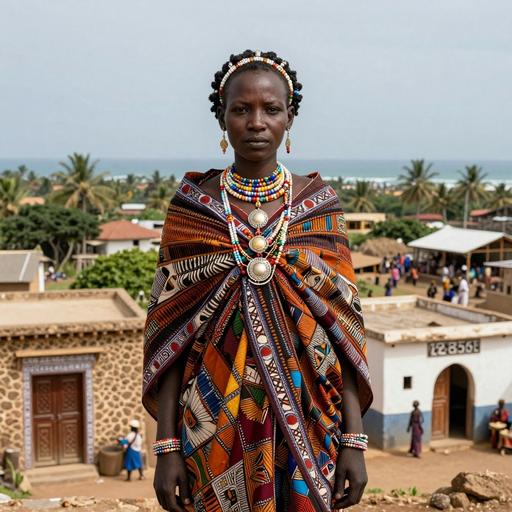
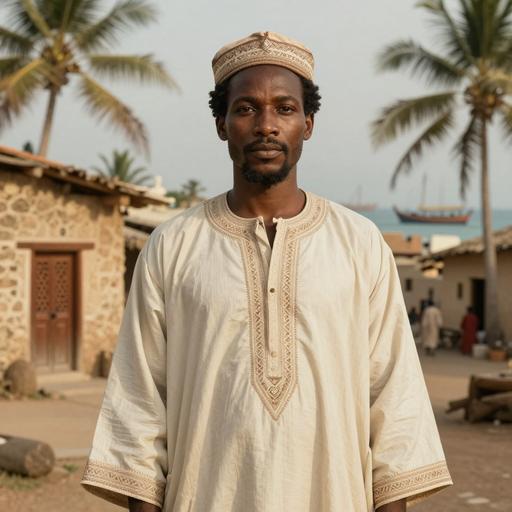
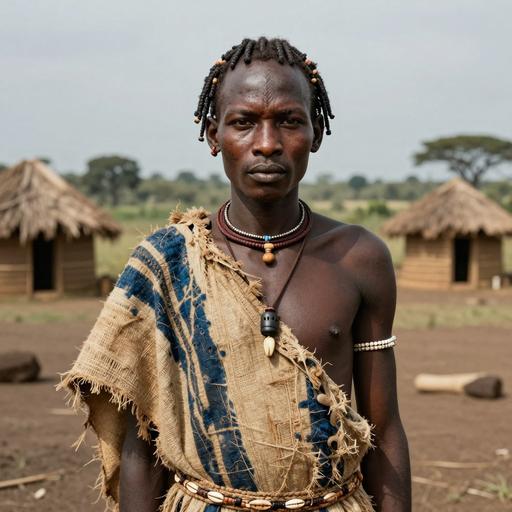
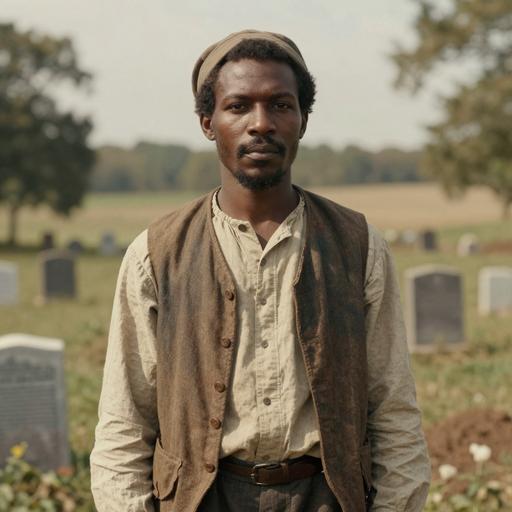
Os retratos são ilustrações geradas com IA. As etiquetas de amostra e os identificadores de acesso identificam os registros de referência.

Retrato Mostrar País Época Data Cultura mtDNA Corresponder
Retrato ilustrativo de Medieval Swahili individual, Mtwapa (Kilifi), Kenya (1,200-1,450 CE) gerado com IA
Identificador de amostra: I23558
Kenya Swahili Culture of Mtwapa 1300-1500 CE Mtwapa L0a1b1a Subclado
Retrato ilustrativo de Medieval Swahili individual, Mtwapa (Kilifi), Kenya (1,442-1,612 CE) gerado com IA
Identificador de amostra: I19409
Kenya Swahili Culture of Mtwapa 1442-1612 calCE (455±20 BP, PSUAMS-12148) Mtwapa L0a1b1a Subclado
Retrato ilustrativo de Democratic Republicofthe Congo Protohistoric individual, Kindoki, DR Congo (1,636-1,800 CE) gerado com IA
Identificador de amostra: KIN004
DR Congo Kindoki Protohistoric Era in Congo 1653-1801 calCE (241±20 BP, OxA-37355) Kindoki L0a1b1a1 Subclado
Retrato ilustrativo de Western individual, Maryland's Catoctin Furnace African American Cemetery, USA (1,700-1,850 CE) gerado com IA
Identificador de amostra: I8084
USA Modern Era 1700 CE - 1850 CE Modern Period L0a1b1a Subclado
MATERNAL LINHAGEM · DNA ANTIGO

Mapa de testes de linhagems antigos

Siga os clados superiores até este ramo e explora onde se encontraram portadores antigos.

A carregar as observações antigas...

Os marcadores são locais de achados arqueológicos. Uma linha de descontínua representa uma transição geográfica proposta e incerta entre ramos consecutivos, apoiada em várias observações fechadas; não é uma rota de viagem exata, um local de nascimento ou um teste de descendência direta. As amostras do clado parental podem pertencer a outros ramos descendentes. As datas das amostras são distintas das datas de formação dos haplogrupos são mantidas.

Perfil de Referência

Mapa de distribuição de portadores

Distribuição geográfica das amostras de DNA antigo (4), portadores directos ou de subclasses de L0A1B1

Portador de um subclasse
Filtro de Período Temporária
Todos os períodos
Mostrar todas as amostras
Perfil de Referência

Distribuição temporária

Distribuição de portadores por períodos arqueológicos

Perfil de Referência

Distribuição geográfica

Recuentos por país registrado das amostras. Reflejam a seleção de referência disponível, não frequências de população.

Perfil de Referência

Distribuição por país e época

Compare as contagens de amostras registadas por países e períodos arqueológicos. Selecione uma célula com dados para examinar uma amostra.

Dados

Dados e proveniência

Informações sobre fontes e qualidade dos dados

Última actualização 2026-02-16
Pontuação de confiança 50/100
Cobertura Low

Fonte de Dados

A classificação, as datas estimadas e o contexto geográfico refletem os dados de referência registrados e podem mudar ao revisar os testes. A cobertura de amostras é desigual; os locais registrados e as associações arqueológicas não estabelecem a origem pessoal nem a identidade cultural.