Saltar para o conteúdo principal
mtDNA · Materno linaje

L3D1A1A

mtDNA Haplogroup L3D1A1A

Um perfil de referência de um ramo de linhagem. Compartilhar haplogrupos não demonstra uma relação familiar ou uma identidade cultural.

Perfil de Referência

Contexto do ramo

Contexto histórico de la rama de linaje mtDNA L3D1A1A

Origins and Evolution

L3D1A1A is a downstream maternal subclade of the Holocene West/Central African lineage L3D1A1. Based on the parent clade's estimated time depth (~4 kya) and typical branch accumulation rates in African mtDNA, L3D1A1A plausibly arose in the late Holocene (on the order of a few thousand years ago). As a maternally inherited mitochondrial lineage, it represents a single female-line descent and its present-day distribution reflects local population structure, female-mediated gene flow, and later historic movements.

Genetic studies of African mtDNA show that L3-derived subclades diversified in multiple West/Central African refugia and expanding populations during the Holocene. L3D1A1A is one of several localized derivatives that appear to have experienced regional growth and persistence; its identification in a small number of ancient samples in modern databases further supports a Holocene presence in the region.

Subclades

As a subclade of L3D1A1, L3D1A1A may itself contain internal diversity (private mutations and micro-branches) detectable only with high-resolution full mitogenome sequencing. At present, L3D1A1A is treated as a terminal or near-terminal branch in published trees and databases for which few deeply nested named subclades are well characterized; ongoing mitogenome sampling in West and Central Africa could reveal additional internal structure.

Geographical Distribution

L3D1A1A is concentrated in West and Central Africa, with highest frequencies observed in some West African coastal and interior groups and among some Central African forest populations. The haplogroup also appears at low-to-moderate frequencies in African-descended populations in the Americas owing to forced translocation during the transatlantic slave trade. Low-frequency occurrences in North Africa, parts of the Middle East, and coastal East Africa reflect historical and recent gene flow across regions.

Observed patterns are consistent with a maternal lineage that expanded locally within West/Central Africa and was later moved beyond the continent through historic diaspora processes. The presence of L3D1A1A in multiple ethnolinguistic groups suggests it is not restricted to a single cultural group but is part of the broader maternal pool of the region.

Historical and Cultural Significance

While mtDNA haplogroups should not be equated with archaeological cultures, the timeframe and regional distribution of L3D1A1A overlap with major historical and demographic processes in West/Central Africa. These include late Holocene population movements, regional Iron Age developments (local urbanization and metallurgy in parts of West Africa), the expansion of Bantu-speaking groups in some areas, and—most consequentially for global distribution—the transatlantic slave trade which carried West/Central African maternal lineages to the Americas.

Thus L3D1A1A contributes to genetic signals used to trace maternal ancestry of African-descended populations in the Americas and to reconstruct female-line continuity and mobility within West/Central Africa.

Conclusion

L3D1A1A is a geographically informative Holocene maternal subclade rooted in West/Central Africa. It illustrates how localized mtDNA diversification, regional demographic history, and historic migrations combine to shape present-day distributions. Continued full mitogenome sequencing, broader sampling of understudied African populations, and integration with ancient DNA will refine the phylogeny and geographic history of L3D1A1A.

Limitations: Age estimates for fine subclades remain approximate without extensive mitogenome calibration and additional ancient samples. Frequencies and distributions reported here are based on current published sampling and may change as new data appear.

Pontos- Chave

  • Origins and Evolution
  • Subclades
  • Geographical Distribution
  • Historical and Cultural Significance
  • Conclusion
Perfil de Referência

Árvore e relações

Contexto filogenético e subclasse

Trajectória evolutiva

Sigue las ramas superiores registradas hasta L3D1A1A. Las fechas son estimaciones y pueden cambiar al revisarse los datos de referencia.

Passos Haplogrupo Antiguidade estimada Época arqueológica Tempo decorrido Subclasses imediatas Portadores modernos analisados Referências antigas
1 L3D1A1A Actual ~2,000 years ago Classical Antiquity 2,500 years 1 19 8
2 L3D1A1 ~7,000 years ago Neolithic 7,000 years 1 20 0
3 L3D1A1'2 - - - 1 21 0
4 L3D1A ~6,000 years ago Chalcolithic 6,000 years 1 28 1
5 L3D1 ~15,000 years ago Mesolithic 15,000 years 3 82 0
6 L3D1'2'3'4'5'6A1 - - - 2 115 0
7 L3D1'2'3'4'5'6A - - - 1 115 0
8 L3D1'2'3'4'5'6 - - - 1 115 0
9 L3D ~50,000 years ago Paleolithic 50,000 years 1 117 0
10 L3C'D - - - 2 206 0
11 L3 ~70,000 years ago Paleolithic 70,000 years 7 30,162 6
12 L3'4 - - - 2 30,212 0
13 L3'4'6 - - - 2 30,216 0
14 L2'3'4'6 - - - 2 31,333 0
15 L2'3'4'5'6'7 - - - 2 31,349 0
16 L1'2'3'4'5'6'7 - - - 2 31,852 0
17 L ~160,000 years ago Paleolithic 160,000 years 2 32,236 5
Perfil de Referência

No mundo

Distribuição geográfica e presença moderna

Origem registada

West/Central Africa

Distribuição moderna

The populations where mtDNA haplogroup L3D1A1A is found include:

  1. Yoruba (West Africa)
  2. Mbuti and other Central African Pygmy groups
  3. Mandinka and other Mande-speaking groups (West Africa)
  4. Wolof and Senegambian populations
  5. Fulani (West/Central Sahel populations)
  6. Bantu-speaking groups in Central and Southern Africa (e.g., Kongo, Luba)
  7. Akan and other coastal West African groups
  8. African-descended populations in the Americas (African American, Afro-Caribbean)
  9. North African and Middle Eastern populations (low frequencies from historical admixture)
  10. Coastal East African groups at low frequencies (reflecting complex regional gene flow)
Contexto Histórico

Uma ramificação através do tempo

Formação estimada em uma cronologia histórica ampla. Os marcadores temporais contribuem contexto e não implicam relação com culturas concretas.

  1. ~10k años de antigüedad

    Revolução neolítica

    Início da agricultura e formação de comunidades sedentárias

  2. ~5k años de antigüedad

    Idade do Bronze

    Metalurgia, escrita e primeiras civilizações

  3. ~3k años de antigüedad

    Idade do Ferro

    Ferramentas de ferro e ampliação de redes comerciais

  4. ~2.5k años de antigüedad

    Antiguidades clássicas

    Desenvolvimento das civilizações grega e romana

  5. ~2.5k años de antigüedad

    Haplogrupo L3D1A1A

    Formação estimada deste ramo mtDNA; as datas e localizações são estimativas de referência.

    Este ramo
  6. Actualidad

    Actualidad

    Idade moderna

Perfil de Referência

Contexto arqueológico

Asociaciones arqueológicas registradas para la rama mtDNA L3D1A1A

Associações registradas

Esses rótulos descrevem os contextos arqueológicos registrados para as amostras de referência vinculadas a L3D1A1A. Uma associação não demonstra que todos os portadores pertenceram a uma cultura ou seguiram uma rota migratória específica.

Afro-Mexican Corded Ware Jordanow-Michelsberg Culture Makwasinyi Manda Modern Period Mtwapa Pastoral Neolithic Saint Martin Songo Mnara St. Helena Colonial
As atribuições culturais baseiam-se no contexto arqueológico das amostras de DNA antigo e podem representar associações regionais de períodos concretos.
Perfil de Referência

Catálogo de amostras

6 portadores directos y 2 portadores de subclados del haplogrupo L3D1A1A

8 mostradas 8 amostras correspondentes

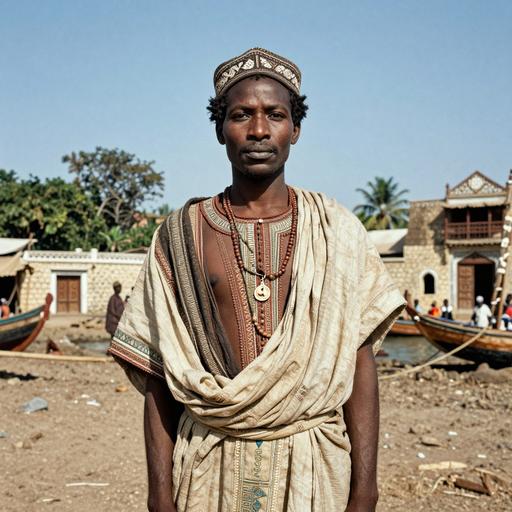
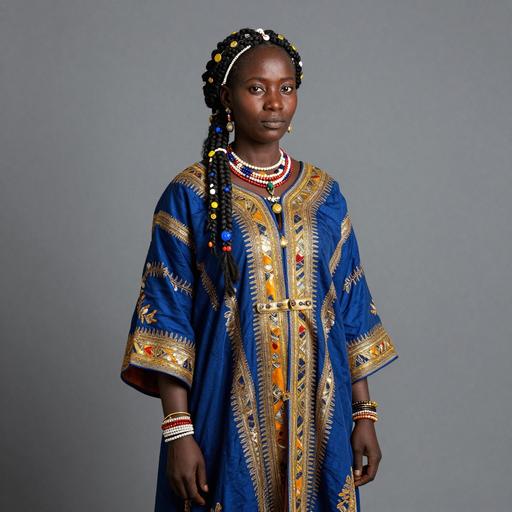
Os retratos são ilustrações geradas com IA. As etiquetas de amostra e os identificadores de acesso identificam os registros de referência.

Retrato Mostrar País Época Data Cultura mtDNA Corresponder
Retrato ilustrativo de Swahili individual, Manda (Lamu), Kenya (800-1,500 CE) gerado com IA
Identificador de amostra: I17419
Kenya Swahili Culture of Manda Island 800 CE - 1500 CE Manda L3d1a1a Direct
Retrato ilustrativo de Swahili-o Near East individual, Songo Mnara (Lindi Region, Kilwa District, Songo Mnara Island), Tanzania (1,412-1,446 CE) gerado com IA
Identificador de amostra: I19550
Tanzania Swahili Culture of Songo Mnara 1412-1446 calCE (535±15 BP, PSUAMS-8409) Songo Mnara L3d1a1a Direct
Retrato ilustrativo de Medieval Swahili individual, Mtwapa (Kilifi), Kenya (1,446-1,611 CE) gerado com IA
Identificador de amostra: I17410
Kenya Swahili Culture of Mtwapa 1446-1611 calCE (450±15 BP, PSUAMS-12697) Mtwapa L3d1a1a Direct
Retrato ilustrativo de Early Colonial individual, San José de los Naturales Royal Hospital mass burial (Mexico City), Mexico (1,450-1,620 CE) gerado com IA
Identificador de amostra: SJN002
Mexico Afro-Mexican Community of Colonial Mexico City 1450-1620 calCE Afro-Mexican L3d1a1a Direct
Retrato ilustrativo de Swahili individual, Makwasinyi (Taita-Taveta), Kenya (1,650-1,950 CE) gerado com IA
Identificador de amostra: I13871
Kenya Makwasinyi (Kenya) 1650-1950 CE Makwasinyi L3d1a1a Direct
Retrato ilustrativo de Swahili individual, Makwasinyi (Taita-Taveta), Kenya (1,650-1,950 CE) gerado com IA
Identificador de amostra: I17404
Kenya Makwasinyi (Kenya) 1650-1950 CE Makwasinyi L3d1a1a Direct
Retrato ilustrativo de Swahili individual, Songo Mnara (Kilwa District, Songo Mnara Island), Tanzania (1,508-1,648 CE) gerado com IA
Identificador de amostra: I19547
Tanzania Swahili Culture of Songo Mnara 1508-1648 calCE (330±15 BP, PSUAMS-8444) Songo Mnara L3d1a1a1 Subclado
Retrato ilustrativo de Swahili individual, Songo Mnara (Kilwa District, Songo Mnara Island), Tanzania (1,629-1,794 CE) gerado com IA
Identificador de amostra: I19549
Tanzania Swahili Culture of Songo Mnara 1629 CE - 1794 CE Songo Mnara L3d1a1a1 Subclado
MATERNAL LINHAGEM · DNA ANTIGO

Mapa de testes de linhagems antigos

Siga os clados superiores até este ramo e explora onde se encontraram portadores antigos.

A carregar as observações antigas...

Os marcadores são locais de achados arqueológicos. Uma linha de descontínua representa uma transição geográfica proposta e incerta entre ramos consecutivos, apoiada em várias observações fechadas; não é uma rota de viagem exata, um local de nascimento ou um teste de descendência direta. As amostras do clado parental podem pertencer a outros ramos descendentes. As datas das amostras são distintas das datas de formação dos haplogrupos são mantidas.

Perfil de Referência

Mapa de distribuição de portadores

Distribuição geográfica das amostras de DNA antigo (8), portadores directos ou de subclasses de L3D1A1A

Portador directo Portador de um subclasse
Filtro de Período Temporária
Todos os períodos
Mostrar todas as amostras
Perfil de Referência

Distribuição temporária

Distribuição de portadores por períodos arqueológicos

Perfil de Referência

Distribuição geográfica

Recuentos por país registrado das amostras. Reflejam a seleção de referência disponível, não frequências de população.

Perfil de Referência

Distribuição por país e época

Compare as contagens de amostras registadas por países e períodos arqueológicos. Selecione uma célula com dados para examinar uma amostra.

Dados

Dados e proveniência

Informações sobre fontes e qualidade dos dados

Última actualização 2026-02-16
Pontuação de confiança 50/100
Cobertura Low

Fonte de Dados

A classificação, as datas estimadas e o contexto geográfico refletem os dados de referência registrados e podem mudar ao revisar os testes. A cobertura de amostras é desigual; os locais registrados e as associações arqueológicas não estabelecem a origem pessoal nem a identidade cultural.