A preparar o relatório

A carregar as informações e as referências disponíveis

Consultando el registro arqueológico...

Recopilando registros antiguos

Saltar para o conteúdo principal
Aisne Iron Age Echoes
Cultura de destaque

Aisne Iron Age Echoes

Four genomes from Aisne reveal a tentative portrait of life and lineage in northern Gaul.

500 CE - 300 BCE
Hauts-de-France (Aisne), France
Desplázate para começar
Capítulo I

A História

Comprender la cultura Aisne Iron Age Echoes

Archaeogenetic and archaeological evidence from four Iron Age burials (500–300 BCE) in Aisne, France, offers preliminary insights into local ancestry and material life. Limited sample size makes conclusions tentative; data hint at continuity of European maternal lineages and mixed paternal signals.

Time Period

500–300 BCE

Region

Hauts-de-France (Aisne), France

Common Y-DNA

I (1), R (1)

Common mtDNA

H (2), H6a (1), T2b (1)

Capítulo II

Cronologia

Momentos-chave da história desta cultura

2500 BCE

Bronze Age foundations in northern France

Bronze Age settlement and exchange networks lay demographic and cultural groundwork in the Aisne valley, later shaping Iron Age communities; this deep time context influences genetic continuities observed centuries later.

Capítulo III

Origins & Emergence

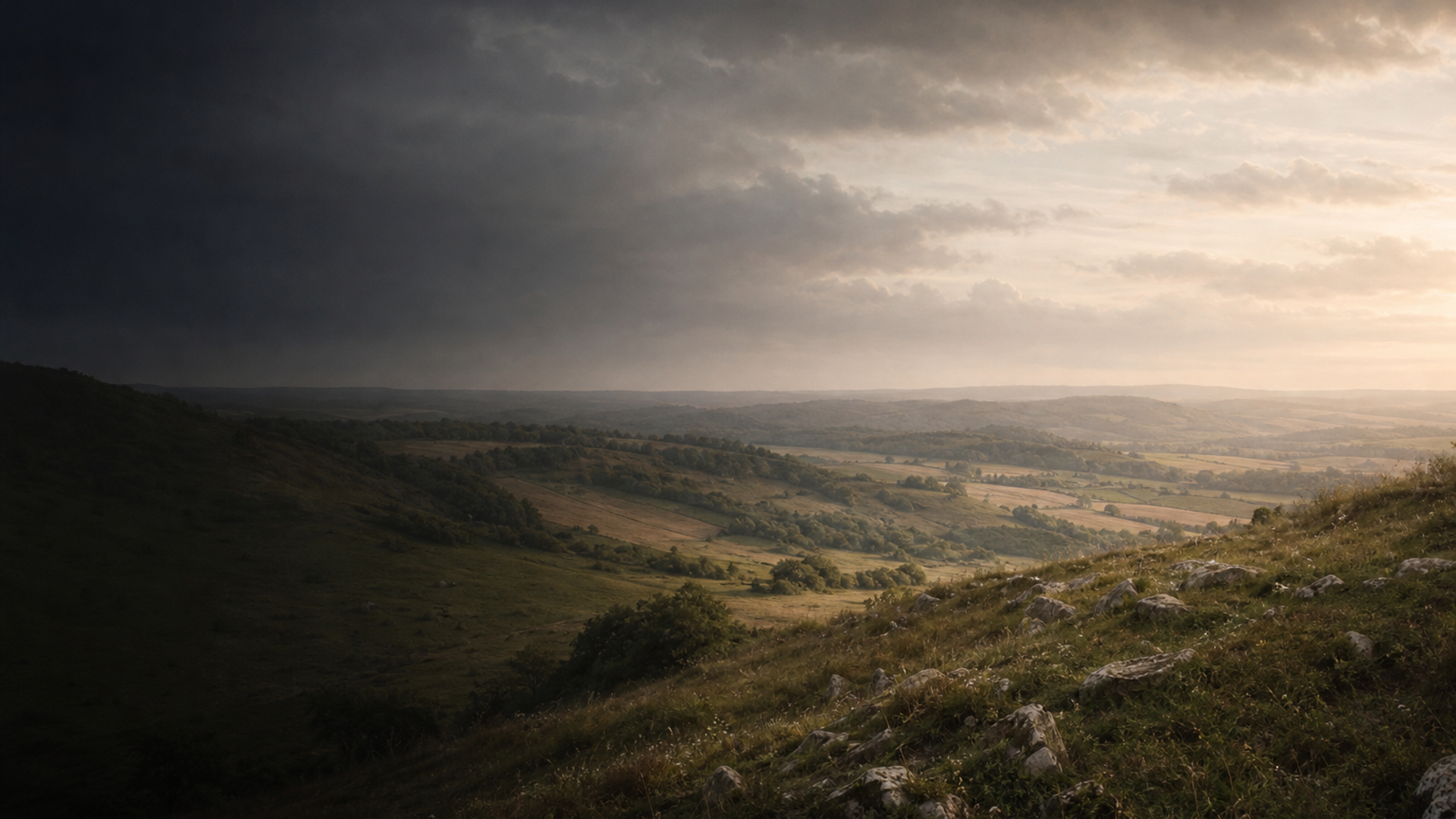
The Iron Age presence in the Aisne valley unfolds against a low, river-cut landscape north of modern Soissons. Archaeological contexts at Bucy-le-Long ("la Fosse Tounise" and "la Heronnière") and Vasseny ("Dessus des Groins") date between 500 and 300 BCE and belong to the broader regional phenomenon often grouped as the Iron Age Culture of Aisne. Excavations have revealed funerary contexts and settlement traces that suggest small, settled communities tied to riverine routes.

Limited evidence suggests these communities participated in the dense exchange networks of north-central Gaul. Material culture patterns in the region show affinities — though not uniformity — with contemporaneous developments to the east and south, reflecting contacts that may include early Hallstatt and emerging La Tène influences; archaeological data indicates these were patchy and locally mediated rather than wholesale cultural replacements.

Genetic results from four individuals provide a narrow but evocative window: they align with a picture of long-term regional continuity punctuated by connections beyond the immediate landscape. Because the sample count is low, claims about population turnover or cultural identity remain provisional, and further excavation and sequencing are needed to map demographic trends with confidence.

  • Sites: Bucy-le-Long (la Fosse Tounise, la Heronnière) and Vasseny (Dessus des Groins)
  • Date range: 500–300 BCE, Iron Age Culture of Aisne
  • Limited evidence of wider Hallstatt/La Tène contacts; locally mediated cultural expression
Capítulo IV

Daily Life & Society

Daily life in the Aisne iron-age landscape would have been shaped by the fertile lowlands and the arterial rivers that cut through them. Archaeological data indicates small farmsteads, with households combining cereal cultivation, animal husbandry, and the craft technologies of the age. Metalworking — smithing of iron and continued use of bronze for specific objects — would have been central to both economy and status display, while pottery and textile production reflect domestic rhythms.

Funerary deposits from the Bucy-le-Long and Vasseny cemeteries, although modest in quantity, suggest variation in mortuary behavior and social differentiation. Grave goods, where present, are often pragmatic rather than lavish, implying communities organized around kin groups and household economies rather than large, centralized polities. River routes likely facilitated exchange of raw materials and ideas, bringing not only objects but people and genes into the region.

Because excavation samples remain small, reconstructions of social hierarchy, craft specialization, and trade intensity must remain cautious. Each new stratigraphic trench and genome will meaningfully refine this portrait.

  • Economy: mixed agriculture, herding, local craft production
  • Social scale: kin-centered households with variable grave assemblages
Capítulo V

Genetic Profile

Genetic data from four individuals (Bucy-le-Long: la Fosse Tounise, la Heronnière; Vasseny: Dessus des Groins) yields a concise but informative profile. Y-chromosome markers were observed as I (1 sample) and R (1 sample). Mitochondrial haplogroups are dominated by H (2 samples), with one H6a and one T2b.

Interpretation: mtDNA H and its sublineages are among the most frequent maternal markers across later Neolithic and historic Europe; their presence here is consistent with long-standing maternal continuity in the region. H6a and T2b likewise occur across Europe from the Neolithic onward and do not in themselves indicate a single migration episode. The paternal signal is mixed: haplogroup I has deep roots in pre-Neolithic and Neolithic Europe, while R (without deeper subclade resolution) could represent the spectrum of R-lineages found in Iron Age and later Western Europe, including those associated with steppe-derived ancestry (e.g., R1b) — but the present data do not resolve subclades.

Crucially, sample count is low (n=4). Limited evidence suggests a blend of local maternal continuity with at least some paternal diversity, but any broader demographic claims are preliminary. Broader regional sampling and higher-resolution Y-chromosome and autosomal analyses are required to distinguish local continuity from incoming streams of ancestry and to time admixture events.

  • mtDNA: H dominates (H, H6a, T2b) — consistent with regional maternal continuity
  • Y-DNA: both I and R observed; subclade resolution lacking, so interpretations are tentative
Capítulo VI

Legacy & Modern Connections

The genetic and archaeological imprint of the Aisne Iron Age persists as a subtle thread in the tapestry of northern France. Modern populations in France exhibit high frequencies of mitochondrial H and, on the paternal side, large proportions of R-lineages; however, direct lineage continuity from these four individuals to contemporary groups cannot be assumed without denser temporal sampling. Archaeologically, the small communities of Aisne exemplify how local traditions continuously adapted to broader currents of trade and cultural exchange.

Civic landscapes like Soissons retain place-names and historic memory that overlay millennia of human occupation. Preservation of sites such as Bucy-le-Long and Vasseny allows archaeology and aDNA to speak together: bones and pottery tell of everyday lives, while genomes hint at inherited ancestries and past movements. Each additional genome from the region will sharpen the picture of how Iron Age communities contributed to the genetic landscape of modern Europe.

  • Genetic continuity is possible but not proven; more samples needed for firm links
  • Archaeology and aDNA together reveal local adaptation within wider Iron Age networks
Com IA

Assistente de IA

Haz preguntas sobre la cultura Aisne Iron Age Echoes

Assistente de IA por DNAGENICS

Desbloquear esta função
Pregunta sobre la cultura Aisne Iron Age Echoes. El asistente con IA puede explicar hallazgos genéticos, contexto histórico, pruebas arqueológicas y conexiones modernas, con sus límites de interpretación.
Exemplo de análise com IA

La cultura Aisne Iron Age Echoes representa un capítulo de la historia humana...

A análise genética permite estudar semelhanças com populações anteriores e possíveis adaptações. As amostras de DNA antigo fornecem informações para investigar padrões migratórios e relações entre populações, com limites que dependem do estudo e do contexto arqueológico.

Esta é uma antevisão da análise com IA. Aceder ao assistente completo para explorar informações sobre:

  • Composição e similaridade genética
  • Padrões migratórios e origens
  • Vida cotidiana e práticas culturais
  • Contexto genético moderno

Explore mais culturas antigas

Descubra a história de civilizações de diferentes partes do mundo antigo