A preparar o relatório

A carregar as informações e as referências disponíveis

Consultando el registro arqueológico...

Recopilando registros antiguos

Saltar para o conteúdo principal
Andronovo Echoes — Kytmanovo
Cultura de destaque

Andronovo Echoes — Kytmanovo

Bronze Age pastoralists at Kytmanovo revealed through graves and mitochondrial U lineages

1862 CE - 1295 BCE
Kytmanovo, Russia
Desplázate para começar
Capítulo I

A História

Comprender la cultura Andronovo Echoes — Kytmanovo

Small-series ancient DNA from Kytmanovo (Russia) illuminates Andronovo-era pastoral lifeways (1862–1295 BCE). Four samples show mtDNA U and a single R Y-haplogroup — preliminary clues linking archaeology and steppe genetic heritage.

Time Period

1862–1295 BCE

Region

Kytmanovo, Russia

Common Y-DNA

R (1 sample)

Common mtDNA

U (4 samples)

Capítulo II

Cronologia

Momentos-chave da história desta cultura

1862 BCE

Earliest dated Kytmanovo sample

One of the Kytmanovo individuals is dated to 1862 BCE, anchoring this small series in the mid-late Andronovo horizon.

Capítulo III

Origins & Emergence

The Andronovo phenomenon is a vast Bronze Age constellation of communities across the Eurasian steppe. Archaeological data indicates a florescence of pastoral economies, wheeled transport, and bronze metallurgy from roughly the late 3rd to the 2nd millennium BCE. The Kytmanovo samples, dated between 1862 and 1295 BCE, fall firmly within this Andronovo horizon and provide a localized echo of broader steppe processes.

Limited evidence from the four Kytmanovo individuals must be read cautiously. These remains suggest continuity of maternal lineages identified as mtDNA U — a haplogroup widespread among European and western Eurasian Bronze Age populations. Material culture at Andronovo sites across southern Siberia and the Altai foothills shows stylistic links with Sintashta and other steppe complexes, suggesting a web of interaction rather than a single origin story. Where genetic and archaeological records overlap, they point to mobile pastoral groups that blended technological innovation (metallurgy, wagons, horse use) with deep-rooted maternal lineages.

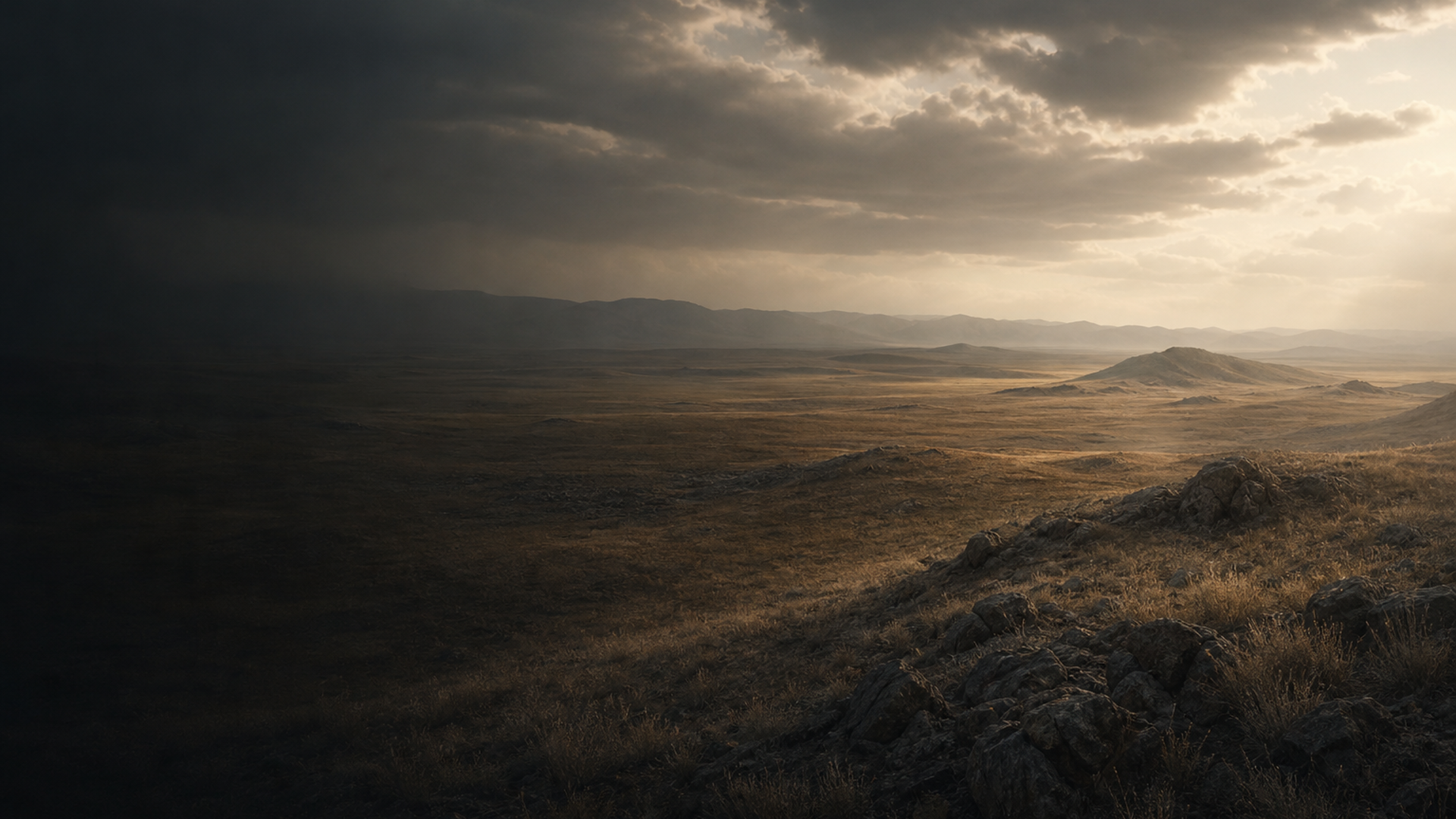
Because the Kytmanovo dataset is small, assertions about broader population movements or language spread remain tentative. Nevertheless, these samples form a piece of a cinematic landscape — rivers, grasslands, and seasonal herding routes — where genes and artifacts together sketch the emergence of Andronovo lifeways.

  • Samples dated 1862–1295 BCE, within the Andronovo horizon
  • mtDNA U prevalent among the four specimens
  • Archaeology shows links across the steppe (Sintashta–Andronovo network)
Capítulo IV

Daily Life & Society

Archaeological evidence from Andronovo contexts paints an image of life on the high steppe: seasonal mobility following grazing cycles, herds of cattle, sheep and horses, and small settlements or encampments tied to ephemeral pastures. Material finds across Andronovo sites — bronze tools, portable hearths, and remnants of woven textiles — suggest skilled craftsmanship adapted to a pastoral economy. At a human scale, burial practices observed in the broader Andronovo corpus show variability: inhumations with modest grave goods to more elaborate burial rites that indicate social differentiation.

At Kytmanovo, the archaeological record is again modest; the skeletal and genetic remains preserved allow glimpses rather than panoramas. The presence of consistent maternal lineages (mtDNA U) among multiple individuals could indicate family or clan-based burial use of a locus across generations. Gendered divisions of labor, leadership, and long-distance exchange are plausible given parallels elsewhere in the Andronovo sphere, but such reconstructions should remain provisional until larger samples and more contextual excavation data are available.

Viewed cinematically, daily life would have been governed by seasonal rhythms: the creak of wagons, the crack of horse hooves, and small communal gatherings around bronze-smithing hearths — a lived world now visible only through shards, bones, and sequences of ancient DNA.

  • Pastoral economy with seasonal mobility and horse use
  • Burial patterns hint at kin-based use of cemetery space
Capítulo V

Genetic Profile

The Kytmanovo dataset comprises four dated individuals (1862–1295 BCE). All four carry mitochondrial haplogroup U, while one male carries a Y-chromosome lineage assigned broadly to haplogroup R. This small sample size (n = 4) requires strong caution: patterns seen here are preliminary and may not reflect population-level frequencies.

MtDNA U is a deep maternal lineage common across Europe and western Eurasia in the Bronze Age; its presence at Kytmanovo aligns with a broad distribution of U-bearing maternal ancestries among steppe and adjacent farming groups. The single observed Y-haplogroup R is consistent with the prevalence of R-derived lineages among many Bronze Age steppe males, but a single data point cannot establish male-line continuity or diversity.

Where larger Andronovo-series studies exist, autosomal results typically indicate a major component of Steppe-related ancestry — itself formed earlier in the 3rd millennium BCE — sometimes admixed with local northern Eurasian or Central Asian groups. For the Kytmanovo individuals specifically, autosomal detail is limited in this small series; therefore, any inference that they represent a definitive Andronovo genetic signature must be tentative.

In sum: the mitochondrial uniformity is intriguing and suggests maternal continuity at the site, while the sparse Y-chromosome evidence hints at broader steppe male-line patterns. Future sampling — especially expanding beyond four individuals — is needed to move from evocative possibility to robust population-level conclusions.

  • All four samples carry mtDNA U — suggests maternal continuity
  • One Y-chromosome assigned to haplogroup R — preliminary male-line signal
Capítulo VI

Legacy & Modern Connections

The Andronovo horizon occupies a central place in stories about Bronze Age transformation on the Eurasian steppe. Archaeologically, it marks a network of pastoralists whose technologies and mobility shaped vast landscapes. Genetically, steppe-derived ancestries and haplogroups such as U (maternal) and R (paternal) appear in later populations across Eurasia, but continuity is complex: genes blend, drift, and are reshaped by repeated migrations and local admixture.

For modern populations in Russia and neighboring regions, steppe-derived genetic components remain part of a multilayered ancestry. However, direct lines of descent from a handful of Kytmanovo individuals to present-day groups cannot be asserted. The true legacy of Andronovo is best expressed as a deep imprint on material culture, mobility patterns, and the genetic mosaic of Eurasia — a cinematic fusion of horse, bronze and gene flow that requires fuller sampling and analysis to fully resolve.

  • Andronovo contributed to the Eurasian steppe’s cultural and genetic mosaic
  • Direct modern descent from these four samples is not demonstrable — further sampling needed
Com IA

Assistente de IA

Haz preguntas sobre la cultura Andronovo Echoes — Kytmanovo

Assistente de IA por DNAGENICS

Desbloquear esta função
Pregunta sobre la cultura Andronovo Echoes — Kytmanovo. El asistente con IA puede explicar hallazgos genéticos, contexto histórico, pruebas arqueológicas y conexiones modernas, con sus límites de interpretación.
Exemplo de análise com IA

La cultura Andronovo Echoes — Kytmanovo representa un capítulo de la historia humana...

A análise genética permite estudar semelhanças com populações anteriores e possíveis adaptações. As amostras de DNA antigo fornecem informações para investigar padrões migratórios e relações entre populações, com limites que dependem do estudo e do contexto arqueológico.

Esta é uma antevisão da análise com IA. Aceder ao assistente completo para explorar informações sobre:

  • Composição e similaridade genética
  • Padrões migratórios e origens
  • Vida cotidiana e práticas culturais
  • Contexto genético moderno

Explore mais culturas antigas

Descubra a história de civilizações de diferentes partes do mundo antigo