A preparar o relatório

A carregar as informações e as referências disponíveis

Consultando el registro arqueológico...

Recopilando registros antiguos

Saltar para o conteúdo principal
Armenia Iron Age: Voices from the Highlands
Cultura de destaque

Armenia Iron Age: Voices from the Highlands

Burials and DNA from 1124–197 BCE illuminate daily life and population threads in ancient Armenia

1124 CE - 197 BCE
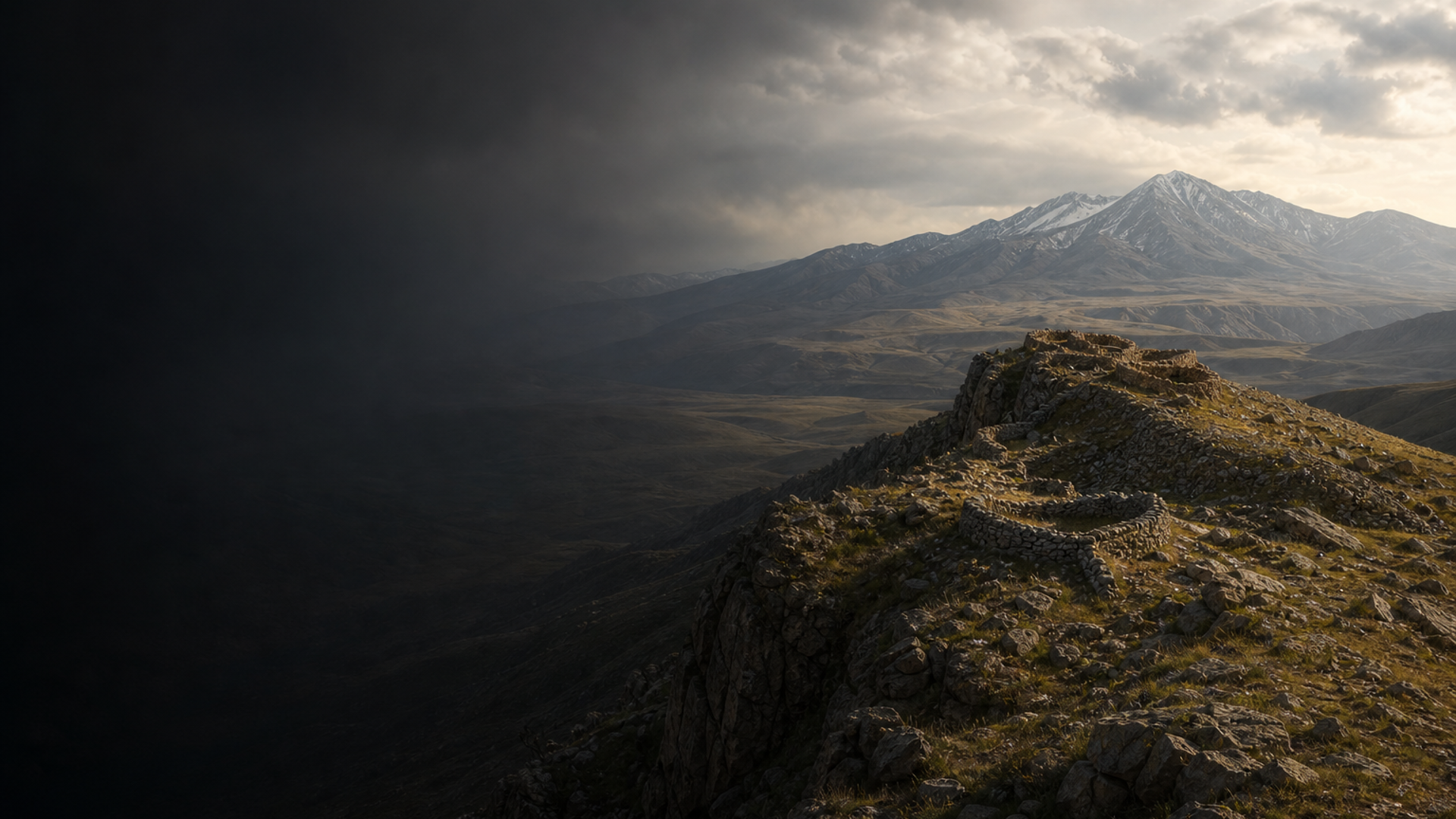
Armenian Highlands (modern Armenia)
Desplázate para começar
Capítulo I

A História

Comprender la cultura Armenia Iron Age: Voices from the Highlands

Archaeological and genetic data from 11 Iron Age individuals (1124–197 BCE) across Armenian sites — Karmir Blur, Lori Berd, Noratus and others — reveal matrilineal diversity typical of West Eurasia and a complex regional story of continuity and contact.

Time Period

1124–197 BCE (Iron Age)

Region

Armenian Highlands (modern Armenia)

Common Y-DNA

No consistent Y‑chromosome pattern reported in this dataset

Common mtDNA

T2e, N, HV1, H2a, R (each observed)

Capítulo II

Cronologia

Momentos-chave da história desta cultura

1124 BCE

Earliest sample in dataset

First dated burial in the Armenia_IA collection (1124 BCE), marking the dataset's chronological start.

860 BCE

Rise of Urartian polities (regional peak)

Archaeological expansion of hilltop fortresses and administrative centers across the Armenian Highlands.

585 BCE

Destruction and transition at Karmir Blur

Stratigraphic evidence records upheaval and rebuilding at key sites such as Teishebaini (Karmir Blur) in the mid-1st millennium BCE.

197 BCE

Latest sample in dataset

The most recent dated individual in the collection (197 BCE), capturing late Iron Age/Hellenistic-era contexts.

Capítulo III

Origins & Emergence

The Armenia_IA assemblage — 11 individuals dated between 1124 and 197 BCE and recovered from cemeteries and complexes such as Lori Berd, Bardzryal, Bragdzor, Karnut, Keti, Karmir Blur (Teishebaini) and Noratus — sits squarely in the Iron Age tapestry of the southern Caucasus. Archaeological data indicate continuity with earlier Bronze Age settlement patterns in the highlands: fortified hilltop citadels, specialized craft quarters and monumental burials appear in stratigraphies at Karmir Blur and other Urartian-linked sites.

Material culture from these sites (pottery styles, metalwork, and architectural traits) suggests regional political entities and networks of exchange extending toward the Levant and Anatolia. Limited epigraphic and material traces connect some sites to the Urartian kingdom (9th–6th centuries BCE), though chronological overlap and local variation mean that not every burial belongs to a single political horizon.

Genetic sampling provides a complementary lens: while 11 individuals form a modest dataset, their geographic spread across multiple cemeteries allows preliminary inferences about population persistence and mobility within the Armenian highlands. Archaeology points to a landscape of fortified towns and rural villages; genetics begins to test whether those visible patterns correspond to demographic continuity, elite movement, or episodic influxes from neighboring regions. Given the sample size and uneven Y‑chromosome reporting, conclusions remain cautious and open to revision as more data accumulate.

  • Samples from key sites: Karmir Blur (Teishebaini), Lori Berd, Noratus, Bardzryal, Bragdzor, Karnut, Keti
  • Material culture shows ties to Urartian-era political networks and wider Near Eastern exchange
  • 11 individuals offer a geographically distributed, preliminary window into Iron Age demography
Capítulo IV

Daily Life & Society

Archaeological contexts associated with the Armenia_IA samples evoke a vivid social landscape: fortified centers like Karmir Blur with administrative architecture and necropoleis, alongside smaller rural cemeteries such as Bragdzor and Noratus. Burials range from modest inhumations to richly furnished graves, reflecting social differentiation visible in grave goods — weapons, ceramics, and personal ornaments.

Excavations at Teishebaini (modern Karmir Blur) revealed urban planning, artisan quarters and evidence for metallurgy and textile production; these economic specializations likely structured daily rhythms and social hierarchies. Funerary practices recorded in cemetery stratigraphy and grave assemblages indicate both local traditions and the adoption of external styles, suggesting households negotiated identity through material display.

Isotopic studies (when available) and the geographic distribution of burials can reveal patterns of mobility: seasonal movement of pastoral groups, long-distance craftsmen, and possible exogamous marriage networks linking the highlands to neighboring regions. Archaeology alone paints a culturally rich portrait; combined with genetic data, it can begin to distinguish whether cultural change reflected population replacement, elite exchange, or the adoption of foreign customs by resident communities.

  • Fortified citadels and artisan quarters indicate complex urban and craft economies
  • Grave diversity shows social differentiation and cultural exchange across the region
Capítulo V

Genetic Profile

The Armenia_IA dataset comprises 11 individuals spanning over nine centuries of the first millennium BCE. Mitochondrial DNA diversity in this set includes haplogroups T2e, N, HV1, H2a and R — lineages widely distributed across West Eurasia. This matrilineal breadth suggests a regional pool consistent with longstanding connections across the Caucasus, Anatolia and the Near East.

Y‑chromosome data are not consistently reported across the samples provided here; where Y‑DNA is missing or sparse, we must refrain from firm statements about paternal continuity or turnover. Autosomal data are also not summarized with this input; therefore, larger-scale claims about admixture proportions (for example, steppe-derived versus local Anatolian/Levantine ancestry) cannot be asserted from these 11 individuals alone.

Despite limitations, several cautious points emerge: (1) the mtDNA composition aligns with expectations for Iron Age populations of the southern Caucasus — neither wholly exotic nor insular — pointing to mixtures of local and incoming maternal lineages; (2) the geographic spread of samples suggests genetic heterogeneity within the highlands, consistent with archaeological evidence for trade and mobility. Because the sample size is moderate (11 individuals) and Y‑chromosome representation is limited, these findings should be treated as preliminary until larger, genome-wide datasets permit more precise modeling of ancestry and population dynamics.

  • Mitochondrial haplogroups (T2e, N, HV1, H2a, R) indicate West Eurasian maternal diversity
  • Y‑chromosome and autosomal information are limited in this dataset; conclusions are provisional
Capítulo VI

Legacy & Modern Connections

The Iron Age communities represented by these burials contributed to the genetic and cultural substrate of the Armenian Highlands. Archaeology shows the formation of political centers and long-distance connections that would shape regional identities; genetics hints at continuing maternal lineages that persist in varying frequencies among later populations.

Modern genetic landscapes of Armenia and neighboring regions likely reflect layers of continuity and contact: local highland continuity punctuated by episodes of mobility and exchange. Given the moderate sample size and fragmentary Y‑chromosome reporting in this dataset, direct links to specific modern populations remain tentative. Future integrated studies combining more extensive ancient genomes with archaeological context will clarify how the Iron Age people of sites like Karmir Blur and Lori Berd contributed to the ancestry of later Armenian-speaking communities. For now, these samples capture a moment when the highlands were both rooted in local tradition and open to the currents of the broader ancient Near East.

  • Archaeogenetic signals suggest continuity with later populations, but specifics are tentative
  • Further genome-wide sampling will better resolve connections to modern Armenian ancestries
Com IA

Assistente de IA

Haz preguntas sobre la cultura Armenia Iron Age: Voices from the Highlands

Assistente de IA por DNAGENICS

Desbloquear esta função
Pregunta sobre la cultura Armenia Iron Age: Voices from the Highlands. El asistente con IA puede explicar hallazgos genéticos, contexto histórico, pruebas arqueológicas y conexiones modernas, con sus límites de interpretación.
Exemplo de análise com IA

La cultura Armenia Iron Age: Voices from the Highlands representa un capítulo de la historia humana...

A análise genética permite estudar semelhanças com populações anteriores e possíveis adaptações. As amostras de DNA antigo fornecem informações para investigar padrões migratórios e relações entre populações, com limites que dependem do estudo e do contexto arqueológico.

Esta é uma antevisão da análise com IA. Aceder ao assistente completo para explorar informações sobre:

  • Composição e similaridade genética
  • Padrões migratórios e origens
  • Vida cotidiana e práticas culturais
  • Contexto genético moderno

Explore mais culturas antigas

Descubra a história de civilizações de diferentes partes do mundo antigo