A preparar o relatório

A carregar as informações e as referências disponíveis

Consultando el registro arqueológico...

Recopilando registros antiguos

Saltar para o conteúdo principal
Aweil Today: Faces of Modern South Sudan
Cultura de destaque

Aweil Today: Faces of Modern South Sudan

A snapshot of living communities in Aweil (2000 CE) linking material life and limited DNA evidence

2000 CE
Aweil, South Sudan (Northern Bahr el Ghazal)
Desplázate para começar
Capítulo I

A História

Comprender la cultura Aweil Today: Faces of Modern South Sudan

Modern South Sudan samples from Aweil (2000 CE) offer a preliminary glimpse into recent population history. With only four samples, archaeological and genetic signals are tentative but suggest continuity with regional Nilotic lifeways and complex East African admixture patterns seen in broader studies.

Time Period

2000 CE

Region

Aweil, South Sudan (Northern Bahr el Ghazal)

Common Y-DNA

Not reported / Undetermined (sample set small)

Common mtDNA

Not reported / Undetermined (sample set small)

Capítulo II

Cronologia

Momentos-chave da história desta cultura

2000 CE

Modern Aweil sampling

Four modern individuals from Aweil were sampled, providing a preliminary genetic snapshot of local populations.

Capítulo III

Origins & Emergence

The materials and human remains sampled from Aweil date to the modern era (2000 CE) and capture a living landscape rather than a deep archaeological horizon. Archaeological survey in Northern Bahr el Ghazal is sporadic; where present, pottery sherds, habitation debris, and pastoral installations indicate long-standing agro‑pastoral economies. Ethnographic continuity suggests links to Nilotic cultural practices that emphasize cattle, seasonal mobility, and riverine resource use.

Limited evidence suggests that the people represented in the Aweil samples belong to communities shaped by recent historical processes: colonial boundaries, twentieth‑century migration, and late twentieth‑century conflict and displacement. These forces have rearranged settlement patterns and genealogies within living memory, so biological signals may reflect both deep regional ancestry and recent gene flow.

Because the dataset here comprises four modern samples, conclusions about population origins remain tentative. Archaeological data indicates continuity of particular lifeways in the region, but without larger, temporally stratified sampling it is impossible to separate multi‑generational local continuity from recent admixture or mobility-driven change.

  • Samples represent modern inhabitants of Aweil (2000 CE)
  • Material culture in the region points to long‑term agro‑pastoral traditions
  • Small sample count limits inferences about deep origins
Capítulo IV

Daily Life & Society

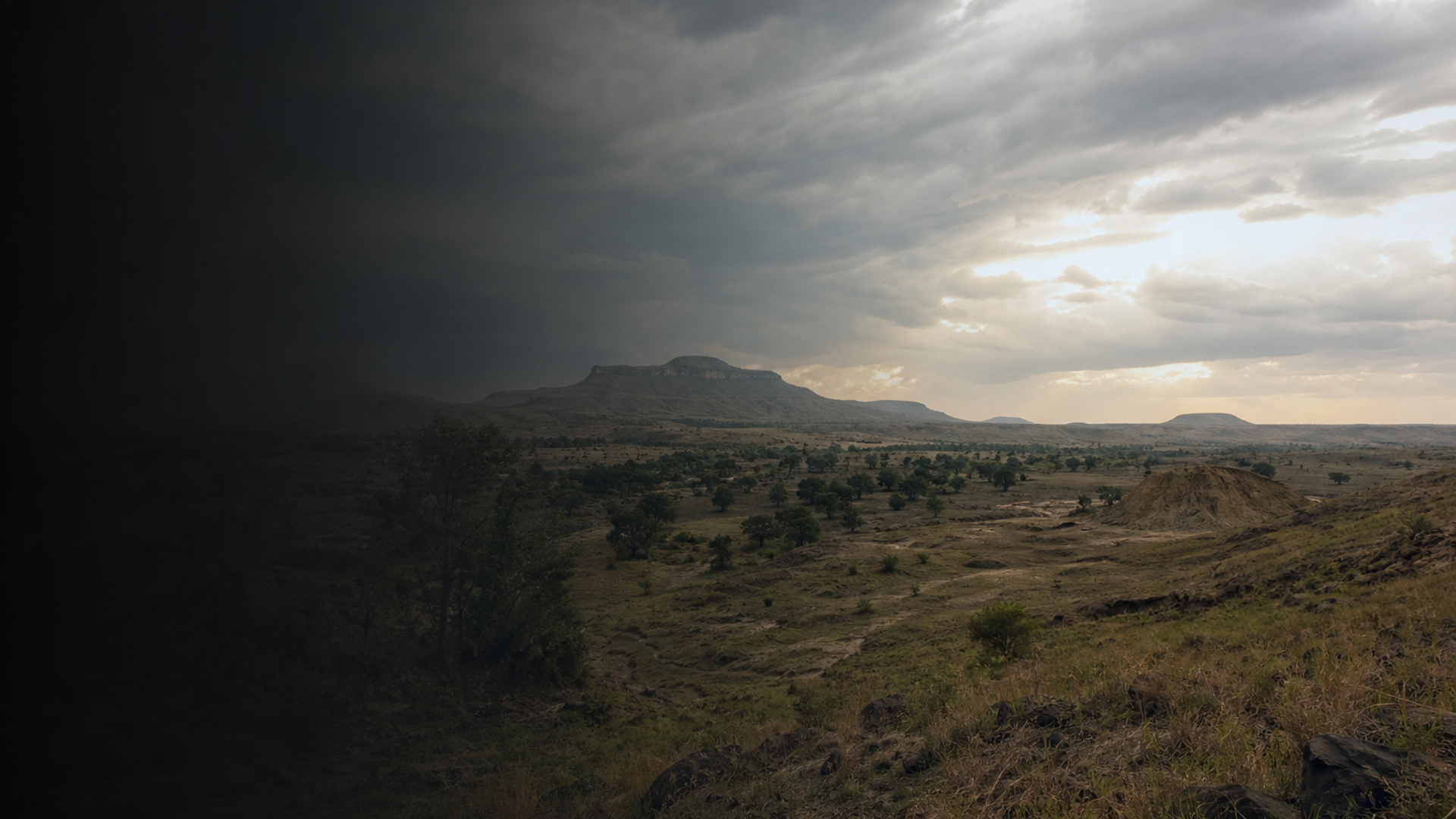
Aweil, set within the floodplains and scrublands of Northern Bahr el Ghazal, has historically supported mixed farming, fishing, and pastoralism. Ceramic fragments and ephemeral hearths recovered nearby reflect domestic activities — cooking, grain processing, and small‑scale craft — that anchor households to predictable seasonal cycles. Cattle remain culturally central across many Nilotic groups in South Sudan, functioning as wealth, bridewealth, and social currency; archaeological traces of kraals and dung‑rich soils often mark past animal enclosures.

Daily life in 2000 CE was shaped by the rhythms of riverine floods and dry seasons, by market exchanges in regional towns, and by networks of kinship stretching across modern borders. Material evidence is often blurred with contemporary refuse, so archaeologists must work hand in hand with oral history and ethnography to build a fuller picture.

Archaeological indicators in the Aweil area are therefore best read as snapshots of living tradition: household economies oriented around cereals, livestock, and river resources; a landscape of seasonal camps and semi‑permanent villages; and social institutions that mediate mobility and resource sharing. These observations inform genetic sampling strategies by highlighting likely pathways of interaction and marriage networks.

  • Mixed farming, fishing, and pastoralism dominate local subsistence
  • Cattle and seasonal mobility structure social life
Capítulo V

Genetic Profile

The genetic dataset tied to these Aweil samples is extremely limited: four individuals dated to 2000 CE. No common Y‑DNA or mtDNA haplogroups are reported in the input data, so any statements about lineage frequencies are necessarily provisional. Because the sample size is below ten, population‑level inferences are preliminary and should be treated as suggestive rather than definitive.

Broader population genetics research across South Sudan and neighboring regions typically documents strong signals associated with Nilotic groups (often characterized in the literature as autochthonous East African components) together with varying contributions from neighboring East African and, in some areas, West Eurasian sources. Archaeological and ethnographic contexts—such as trade routes, pastoral alliances, and historical migration—offer plausible mechanisms for such admixture.

In practice, integrating the Aweil DNA with archaeological data means using material evidence of mobility and social networks to interpret genetic diversity: localized matrilineal or patrilineal practices, exogamous marriage, and recent displacement could all shape the observed genetic profiles. Future work must expand sampling across sites, include uniparental markers and genome‑wide data, and place modern DNA in dialogue with older, dated archaeological contexts to resolve temporal layers of ancestry.

  • Dataset of 4 modern samples — conclusions are preliminary
  • Regional genetic landscape shows Nilotic-associated ancestry with variable external admixture
Capítulo VI

Legacy & Modern Connections

The living communities of Aweil carry traditions and biological lineages shaped by centuries of riverine life, cattle culture, and intercommunal ties. Archaeology frames those traditions in material terms — pots, hearths, and pastoral infrastructure — while genetics can trace the invisible threads of descent and contact.

Given the tiny sample set, this collection functions best as a prompt: it highlights the urgency of broader, ethically conducted sampling and collaborative research with South Sudanese communities. When expanded, combined archaeological and genetic studies can illuminate how recent history — migration, conflict, and climate fluctuation — has translated into the patterns of kinship and ancestry visible today. For descendants and researchers alike, the message is clear: modern DNA snapshots are powerful, but their true legacy emerges only through careful, contextualized expansion of both archaeological and genetic datasets.

  • Current samples underscore the need for broader, collaborative research
  • Combined archaeology and genetics can reveal how recent events shaped ancestry
Com IA

Assistente de IA

Haz preguntas sobre la cultura Aweil Today: Faces of Modern South Sudan

Assistente de IA por DNAGENICS

Desbloquear esta função
Pregunta sobre la cultura Aweil Today: Faces of Modern South Sudan. El asistente con IA puede explicar hallazgos genéticos, contexto histórico, pruebas arqueológicas y conexiones modernas, con sus límites de interpretación.
Exemplo de análise com IA

La cultura Aweil Today: Faces of Modern South Sudan representa un capítulo de la historia humana...

A análise genética permite estudar semelhanças com populações anteriores e possíveis adaptações. As amostras de DNA antigo fornecem informações para investigar padrões migratórios e relações entre populações, com limites que dependem do estudo e do contexto arqueológico.

Esta é uma antevisão da análise com IA. Aceder ao assistente completo para explorar informações sobre:

  • Composição e similaridade genética
  • Padrões migratórios e origens
  • Vida cotidiana e práticas culturais
  • Contexto genético moderno

Explore mais culturas antigas

Descubra a história de civilizações de diferentes partes do mundo antigo