A preparar o relatório

A carregar as informações e as referências disponíveis

Consultando el registro arqueológico...

Recopilando registros antiguos

Saltar para o conteúdo principal
Barç Medieval Ancestor (1402–1439)
Cultura de destaque

Barç Medieval Ancestor (1402–1439)

A single individual from Barç links Korça Basin archaeology with preliminary DNA signals of R and J.

1402 CE - 1439 CE
Barç, Korça Basin, Southeast Albania
1 Amostras antigas
Desplázate para começar
Capítulo I

A História

Comprender la cultura Barç Medieval Ancestor (1402–1439)

A late-medieval individual (1402–1439 CE) from Barç, Korça Basin, Albania. Archaeology places the find in a turbulent era of local principalities and external contact; genetic data (Y-R, mtDNA J) offer cautious hints at regional ancestry. Conclusions are preliminary (n=1).

Time Period

1402–1439 CE (Late Medieval)

Region

Barç, Korça Basin, Southeast Albania

Common Y-DNA

R (1 sample)

Common mtDNA

J (1 sample)
Capítulo II

Cronologia

Momentos-chave da história desta cultura

2500 BCE

Early Bronze Age activity in the Korça Basin

Archaeological traces show the Korça Basin was occupied in the Early Bronze Age, establishing long-term settlement patterns in the landscape.

Capítulo III

Origins & Emergence

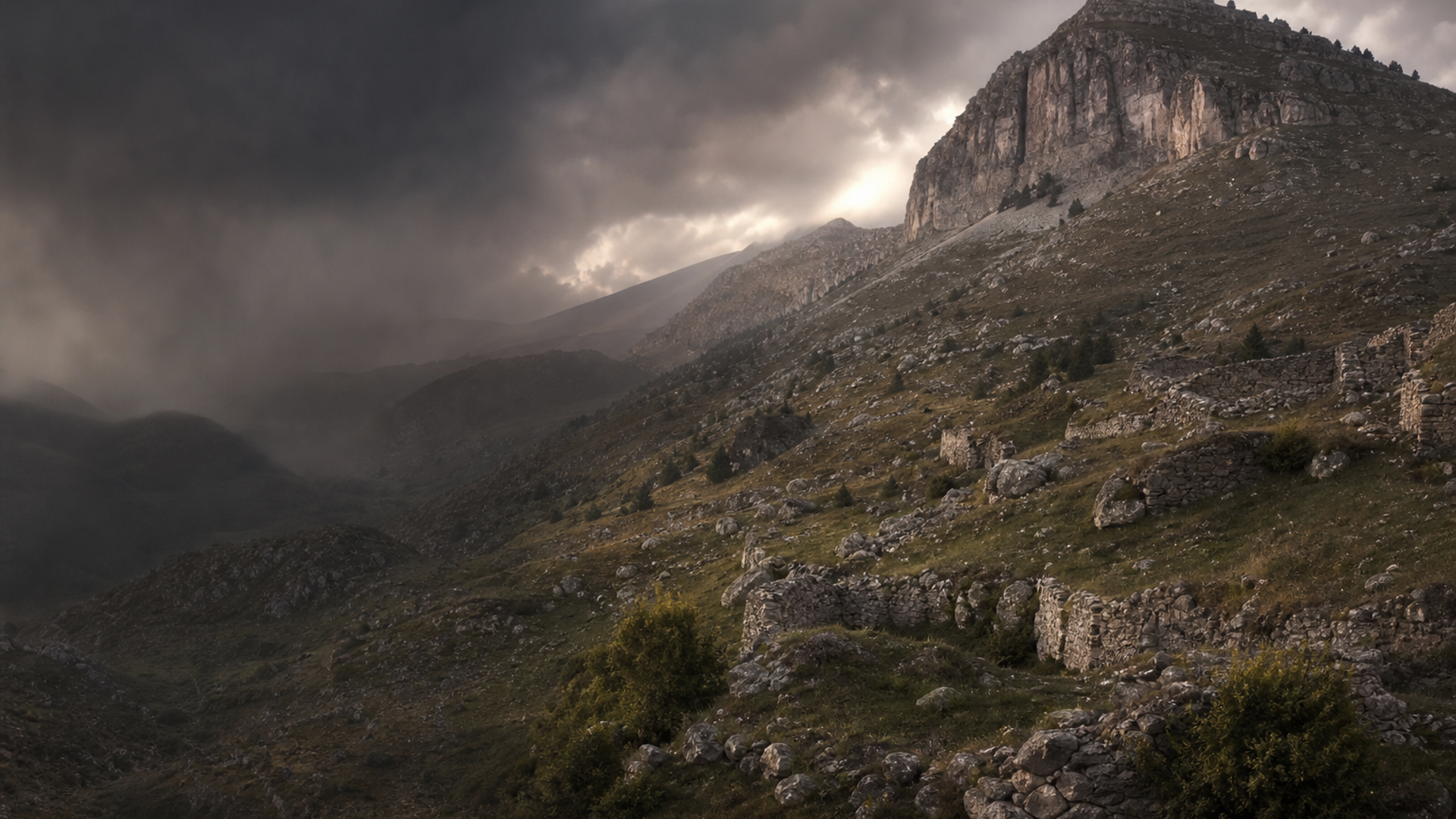
In the cool light of the Korça Basin, the Barç individual emerges from a late-medieval horizon (1402–1439 CE) when local communities navigated shifting alliances and new external pressures. Archaeological data indicates the site lies within a landscape long used for farming and seasonal movement; its material record ties into broader Balkan medieval networks rather than an isolated enclave.

Limited evidence suggests that settlements in the southeast Albanian uplands sustained mixed agrarian economies, with occasional long-distance contacts across the Adriatic and into Ottoman-held territories. The period overlaps early Ottoman incursions and the persistence of Byzantine and local Albanian principalities — a politically dynamic backdrop that would shape patterns of mobility and marriage.

Because this profile is derived from a single sampled individual, any narrative about population origins must remain tentative. Archaeology provides the landscape and cultural possibilities; genetics offers the individual voice. Together they sketch an emergent picture of a person living at a crossroads of trade, conflict, and continuity, but many threads remain unresolved until more samples and stratified contexts are analyzed.

  • Late-medieval context: 1402–1439 CE
  • Site: Barç, Korça Basin (southeast Albania)
  • Conclusions are preliminary given a single sample
Capítulo IV

Daily Life & Society

Archaeological indicators from the Korça Basin imply a rhythm of rural life shaped by fields, flocks, and seasonal markets. Pottery styles, small metal finds, and the distribution of rural burials in the region suggest households integrated local production with occasional long-distance goods. Hilltop sites and valley hamlets would have been anchored by kinship ties, seasonal labor, and the negotiation of resources in a landscape of rivulets and terraces.

The cinematic image is of a community that rises each morning to tend terraces and herds, yet remains plugged into wider networks: merchants, itinerant craftsmen, and the movement of armies could all introduce new people and ideas. Archaeological data indicates variability in wealth and burial practices across sites in the Korça Basin, but the full spectrum of social differentiation is not yet robustly sampled. As such, the individual from Barç should be seen as one life among many possible social roles — farmer, artisan, soldier, or migrant — preserved by chance in the archaeological record.

  • Rural, agrarian lifeways with regional market ties
  • Evidence of variability in burial and material culture across nearby sites
Capítulo V

Genetic Profile

The genetic data from Barç are simple in number but rich in implication: one male-associated sample carries Y-haplogroup R and mitochondrial haplogroup J. Y-haplogroup R is widely distributed across Europe and the wider Eurasian corridor; without deeper subclade resolution it is not possible to pinpoint a recent origin or migration event. mtDNA J has a long presence in the Mediterranean and Near East and appears in many European contexts, often interpreted as evidence of prehistoric and historic gene flow across these regions.

Archaeogenetically, a lone R/Y — J/mt combination can reflect many scenarios: local continuity of male lineages common in the Balkans, maternal connections tracing to broader Mediterranean gene pools, or the outcome of mobility and marriage networks during the medieval period. Importantly, with a sample count of one, patterns of population structure, sex-biased migration, or admixture cannot be robustly inferred. Any hypotheses about regional ancestry or interaction must therefore be framed as provisional. Future sampling from Barç and neighboring sites will be essential to test whether these signals represent local continuity, incoming lineages, or individual mobility.

  • Y-haplogroup: R (broadly Eurasian; subclade unspecified)
  • mtDNA: J (Mediterranean/Near Eastern presence); n=1 so conclusions are tentative
Capítulo VI

Legacy & Modern Connections

The single Barç genome offers a cinematic but cautious bridge to present-day genetic landscapes of Albania and the Balkans. Archaeologically, the Korça Basin has seen repeated layers of settlement and contact; genetically, the presence of R and J echoes broader Mediterranean and European threads that continue into modern populations.

Yet continuity should not be assumed. Centuries of migration, disease, and political change — including Ottoman-era movements and later demographic shifts — mean that a direct one-to-one mapping from one medieval individual to modern communities is unlikely. Instead, the Barç specimen is best read as a human snapshot: it preserves an individual ancestry that contributes one data point to the long, composite story of the region. Expanded sampling and integrated archaeological context will clarify how representative this profile is of late-medieval Korça Basin populations and their connections to the modern gene pool.

  • Signals align with wider Mediterranean and Balkan genetic threads
  • Direct continuity to modern groups is uncertain; more samples needed
Capítulo VII

Catálogo de amostras

1 amostras de DNA antigo associadas à cultura Barç Medieval Ancestor (1402–1439) fornecem dados de referência sobre as populações desse período.

1 / 1 amostras
Retrato Mostrar País Época Data Cultura Sexo DNA-Y ADNmt
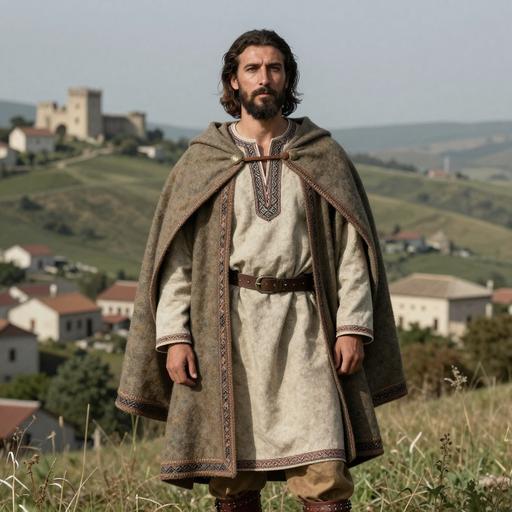
Retrato reconstruído de Barc Medieval-o individual, Albania
Barc Medieval-o individual, Albania
Albania Albania_Barc_Medieval 1402-1439 calCE (515±20 BP, PSUAMS-5942) Albanian M R-PF7563 J1c5d
Com IA

Assistente de IA

Haz preguntas sobre la cultura Barç Medieval Ancestor (1402–1439)

Assistente de IA por DNAGENICS

Desbloquear esta função
Pregunta sobre la cultura Barç Medieval Ancestor (1402–1439). El asistente con IA puede explicar hallazgos genéticos, contexto histórico, pruebas arqueológicas y conexiones modernas, con sus límites de interpretación.
Exemplo de análise com IA

La cultura Barç Medieval Ancestor (1402–1439) representa un capítulo de la historia humana...

A análise genética permite estudar semelhanças com populações anteriores e possíveis adaptações. As amostras de DNA antigo fornecem informações para investigar padrões migratórios e relações entre populações, com limites que dependem do estudo e do contexto arqueológico.

Esta é uma antevisão da análise com IA. Aceder ao assistente completo para explorar informações sobre:

  • Composição e similaridade genética
  • Padrões migratórios e origens
  • Vida cotidiana e práticas culturais
  • Contexto genético moderno

Explore mais culturas antigas

Descubra a história de civilizações de diferentes partes do mundo antigo





