A preparar o relatório

A carregar as informações e as referências disponíveis

Consultando el registro arqueológico...

Recopilando registros antiguos

Saltar para o conteúdo principal
Birlik Tasmola: Iron Age Steppe Echoes
Cultura de destaque

Birlik Tasmola: Iron Age Steppe Echoes

Preliminary insights from three Early Iron Age burials in Birlik, Kazakhstan (781–481 BCE)

781 CE - 481 BCE
Kazakhstan (Almaty; Pavlodar, Bayanaul)
Desplázate para começar
Capítulo I

A História

Comprender la cultura Birlik Tasmola: Iron Age Steppe Echoes

Archaeological and genetic glimpses from three Early Iron Age (781–481 BCE) burials at Birlik, Kazakhstan. Evidence ties these Tasmola‑era mounds to mobile pastoral lifeways and emerging Iron Age technologies. Ancient DNA is limited (n=3); conclusions remain provisional.

Time Period

781–481 BCE

Region

Kazakhstan (Almaty; Pavlodar, Bayanaul)

Common Y-DNA

Undetermined (limited data — 3 samples)

Common mtDNA

Undetermined (limited data — 3 samples)

Capítulo II

Cronologia

Momentos-chave da história desta cultura

781 BCE

Earliest dated Birlik burials (Tasmola EIA)

Radiocarbon‑calibrated burials at Birlik mark Early Iron Age use of Tasmola kurgans in the Almaty and Bayanaul regions.

Capítulo III

Origins & Emergence

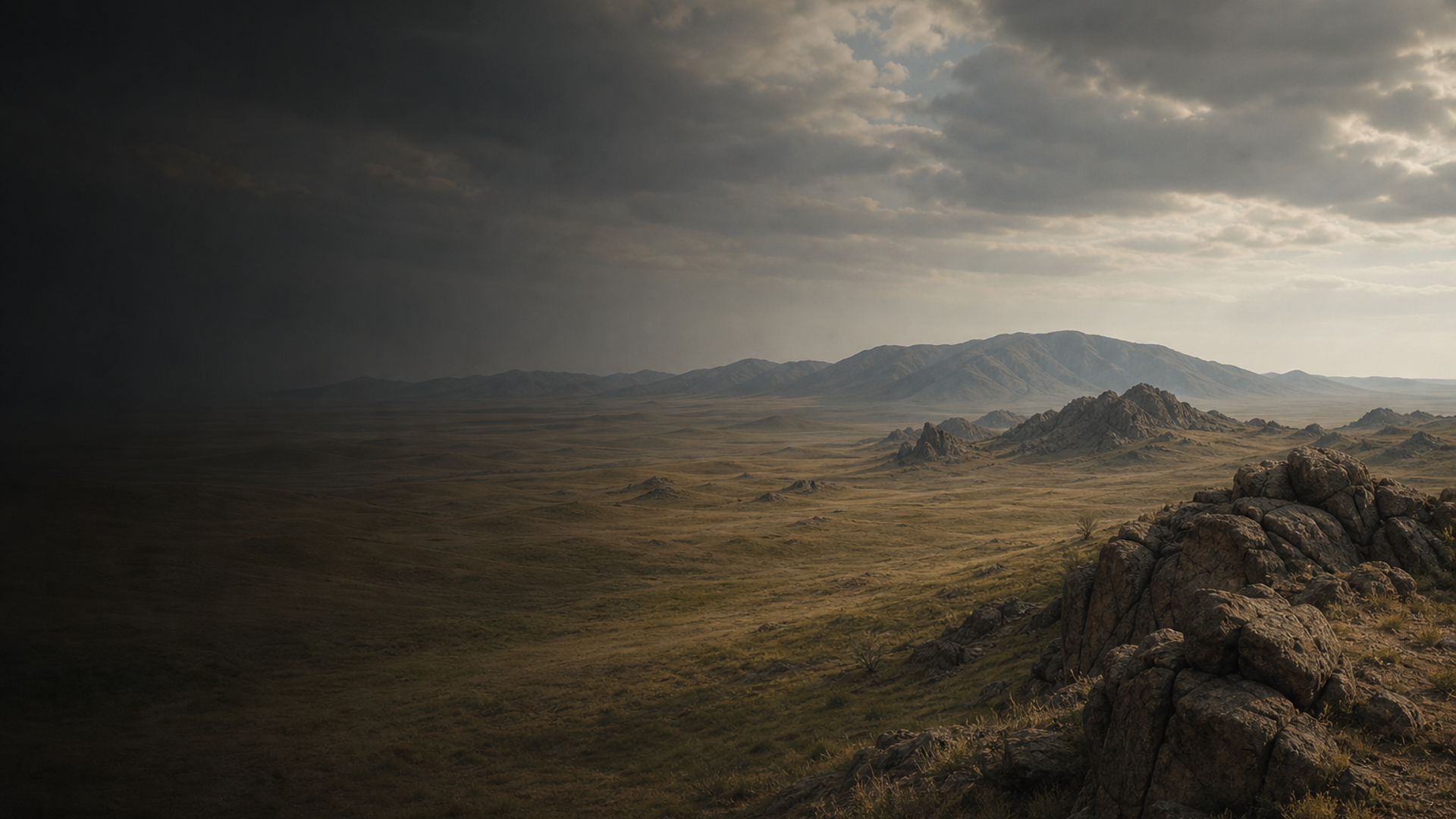
Rising out of the open steppe between the foothills of present‑day Almaty and the northern Bayanaul heights, the Birlik burials belong to the Early Iron Age phase of the Tasmola cultural horizon (roughly 8th–5th centuries BCE). Archaeological data indicates that the Tasmola phenomenon is expressed most visibly in funerary landscapes: low mounds, stone‑lined graves, and concentrated cemeteries on elevated ground. Birlik — including the documented mound 25 in Bayanaul District and graves near Talgar — sits at an ecological crossroads where mountain pastures meet expansive steppe.

Limited evidence suggests this was a world of mobile pastoral households that increasingly incorporated iron tools and weaponry into ritual contexts. Metalworking traces and the distribution of grave goods across the region point to intensifying long‑distance exchange across the Eurasian steppe during this period. While material culture links Tasmola communities to wider steppe trajectories, precise cultural origins remain debated: some patterns reflect local continuities from Late Bronze Age populations, while others hint at broader pan‑steppe innovations that culminate in the later Scythian cultural horizon.

Because the corpus of directly radiocarbon‑dated and genetically sampled Birlik individuals is small, reconstructions of migration, interaction, and chronology are provisional and will be refined as more excavations and aDNA data become available.

  • Tasmola cultural phase: ~8th–5th centuries BCE (Early Iron Age)
  • Key sites: Birlik (Talgar, Almaty) and mound 25 (Bayanaul, Pavlodar)
  • Evidence indicates mobile pastoralism with emerging iron use
Capítulo IV

Daily Life & Society

The archaeological record at Tasmola cemeteries offers the clearest glimpses of social life: mortuary architecture, grave orientation, and associated objects. Archaeological data indicates that graves often contain metal implements, personal ornaments, and fragments interpreted as horse‑related equipment — a signature of mounted pastoral communities across the steppe. Settlements are less well preserved in the high grasslands, so funerary contexts serve as primary proxies for status differences and craft specialization.

From the cinematic sweep of seasonal pastures to the intimate detail of a metal clasp or spearhead placed in a grave, these peoples balanced mobility with durable ritual landscapes. Trade and exchange networks likely brought raw metals and finished goods from distant workshops, while local smithing adapted to pastoral needs. Limited osteological sampling suggests physically demanding lifeways — herding, riding, and warfare or raiding — but detailed bioarchaeological studies remain sparse for Birlik specifically.

Archaeological interpretations emphasize variability: some graves are richly furnished, suggesting social differentiation; others are modest, indicating a range of economic statuses. As with many steppe cultures, ritualized treatment of the dead encoded community memory and ties to landscape.

  • Funerary goods suggest horse equipment, metal tools, and personal ornaments
  • Burials reveal social differentiation; settlements are poorly preserved
Capítulo V

Genetic Profile

Genetic data for the Kazakhstan_Birlik_Tasmola_EIA grouping are extremely limited: only three individuals are reported from burials dated between 781 and 481 BCE. No consistent Y‑DNA or mtDNA haplogroups are reported in this small dataset, so population‑level claims would be premature. When sample counts are under ten, patterns of ancestry, sex‑biased migration, and lineage continuity must be treated as provisional.

Nevertheless, the genomic toolkit applied to contemporaneous steppe assemblages offers a roadmap. Ancient autosomal DNA can test for admixture between local Bronze Age inhabitants and incoming Iron Age groups, quantify eastern vs. western Eurasian ancestry components, and identify kin relationships within mounds. Y‑chromosome and mitochondrial analyses — when reported — can point to patrilineal or matrilineal continuity, but with n=3 any observed haplogroup could reflect individual variation rather than population norms.

Archaeological context combined with aDNA from more individuals would allow us to ask whether Birlik populations were largely local descendants adapting to new technologies, or whether they carried genetic signatures of wider steppe movements associated with the early Scythian horizon. For now, the genetic story is a whisper: suggestive, incomplete, and awaiting fuller sampling.

  • Sample count is only 3 — conclusions are highly provisional
  • No common Y‑DNA/mtDNA haplogroups reported; more aDNA needed
Capítulo VI

Legacy & Modern Connections

The Tasmola landscape at Birlik speaks to a long continuum of steppe lifeways that feed into the ethnogenesis of later groups across Central Asia. Archaeological traditions — burial mounds, horse culture, and iron metallurgy — leave durable cultural echoes visible centuries later. Modern populations of Kazakhstan carry a complex genetic heritage formed by millennia of migrations across Eurasia; while direct ancestry claims from three Early Iron Age individuals cannot be made, these burials contribute crucial temporal anchors for regional genetic change.

Culturally, funerary forms and pastoral economies documented in Tasmola contexts resonate with later steppe practices. Genetically, future expanded sampling from Birlik and surrounding cemeteries will help map how local Bronze Age ancestry blended with incoming Iron Age components, clarifying threads that join ancient peoples to the living tapestry of Central Asian populations.

  • Tasmola mortuary and pastoral traditions echo in later steppe cultures
  • Limited aDNA provides temporal anchors but not definitive ancestry links
Com IA

Assistente de IA

Haz preguntas sobre la cultura Birlik Tasmola: Iron Age Steppe Echoes

Assistente de IA por DNAGENICS

Desbloquear esta função
Pregunta sobre la cultura Birlik Tasmola: Iron Age Steppe Echoes. El asistente con IA puede explicar hallazgos genéticos, contexto histórico, pruebas arqueológicas y conexiones modernas, con sus límites de interpretación.
Exemplo de análise com IA

La cultura Birlik Tasmola: Iron Age Steppe Echoes representa un capítulo de la historia humana...

A análise genética permite estudar semelhanças com populações anteriores e possíveis adaptações. As amostras de DNA antigo fornecem informações para investigar padrões migratórios e relações entre populações, com limites que dependem do estudo e do contexto arqueológico.

Esta é uma antevisão da análise com IA. Aceder ao assistente completo para explorar informações sobre:

  • Composição e similaridade genética
  • Padrões migratórios e origens
  • Vida cotidiana e práticas culturais
  • Contexto genético moderno

Explore mais culturas antigas

Descubra a história de civilizações de diferentes partes do mundo antigo