A preparar o relatório

A carregar as informações e as referências disponíveis

Consultando el registro arqueológico...

Recopilando registros antiguos

Saltar para o conteúdo principal
Bronze Age Echoes of Kapitan Andreevo
Cultura de destaque

Bronze Age Echoes of Kapitan Andreevo

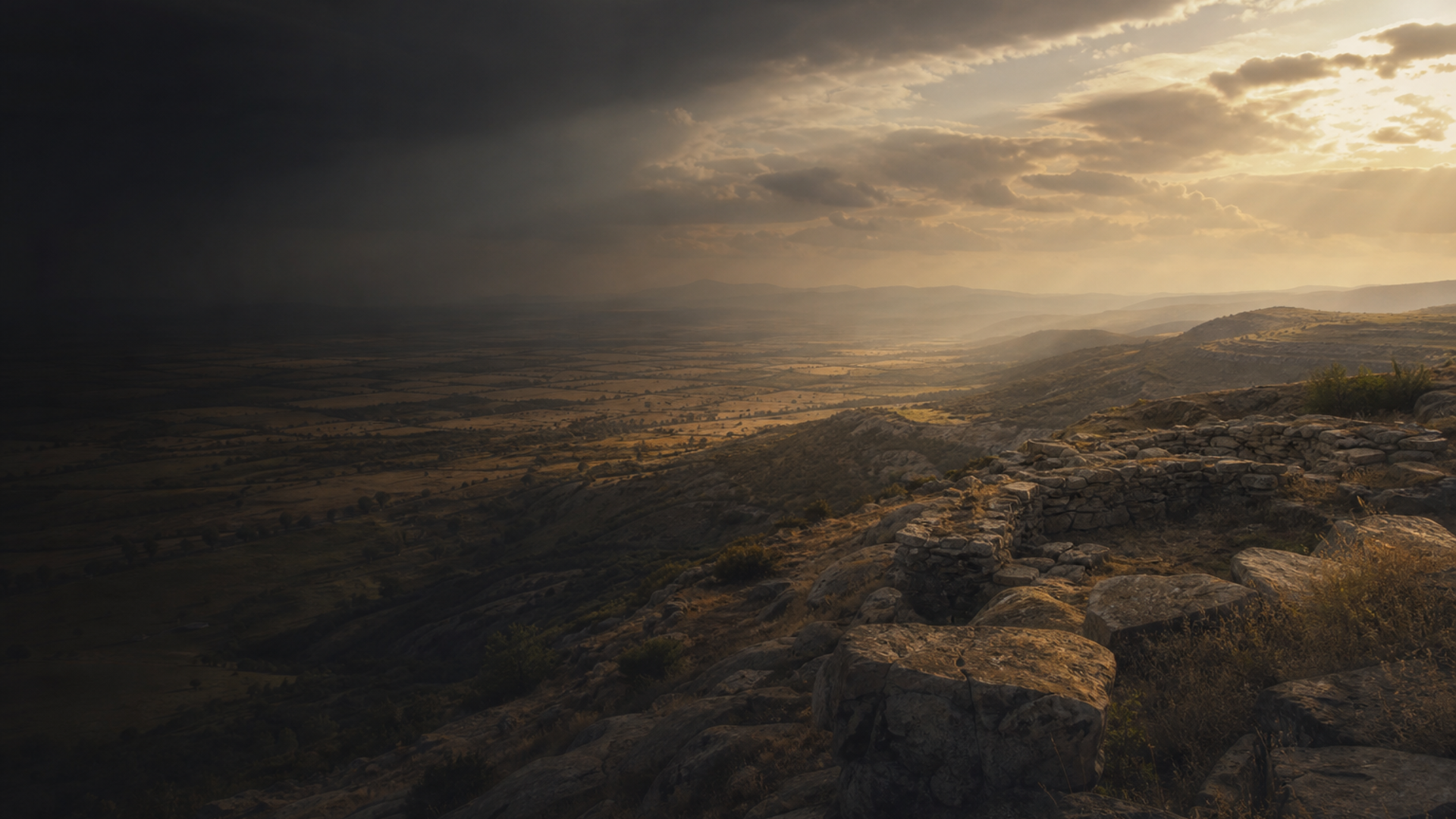
A lone Early–Middle Bronze Age individual links local archaeology with ancient DNA

3000 CE - 1300 BCE
Bulgaria (Kapitan Andreevo, South)
Desplázate para começar
Capítulo I

A História

Comprender la cultura Bronze Age Echoes of Kapitan Andreevo

Archaeological finds from Kapitan Andreevo, Bulgaria (3000–1300 BCE) paired with a single ancient genome (mtDNA J) hint at population continuity and mobility in Early–Middle Bronze Age Bulgaria. Conclusions are preliminary due to the small sample size.

Time Period

3000–1300 BCE

Region

Bulgaria (Kapitan Andreevo, South)

Common Y-DNA

Undetermined (limited data)

Common mtDNA

J (1 sample)

Capítulo II

Cronologia

Momentos-chave da história desta cultura

2500 BCE

Bronze Age consolidation in Bulgaria

Archaeological record shows expanding metalwork, varied burial rites, and growing settlements—features characteristic of the Early to Middle Bronze Age relevant to Kapitan Andreevo.

Capítulo III

Origins & Emergence

Bulgaria's Early to Middle Bronze Age (roughly 3000–1300 BCE) is a landscape of shifting horizons: tell mounds, copper-smith workshops, and cemetery clusters mark a dynamic patchwork of communities. At sites along the southeastern borderlands, including Kapitan Andreevo (South Bulgaria), archaeological layers record intensified metallurgy, changing burial rites, and growing long-distance exchange. Material culture — pottery styles, metal forms, and settlement patterns — suggests both local continuity from late Neolithic and Chalcolithic foundations and the influx of new ideas and people.

Archaeological data indicates regional diversity rather than a single unified culture. Fortified hilltops sit alongside open settlements; elite burials occasionally contain rich metalwork while nearby graves are modest. This mixture implies social differentiation emerging over centuries. Limited evidence suggests contact across the Balkans and into the Aegean and Carpathian zones, visible in traded bronze and stylistic parallels.

Given the single genetic sample from Kapitan Andreevo, origins are best framed as provisional: the archaeological record provides a detailed backdrop of technological and social change, while the lone genome offers a tentative genetic snapshot that must be integrated cautiously into broader regional narratives.

  • 3000–1300 BCE marked by increased metallurgy and social complexity
  • Kapitan Andreevo sits on a crossroads of local and long-distance exchange
  • Archaeology shows regional diversity and emerging social hierarchy
Capítulo IV

Daily Life & Society

Everyday life in Early–Middle Bronze Age Bulgaria unfolded in intimate, tactile terms: homes built of timber and daub, storage pits for cereals, and hearths where food and craft intersected. Excavations at contemporary Bulgarian sites reveal pottery for cooking and storage, loom weights suggesting textile production, and slag and crucible fragments attesting to on-site metalworking. These finds paint a picture of households engaged in mixed farming, animal husbandry, and increasingly specialized crafts.

Communal activities likely revolved around cyclical agricultural tasks and seasonal gatherings that reinforced alliances and exchange. Cemeteries and funerary offerings show variability in status; some individuals were interred with bronze tools or ornaments, while others received humble burials, indicating social differentiation. Painted ceramics and personal adornment suggest identity markers—local styles communicating kinship, local affiliation, or craft lineage.

Landscape use combined small villages, possible seasonal camps, and strategic hillforts. Roads of trade were not paved but visible in the flow of goods: copper and tin for bronze, finished metal artifacts, and exotic materials traded across the Balkans. In this world, technological change—especially metallurgy—reshaped daily rhythms and social prestige.

  • Household economies: farming, herding, textile weaving, and metalworking
  • Burial variability reflects emerging social ranking
Capítulo V

Genetic Profile

The genetic evidence from the Bulgaria_EBA_MBA grouping currently rests on a single sampled individual from Kapitan Andreevo. That genome carries mitochondrial haplogroup J, a lineage found across Neolithic and Bronze Age Europe and the Near East. mtDNA J can indicate maternal connections that span broad geographic networks, but a single maternal lineage cannot capture the population's full ancestry.

Archaeogenetic patterns across the Balkans often show a mosaic inheritance: Neolithic farming ancestry, steppe-related gene flow in the Bronze Age, and later regional admixture. For Bulgaria in the Early–Middle Bronze Age, archaeological signals of new technologies and exchanges are consistent with the possibility of gene flow from neighboring regions, but with one sample we cannot quantify proportions or directions. The absence of robust Y-DNA data here prevents inferences about paternal line continuity or social patrilineality.

Given the sample count of one, any genetic interpretation is highly provisional. This individual’s mtDNA J provides a valuable but narrow window: it aligns with broader patterns of mobility and connectedness in Bronze Age Europe but should be integrated cautiously alongside archaeological context. Increasing the sample size from Kapitan Andreevo and other contemporaneous sites is essential to resolve population structure and migration hypotheses.

  • mtDNA J present in the single Kapitan Andreevo sample
  • Conclusions are provisional: n=1 means limited population inference
Capítulo VI

Legacy & Modern Connections

The material and genetic echoes of Early–Middle Bronze Age Bulgaria thread into the long tapestry of the Balkans. Technological advances—especially in bronze-working—and expanding trade networks set foundations for later cultural formations in the region. While modern populations are shaped by millennia of additional migrations and admixture, ancient lineages like mtDNA J remind us of deep maternal continuities that cross time and geography.

Archaeology provides tangible links: pottery motifs, metal types, and settlement patterns that resonate in later Thracian and Balkan traditions. Genetics offers another layer, revealing potential ancestral strands; yet with only a single genome from Kapitan Andreevo, the connection to present-day Bulgarians or neighboring peoples must remain tentative. Future integrated studies combining more genomes, isotopes, and fine-grained archaeological data will clarify which aspects of Bronze Age lifeways persisted and which were transformed.

  • Bronze-age metallurgy and exchange shaped later Balkan cultural trajectories
  • Single ancient mtDNA hints at deep maternal ties, but broader sampling is needed
Com IA

Assistente de IA

Haz preguntas sobre la cultura Bronze Age Echoes of Kapitan Andreevo

Assistente de IA por DNAGENICS

Desbloquear esta função
Pregunta sobre la cultura Bronze Age Echoes of Kapitan Andreevo. El asistente con IA puede explicar hallazgos genéticos, contexto histórico, pruebas arqueológicas y conexiones modernas, con sus límites de interpretación.
Exemplo de análise com IA

La cultura Bronze Age Echoes of Kapitan Andreevo representa un capítulo de la historia humana...

A análise genética permite estudar semelhanças com populações anteriores e possíveis adaptações. As amostras de DNA antigo fornecem informações para investigar padrões migratórios e relações entre populações, com limites que dependem do estudo e do contexto arqueológico.

Esta é uma antevisão da análise com IA. Aceder ao assistente completo para explorar informações sobre:

  • Composição e similaridade genética
  • Padrões migratórios e origens
  • Vida cotidiana e práticas culturais
  • Contexto genético moderno

Explore mais culturas antigas

Descubra a história de civilizações de diferentes partes do mundo antigo