A preparar o relatório

A carregar as informações e as referências disponíveis

Consultando el registro arqueológico...

Recopilando registros antiguos

Saltar para o conteúdo principal
Caucasus Lowlands, Late Neolithic
Cultura de destaque

Caucasus Lowlands, Late Neolithic

Two maternal lineages glimpsed at Zeyem Chaj and Polutepe (5730–5375 BCE)

5730 CE - 5375 BCE
Azerbaijan, Caucasus lowlands
Desplázate para começar
Capítulo I

A História

Comprender la cultura Caucasus Lowlands, Late Neolithic

Archaeogenetic and archaeological evidence from two Late Neolithic burials in Azerbaijan (Zeyem Chaj / Mentesh Tepe and Polutepe) dated 5730–5375 BCE reveals mtDNA lineages U7 and H. Limited samples make conclusions provisional but they hint at Near Eastern and West Eurasian connections.

Time Period

5730–5375 BCE (Late Neolithic)

Region

Azerbaijan, Caucasus lowlands

Common Y-DNA

Not determined / limited data

Common mtDNA

U7 (1 sample), H (1 sample)

Capítulo II

Cronologia

Momentos-chave da história desta cultura

5700 BCE

Late Neolithic occupation documented

Radiocarbon-dated burials at Zeyem Chaj / Mentesh Tepe and Polutepe date to c. 5730–5375 BCE, indicating Late Neolithic occupation of Azerbaijan lowlands.

Capítulo III

Origins & Emergence

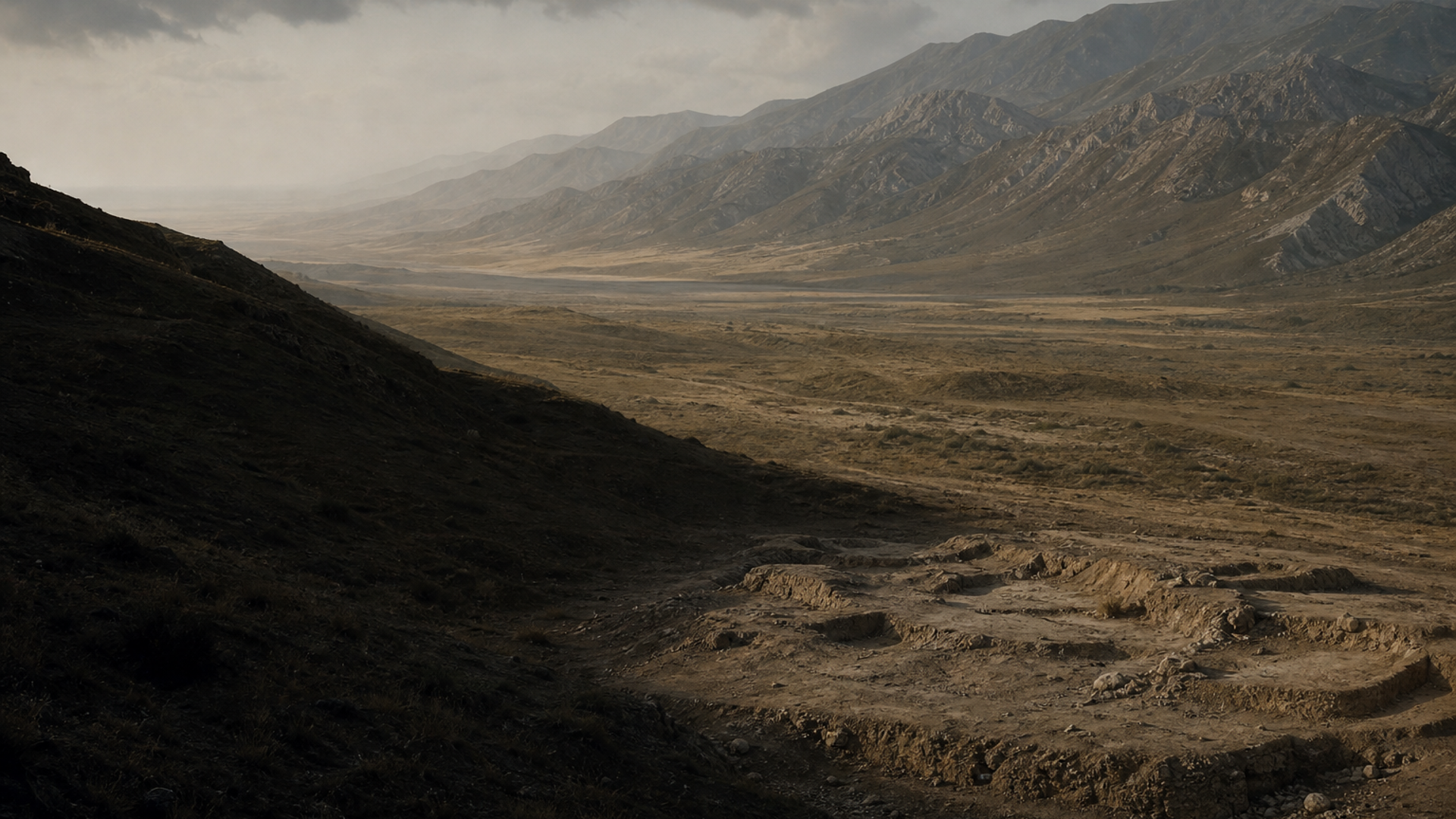
In the twilight of the sixth millennium BCE the flatlands of the eastern Caucasus hosted small, rooted communities whose traces now survive as pottery shards, hearths and buried individuals. Archaeological data indicates occupation in sites such as Zeyem Chaj (associated with Mentesh Tepe) and Polutepe near Uchtepe village in Jalilabad district, Azerbaijan. Radiocarbon dates for the sampled individuals fall between 5730 and 5375 BCE, placing them in the regional Late Neolithic horizon when farming, herding and local networks of exchange were intensifying.

Limited evidence suggests these communities were part of a broader tapestry of Neolithic cultures stretching from the South Caucasus into the Near East. Material culture and settlement patterns in the lowlands reflect adaptations to riverine and steppe-edge environments—fertile soils for cultivation and pastures for stock. While precise cultural attribution remains cautious, the combined archaeological and genetic glimpses indicate both local continuity and connections beyond the immediate landscape. Given the small sample size (two genomes), origins should be treated as provisional: these individuals provide hints, not a complete picture, of demographic processes shaping the Caucasus Lowlands during the Late Neolithic.

  • Radiocarbon span: 5730–5375 BCE
  • Sites: Zeyem Chaj / Mentesh Tepe; Polutepe (Uchtepe village)
  • Evidence indicates farming-herding lifeways with regional connections
Capítulo IV

Daily Life & Society

The everyday world of Late Neolithic inhabitants in the Azerbaijan lowlands can be evoked from subtle traces: hearths warm and smoked, broken pottery mended and reused, and animals kept close to homesteads. Archaeological data indicates small settlements where people tended cereals and pulses and managed domestic animals—sheep, goats and cattle are probable, reflecting Neolithic economies across the Caucasus and adjacent Near East. Stone tools, grinding stones and ceramic fragments recovered at nearby sites suggest food processing, textile work and household craft activities.

Social life likely blended kinship ties with seasonal rhythms: planting, harvest and pasture movement. Burials from these sites are important touchstones; they reflect community attention to the dead and offer the genetic material that connects bodies to broader population histories. Yet many social details—hierarchies, religious practices, and the full extent of exchange networks—remain opaque. Archaeobotanical and zooarchaeological data are still limited for these exact sites, so reconstructions combine local finds with broader regional patterns to build a plausible portrait of daily life.

  • Mixed farming and animal husbandry inferred from regional parallels
  • Household crafts and food processing implied by tools and ceramics
Capítulo V

Genetic Profile

Ancient DNA recovered from two individuals dated between 5730 and 5375 BCE provides a narrow but evocative genetic window. Maternal lineages present are mtDNA U7 in one individual and mtDNA H in the other. U7 is today associated with Near Eastern and South Caucasus populations and has been observed in some ancient individuals from western Asia, suggesting connections or ancestry components linked to Near Eastern gene pools. H is a broadly distributed West Eurasian lineage common in Europe and parts of the Near East.

These mtDNA signals hint at a mixed maternal heritage in the Caucasus lowlands, reflecting interaction zones where Near Eastern and West Eurasian ancestries meet. Crucially, no Y-chromosome haplogroups are reported for these samples, so paternal lineage structure remains unknown. With only two genomes, any demographic inference is preliminary: small-sample bias is a major caveat. Nonetheless, when integrated with archaeological context, these genetic results support a picture of Late Neolithic communities that were locally rooted but connected through networks of movement and exchange across the Caucasus and into neighboring regions. Future sampling across more burials and sites will be necessary to test whether U7 and H were typical in the region or represent isolated maternal lines.

  • mtDNA detected: U7 (1), H (1)
  • No Y‑DNA reported; paternal structure remains unresolved
Capítulo VI

Legacy & Modern Connections

The genetic and archaeological fragments from Zeyem Chaj and Polutepe contribute to a longer narrative: the Caucasus as a perennial crossroads. Maternal lineages such as U7 and H observed here resonate with modern genetic diversity in the South Caucasus and the Near East, suggesting threads of continuity and admixture that stretch into later millennia. Archaeologically, the Late Neolithic occupation of the lowlands set foundations for continued cultivation, herding and interregional contact.

However, any claims of direct descent from these two individuals to modern groups must be tentative. The sample is very small and regional population dynamics over five thousand years include migrations, expansions and replacements. Still, these remains serve as crucial anchors—each genome a filament in the tapestry—helping scientists trace how ancient communities contributed to the genetic landscape of Azerbaijan and neighboring regions. Future, broader ancient DNA sampling will clarify the scale and direction of these connections.

  • Signals of Near Eastern and West Eurasian maternal ancestry in the lowlands
  • Findings are preliminary; larger ancient DNA datasets needed for continuity claims
Com IA

Assistente de IA

Haz preguntas sobre la cultura Caucasus Lowlands, Late Neolithic

Assistente de IA por DNAGENICS

Desbloquear esta função
Pregunta sobre la cultura Caucasus Lowlands, Late Neolithic. El asistente con IA puede explicar hallazgos genéticos, contexto histórico, pruebas arqueológicas y conexiones modernas, con sus límites de interpretación.
Exemplo de análise com IA

La cultura Caucasus Lowlands, Late Neolithic representa un capítulo de la historia humana...

A análise genética permite estudar semelhanças com populações anteriores e possíveis adaptações. As amostras de DNA antigo fornecem informações para investigar padrões migratórios e relações entre populações, com limites que dependem do estudo e do contexto arqueológico.

Esta é uma antevisão da análise com IA. Aceder ao assistente completo para explorar informações sobre:

  • Composição e similaridade genética
  • Padrões migratórios e origens
  • Vida cotidiana e práticas culturais
  • Contexto genético moderno

Explore mais culturas antigas

Descubra a história de civilizações de diferentes partes do mundo antigo