A preparar o relatório

A carregar as informações e as referências disponíveis

Consultando el registro arqueológico...

Recopilando registros antiguos

Saltar para o conteúdo principal
Celts: Echoes of Iron and Riverine Stone
Cultura de destaque

Celts: Echoes of Iron and Riverine Stone

A cinematic arc from hillfort ramparts to genomes — tracing Celtic lifeways across Europe

7739 BCE - 1300800 BCE
British Isles & Western–Central Europe (UK, Ireland, France, Germany, Czech lands, Central Europe)
14 Amostras antigas
Desplázate para começar
Capítulo I

A História

Comprender la cultura Celts: Echoes of Iron and Riverine Stone

Archaeological and genetic evidence ties Iron Age La Tène and Hallstatt landscapes across the British Isles and continental Europe to a diverse ancestry profile dominated by Y haplogroups R and I and mtDNA H, U, K, J, T. This synthesis connects sites from Yorkshire to Bessan with population dynamics over millennia.

Time Period

c. 7739 BCE–1300 CE (dominant Iron Age: c. 800 BCE–100 CE)

Region

British Isles & Western–Central Europe (UK, Ireland, France, Germany, Czech lands, Central Europe)

Common Y-DNA

R (predominant), I, G, CTS, F

Common mtDNA

H, U, K, J, T

Capítulo II

Cronologia

Momentos-chave da história desta cultura

2500 BCE

Bell Beaker expansions impact Western Europe

Bell Beaker-related movements (c. 2500 BCE) introduce new material styles and steppe-related ancestry components across Britain and continental Europe.

800 BCE

Hallstatt horizon emerges

The Hallstatt cultural complex (c. 800–450 BCE) crystallizes elite craft traditions and hillfort networks across Central Europe.

450 BCE

La Tène artistic expansion

La Tène styles spread across rivers and coasts, visible in metalwork and settlement patterns; local adoption creates regional variants.

43 CE

Roman contact and transformation

Roman incursions and trade reshape political landscapes in parts of Britain and Gaul, leaving complex archaeological and genetic signatures.

500 CE

Post-Roman regional continuity

After Roman withdrawal, local traditions persist and adapt; genetic continuity is regionally variable but detectable in many areas.

Capítulo III

Origins & Emergence

The label "Celtic" bundles a long tapestry of peoples, languages and material traditions rather than a single origin event. Archaeological hallmarks commonly associated with Celtic identity—such as La Tène-style art, fortified hilltop settlements, and complex metalwork—emerge most clearly in Central Europe during the Hallstatt (c. 800–450 BCE) and La Tène (c. 450–1 BCE) periods. Yet the deep-time genetic record included here stretches from Mesolithic–Neolithic ancestry (earliest sample c. 7739 BCE) through Bronze and Iron Age transformations.

Sites cited in this dataset—Driffield Terrace (Yorkshire), Ballynahatty and Annagh (Ireland), Asperg "Grafenbuehl" (Baden-Württemberg), Le Buissonnet (Hauts-de-France) and La Monédière/Bessan (Occitanie)—show overlapping material traditions and long-term regional continuity. Archaeological data indicates that the material culture we call La Tène spread via networks of trade, craft specialists, and mobility across rivers and alpine passes rather than by a single mass migration. Limited evidence suggests local adoption and adaptation were common: in the British Isles, for example, La Tène motifs appear alongside longstanding Bronze Age and Iron Age local traditions.

Where genetics are robust (large sample sizes across regions), we observe admixture patterns consistent with multiple ancestral layers: Mesolithic, Neolithic farming, Bronze Age steppe-related influxes, and Iron Age regional dynamics. These strands together created the demographic substrate on which La Tène cultural forms developed and spread.

  • La Tène and Hallstatt material traditions central to archaeological ‘Celtic’ identity
  • Dataset spans deep prehistory (Mesolithic) to medieval centuries, reflecting cultural continuity and change
  • Spread of La Tène traits likely involved networks and acculturation, not a single migration
Capítulo IV

Daily Life & Society

Life in communities labeled Celtic varied with landscape: river plains, coastal harbors, and upland hillforts each shaped diet, craft and social organization. Excavations at hillforts and settlements (for instance, sites in East Yorkshire, Derbyshire and numerous French oppida) reveal timber roundhouses, iron tools, and craft debris—evidence of ironworking, textile production and long-distance exchange.

Burial practices are heterogeneous: richly furnished burials in some Hallstatt and La Tène contexts contrast with modest inhumations and cremations elsewhere. Sites such as Ballynahatty (County Down) and Driffield Terrace (Yorkshire) show regional mortuary diversity, indicating varied social hierarchies and ritual practice. Agricultural staples—wheat, barley—and pastoral economies dominated, while imported luxury goods attest to connectivity across river corridors and coasts.

Archaeobotanical and zooarchaeological data indicate seasonal rhythms of farming and herding, while artefact distributions suggest specialized craftscapes (metalworkers clustered near ore sources in central Europe; coastal communities focused on salt and maritime exchange). Ethnographic analogy and historic linguistics help reconstruct probable social roles, but archaeological evidence cautions against a single, uniform picture of Celtic society.

  • Settlement types range from coastal sites (Bessan region) to upland hillforts and lowland farms
  • Diverse burial customs and craft specialization point to variable social hierarchies
Capítulo V

Genetic Profile

With 1,200 samples spanning 7739 BCE–1300 CE, the genetic portrait associated with 'Celtic' archaeological contexts is rich and regionally structured. Y-chromosome counts in this dataset show dominance of broad R-lineages (302 samples) and substantial representation of haplogroup I (184 samples), with smaller counts of G, CTS, and F. These patterns align with a Western European skew toward R lineages that rose in frequency after the Bronze Age, alongside enduring local lineages (I) that reflect Mesolithic and Neolithic continuity.

Mitochondrial diversity is similarly mixed: H (246), U (192), K (172), J (115) and T (81) are common, reflecting maternal lineages widespread in Europe since the Neolithic and Bronze Age. Genomic analyses indicate that Iron Age populations labeled Celtic were neither genetically homogeneous nor simply recent arrivals; instead, they show layered ancestry—Mesolithic hunter-gatherers, Neolithic farmers, Bronze Age steppe-related influxes, and regional Iron Age admixture.

Regional nuance matters: western Atlantic margins (Ireland, western Britain) often retain higher proportions of local ancestry components, while parts of continental central Europe show stronger Bronze Age steppe-linked signals. Because this dataset is large, many population-scale inferences are robust, but local complexity and temporal changes mean that genetic signatures must be interpreted alongside archaeological context. Limited or uneven sampling in some micro-regions can still obscure fine-scale dynamics.

  • Large sample (n=1,200) shows predominant Y haplogroup R with significant I contribution
  • mtDNA diversity (H, U, K, J, T) reflects layered maternal ancestries from Neolithic onward
Capítulo VI

Legacy & Modern Connections

The material and genetic legacies of people associated with La Tène and Hallstatt horizons persist in modern populations across the British Isles and continental Europe, but not as a singular ‘‘Celtic gene.’’ Instead, living communities inherit a palimpsest of ancestries formed over millennia. Place names, artistic motifs, and linguistic traces reflect cultural continuities, while genomes reveal multiple ancestral inputs that correlate with archaeological transitions such as the Bell Beaker and Bronze Age movements.
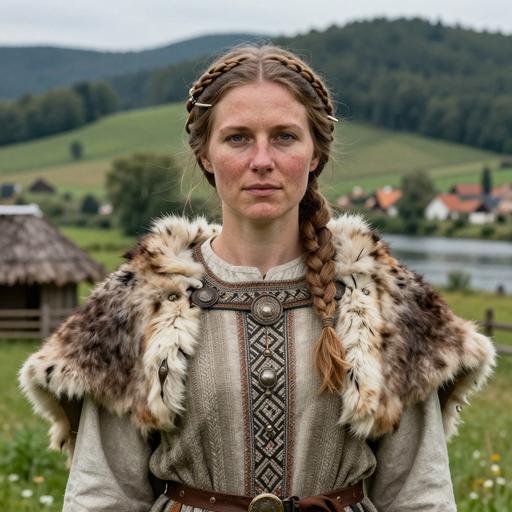
Modern genetic affinities to these ancient populations are regionally structured: communities in parts of Ireland, western Britain and Brittany show higher continuity with local Iron Age genomes, whereas central and eastern European populations bear signals of additional Bronze Age and later contacts. Archaeogenetics thus offers a bridge between evocative cultural labels and concrete demographic histories—illuminating continuity, migration and cultural transformation without reducing identity to a single genetic signature.
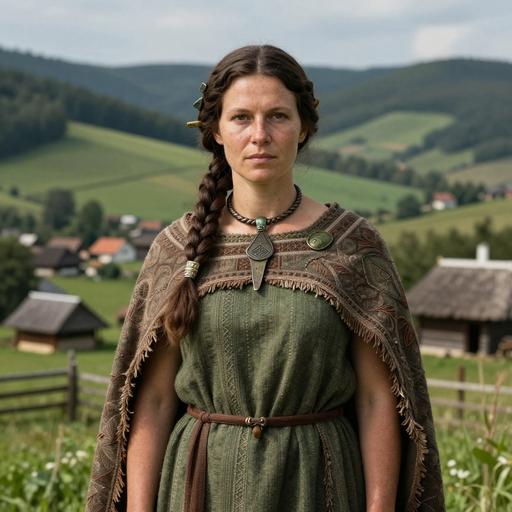
  • No single ‘Celtic’ genotype—modern populations inherit layered ancestries
  • Archaeology and DNA together clarify regional continuities and episodes of migration
Capítulo VII

Catálogo de amostras

14 amostras de DNA antigo associadas à cultura Celts: Echoes of Iron and Riverine Stone fornecem dados de referência sobre as populações desse período.

14 / 14 amostras
Retrato Mostrar País Época Data Cultura Sexo DNA-Y ADNmt
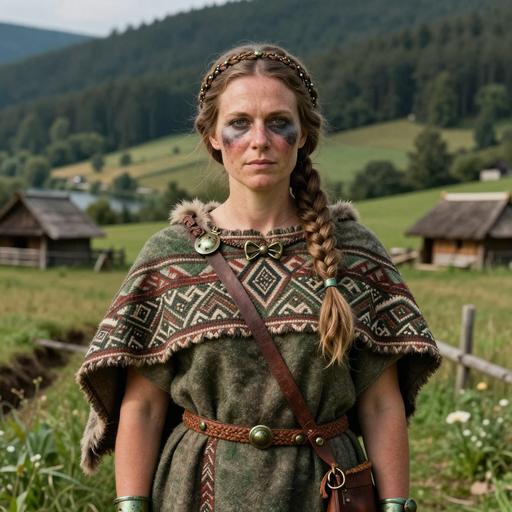
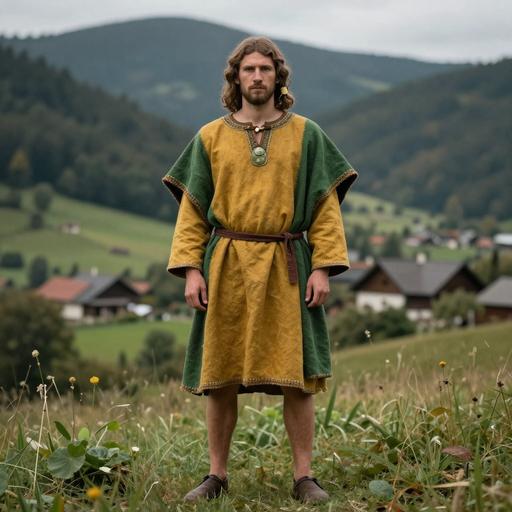
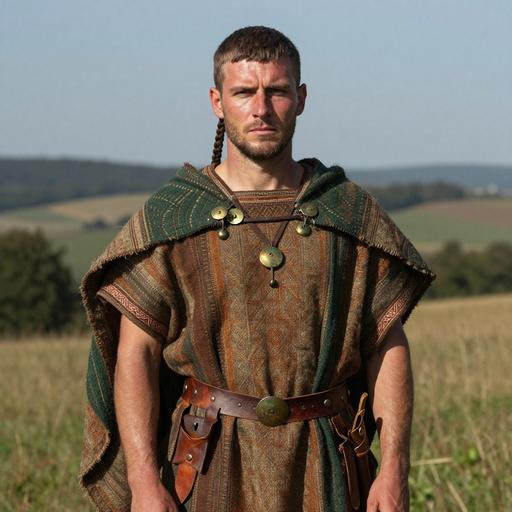
Retrato reconstruído de Hallstatt individual, Czech Republic
Hallstatt individual, Czech Republic
Czech Republic Czech_IA_Hallstatt 800-550 BCE Celtic F - U5a2b
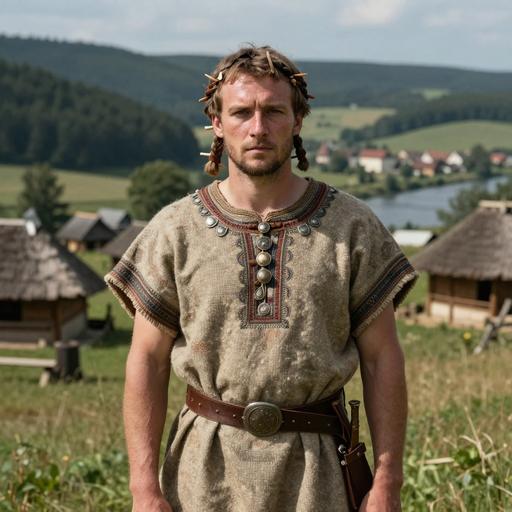
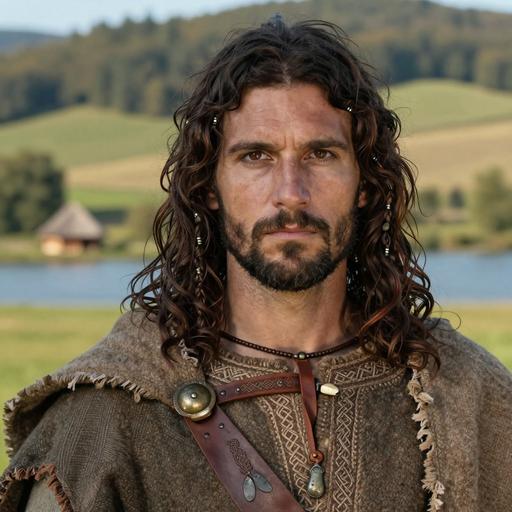
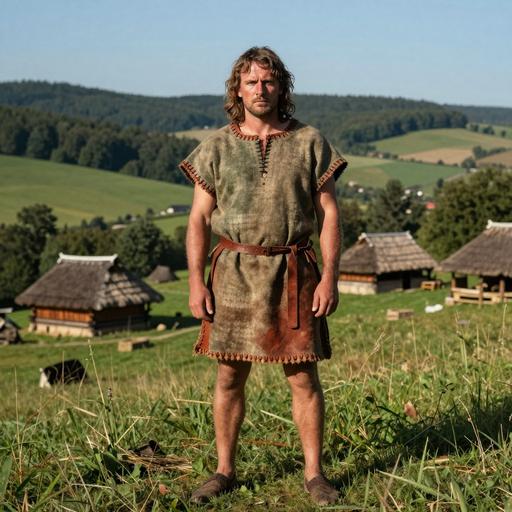
Retrato reconstruído de Hallstatt individual, Czech Republic
Hallstatt individual, Czech Republic
Czech Republic Czech_IA_Hallstatt 800-550 BCE Celtic M R-Y39302 J1c1
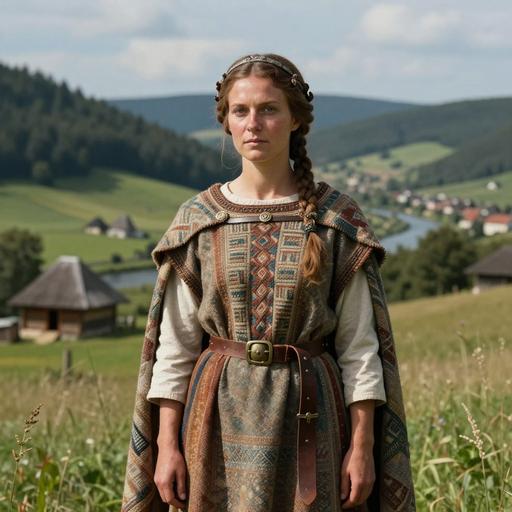
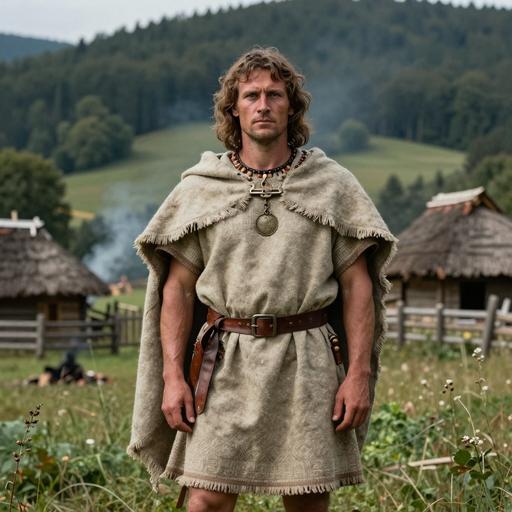
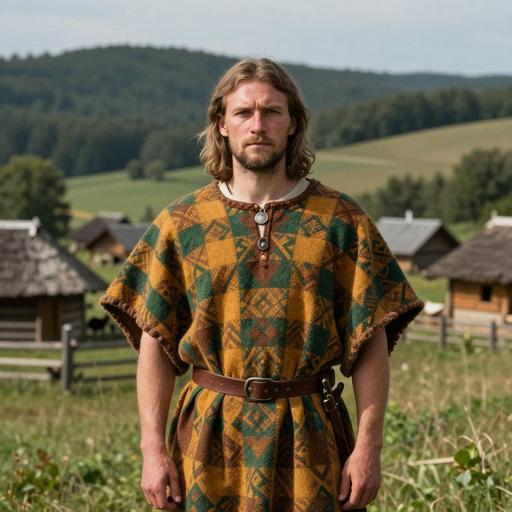
Retrato reconstruído de Hallstatt individual, Czech Republic
Hallstatt individual, Czech Republic
Czech Republic Czech_IA_Hallstatt 800-550 BCE Celtic F - H7
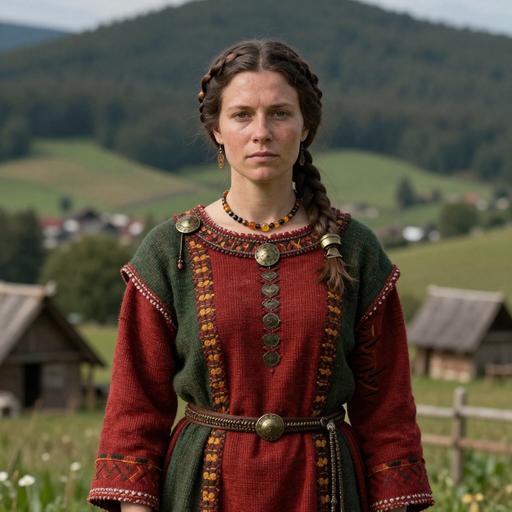
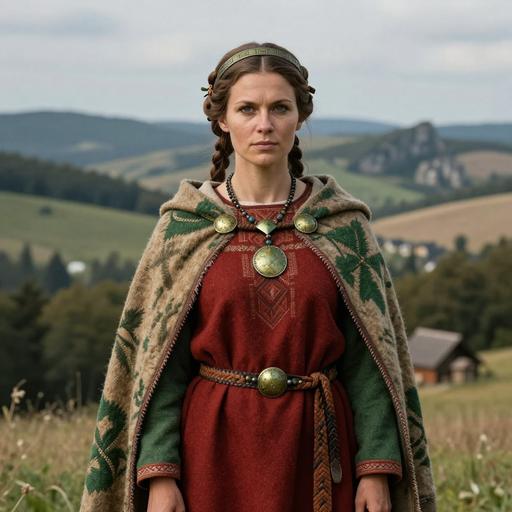
Retrato reconstruído de Hallstatt individual, Czech Republic
Hallstatt individual, Czech Republic
Czech Republic Czech_IA_Hallstatt 771-541 calBCE (2490±20 BP, PSUAMS-10022) Celtic M G-CTS2488 H3
Retrato reconstruído de Hallstatt individual, Czech Republic
Hallstatt individual, Czech Republic
Czech Republic Czech_IA_Hallstatt 909 BCE Celtic M R-DF103 H6a1a
Retrato reconstruído de Hallstatt individual, Czech Republic
Hallstatt individual, Czech Republic
Czech Republic Czech_IA_Hallstatt 771-543 calBCE (2495±20 BP, PSUAMS-10021) Celtic F - U5b1b1+@16192
Retrato reconstruído de Hallstatt individual, Czech Republic
Hallstatt individual, Czech Republic
Czech Republic Czech_IA_Hallstatt 753 BCE Celtic F - HV0-a
Retrato reconstruído de Hallstatt individual, Czech Republic
Hallstatt individual, Czech Republic
Czech Republic Czech_IA_Hallstatt 800-550 BCE Celtic M I-L1229 U5b1b1+@16192
Retrato reconstruído de Hallstatt individual, Czech Republic
Hallstatt individual, Czech Republic
Czech Republic Czech_IA_Hallstatt 800-550 BCE Celtic M R-P297 I4a
Retrato reconstruído de Hallstatt individual, Czech Republic
Hallstatt individual, Czech Republic
Czech Republic Czech_IA_Hallstatt 800-550 BCE Celtic F - W6a
Com IA

Assistente de IA

Haz preguntas sobre la cultura Celts: Echoes of Iron and Riverine Stone

Assistente de IA por DNAGENICS

Desbloquear esta função
Pregunta sobre la cultura Celts: Echoes of Iron and Riverine Stone. El asistente con IA puede explicar hallazgos genéticos, contexto histórico, pruebas arqueológicas y conexiones modernas, con sus límites de interpretación.
Exemplo de análise com IA

La cultura Celts: Echoes of Iron and Riverine Stone representa un capítulo de la historia humana...

A análise genética permite estudar semelhanças com populações anteriores e possíveis adaptações. As amostras de DNA antigo fornecem informações para investigar padrões migratórios e relações entre populações, com limites que dependem do estudo e do contexto arqueológico.

Esta é uma antevisão da análise com IA. Aceder ao assistente completo para explorar informações sobre:

  • Composição e similaridade genética
  • Padrões migratórios e origens
  • Vida cotidiana e práticas culturais
  • Contexto genético moderno

Explore mais culturas antigas

Descubra a história de civilizações de diferentes partes do mundo antigo