A preparar o relatório

A carregar as informações e as referências disponíveis

Consultando el registro arqueológico...

Recopilando registros antiguos

Saltar para o conteúdo principal
Dushan Dawn: Early Neolithic Guangxi
Cultura de destaque

Dushan Dawn: Early Neolithic Guangxi

A single ancient genome hints at life in Guangxi's Neolithic world (7025–6644 BCE)

7025 CE - 6644 BCE
Guangxi, southern China (Dushan)
Desplázate para começar
Capítulo I

A História

Comprender la cultura Dushan Dawn: Early Neolithic Guangxi

Single mtDNA B from Dushan, Guangxi (7025–6644 BCE) links Neolithic southern China archaeology to deep maternal lineages in East and Southeast Asia. Archaeological and genetic evidence is limited; results are preliminary but evocative.

Time Period

7025–6644 BCE (radiocarbon range)

Region

Guangxi, southern China (Dushan)

Common Y-DNA

Not reported (single male/female unassigned)

Common mtDNA

B

Capítulo II

Cronologia

Momentos-chave da história desta cultura

6920 BCE

Dated individual from Dushan

A human individual from Dushan, Guangxi is radiocarbon-dated to ~7025–6644 BCE and yields mtDNA haplogroup B, providing a rare genetic glimpse into early Neolithic Guangxi.

Capítulo III

Origins & Emergence

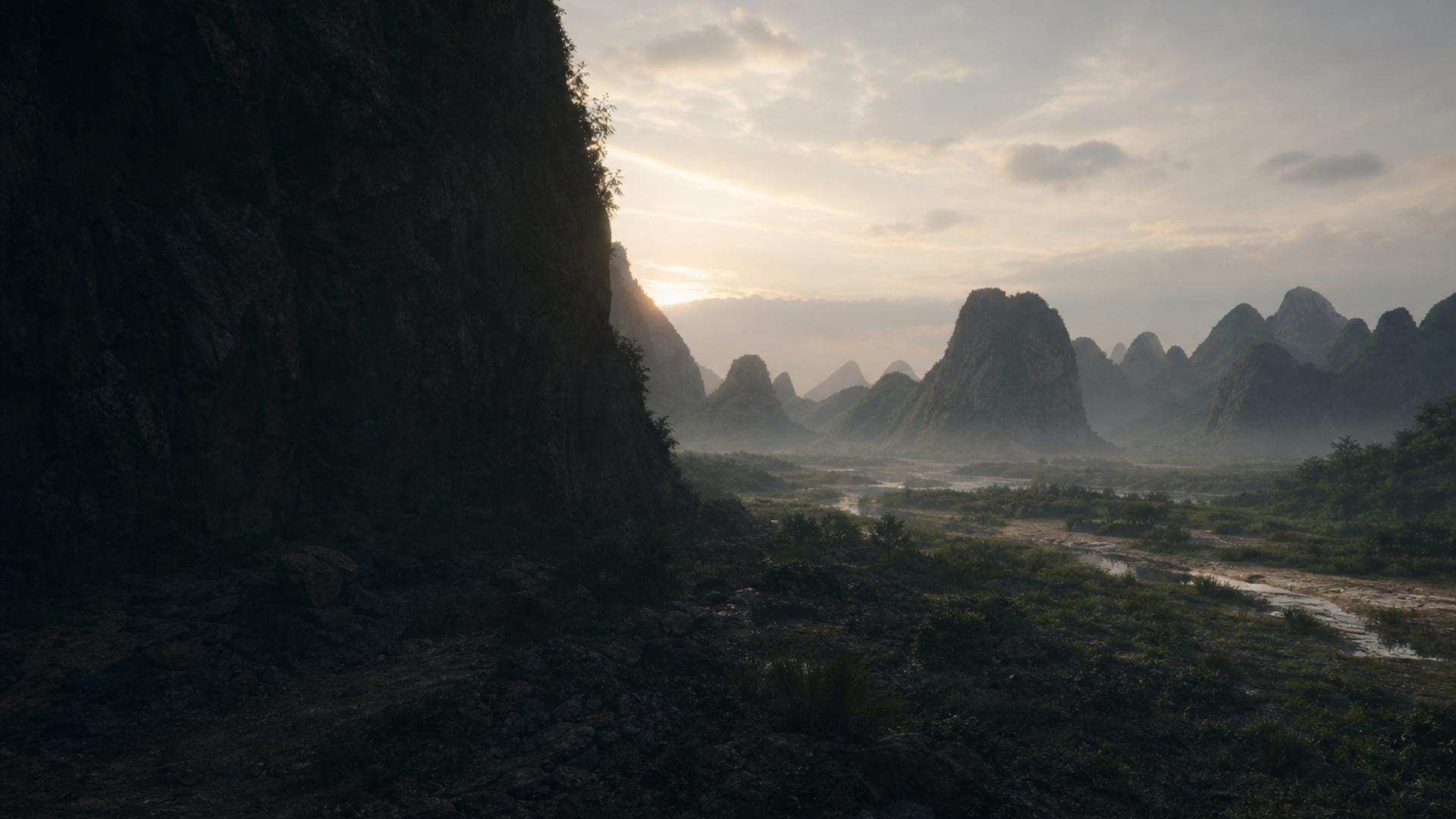
Along the limestone hills and river valleys of present-day Guangxi, the Dushan recovery represents an early chapter of Neolithic expansion in southern China. Radiocarbon dates associated with the genetic sample place human activity firmly between 7025 and 6644 BCE, a time when small, localized communities were experimenting with a mixed subsistence of wild resources and emerging cultivation. Archaeological data indicates pottery, ground stone tools, and features consistent with seasonal settlement, but preservation varies across loci.

Limited evidence suggests these groups occupied a landscape of karst caves, shallow riverine terraces and wetlands where early rice husbandry may have been practiced alongside foraging for riverine fish, mollusks and wild tubers. The material culture at Dushan fits within a broader Neolithic mosaic of southern China in which local traditions interacted with innovations spreading from the Yangtze basin and coastal regions.

While the single genetic sample cannot resolve migration routes, the Dushan context provides a snapshot of a community at the edge of agricultural dispersal and local adaptation. Archaeological interpretation remains provisional: more systematic excavation and additional directly dated samples will be required to clarify demographic and cultural trajectories.

  • Radiocarbon context: 7025–6644 BCE
  • Karst landscapes and riverine settlements
  • Evidence for mixed foraging and incipient cultivation
Capítulo IV

Daily Life & Society

The daily rhythms at Neolithic Dushan can be imagined through the imprint left on stone, pottery and faunal remains. Archaeological data indicates communities likely organized around seasonal resource rounds — tending small cultivated plots, exploiting riverine fisheries and collecting wild plants. Pottery fragments suggest storage and cooking technologies that enabled more sedentary lifeways, while polished stone adzes and ground implements point to woodworking and landscape modification.

Social life was probably flexible and locally structured. Features such as hearths, pit storage and small burial deposits (if present) imply household-level organization rather than large, hierarchical centers. Exchange of raw materials and decorative motifs across southern China is suggested by stylistic affinities in pottery and lithics, hinting at networks of interaction rather than mass migration.

Osteological and isotopic data from Guangxi sites more broadly (though not abundant at Dushan specifically) often indicate diets dominated by plant foods supplemented by freshwater protein. Seasonal mobility, kin-based households, and nuanced responses to a dynamic environment would have defined daily existence.

These reconstructions are provisional: the single ancient-genome sample offers a biological anchor but insufficient demographic resolution to reconstruct community structure with confidence.

  • Pottery and ground stone tools indicate sedentary practices
  • Diet likely mixed: early cultivation plus riverine foraging
Capítulo V

Genetic Profile

The genetic dataset from China_Guangxi_Dushan_N comprises a single individual, dated between 7025 and 6644 BCE, carrying mitochondrial haplogroup B. Haplogroup B is widespread across East Asia and Southeast Asia in both ancient and modern populations; it is frequently detected in coastal and inland groups and has been associated in broader studies with maternal lineages that participated in Holocene expansions.

Because only mtDNA is reported for this sample (with no common Y-DNA assigned), inferences are strictly maternal and limited in scope. Mitochondrial sequences can illuminate aspects of maternal continuity and population connectivity but cannot by themselves reveal sex-biased migration, genome-wide ancestry components, or fine-scale demographic events. Archaeogenomic comparisons elsewhere in southern China and Southeast Asia have shown a complex tapestry: local hunter-gatherer ancestry, incoming agricultural-associated lineages from the Yangtze and mainland Southeast Asia, and later movements. Whether the Dushan individual represents local continuity, a migrating group, or admixture among small local populations cannot be resolved from one mtDNA sample.

Given the sample count of one (well below 10), conclusions about population structure must be treated as preliminary. Additional whole-genome data, more mitochondrial genomes and contextual archaeological sampling are needed to connect this individual to broader Neolithic demographic processes.

  • mtDNA haplogroup B present in single individual
  • Single maternal genome → preliminary insights only
Capítulo VI

Legacy & Modern Connections

The Dushan genetic signal offers a poignant, if cautious, bridge between deep Neolithic lifeways in Guangxi and the genetic landscape of later East and Southeast Asian populations. Maternal lineages like mtDNA B persist in many modern groups across southern China and island Southeast Asia, suggesting threads of continuity in maternal ancestry across millennia.

However, the picture is far from complete. Archaeological continuity in material culture does not equate to unbroken genetic continuity, and migrations, admixture events and cultural diffusion have reshaped the region repeatedly. The Dushan sample underscores the value of integrating archaeology with ancient DNA: paired datasets can reveal how communities adapted, moved and exchanged ideas. Future sampling in Guangxi and adjacent regions will be key to transforming this evocative snapshot into a robust narrative of Neolithic transformation.

  • mtDNA B links broadly to maternal lineages in East and SE Asia
  • More samples needed to map continuity and admixture
Com IA

Assistente de IA

Haz preguntas sobre la cultura Dushan Dawn: Early Neolithic Guangxi

Assistente de IA por DNAGENICS

Desbloquear esta função
Pregunta sobre la cultura Dushan Dawn: Early Neolithic Guangxi. El asistente con IA puede explicar hallazgos genéticos, contexto histórico, pruebas arqueológicas y conexiones modernas, con sus límites de interpretación.
Exemplo de análise com IA

La cultura Dushan Dawn: Early Neolithic Guangxi representa un capítulo de la historia humana...

A análise genética permite estudar semelhanças com populações anteriores e possíveis adaptações. As amostras de DNA antigo fornecem informações para investigar padrões migratórios e relações entre populações, com limites que dependem do estudo e do contexto arqueológico.

Esta é uma antevisão da análise com IA. Aceder ao assistente completo para explorar informações sobre:

  • Composição e similaridade genética
  • Padrões migratórios e origens
  • Vida cotidiana e práticas culturais
  • Contexto genético moderno

Explore mais culturas antigas

Descubra a história de civilizações de diferentes partes do mundo antigo