A preparar o relatório

A carregar as informações e as referências disponíveis

Consultando el registro arqueológico...

Recopilando registros antiguos

Saltar para o conteúdo principal
Echoes at Dulan Wayan
Cultura de destaque

Echoes at Dulan Wayan

Medieval highland lives on the northeastern Tibetan edge, revealed by archaeology and 10 ancient genomes

605 CE - 884 CE
Dulan County, Reshui town, Qinghai, China
Desplázate para começar
Capítulo I

A História

Comprender la cultura Echoes at Dulan Wayan

Archaeological and genomic evidence from the Dulan Wayan reservoir (Dulan County, Qinghai) illuminates a 605–884 CE community on the Tibetan Plateau margin. Ten genomes reveal mainly East Asian maternal lineages and mixed paternal signals suggesting regional admixture over medieval trade networks.

Time Period

605–884 CE

Region

Dulan County, Reshui town, Qinghai, China

Common Y-DNA

O (2), N (1), R (1)

Common mtDNA

D (3), M (2), D4 (1), C4d (1), A21 (1)

Capítulo II

Cronologia

Momentos-chave da história desta cultura

605 CE

Earliest dated occupation at Dulan Wayan

Contextual and chronometric evidence places early occupation of the reservoir site around 605 CE, marking the start of the sampled horizon.

750 CE

Frontier exchange intensifies

Material affinities with Tang-period styles suggest increased contact and exchange across the plateau margin during the mid-8th century.

884 CE

Latest dated occupations in the sample set

The most recent dated contexts in the current assemblage fall near 884 CE, after which local dynamics require further study.

Capítulo III

Origins & Emergence

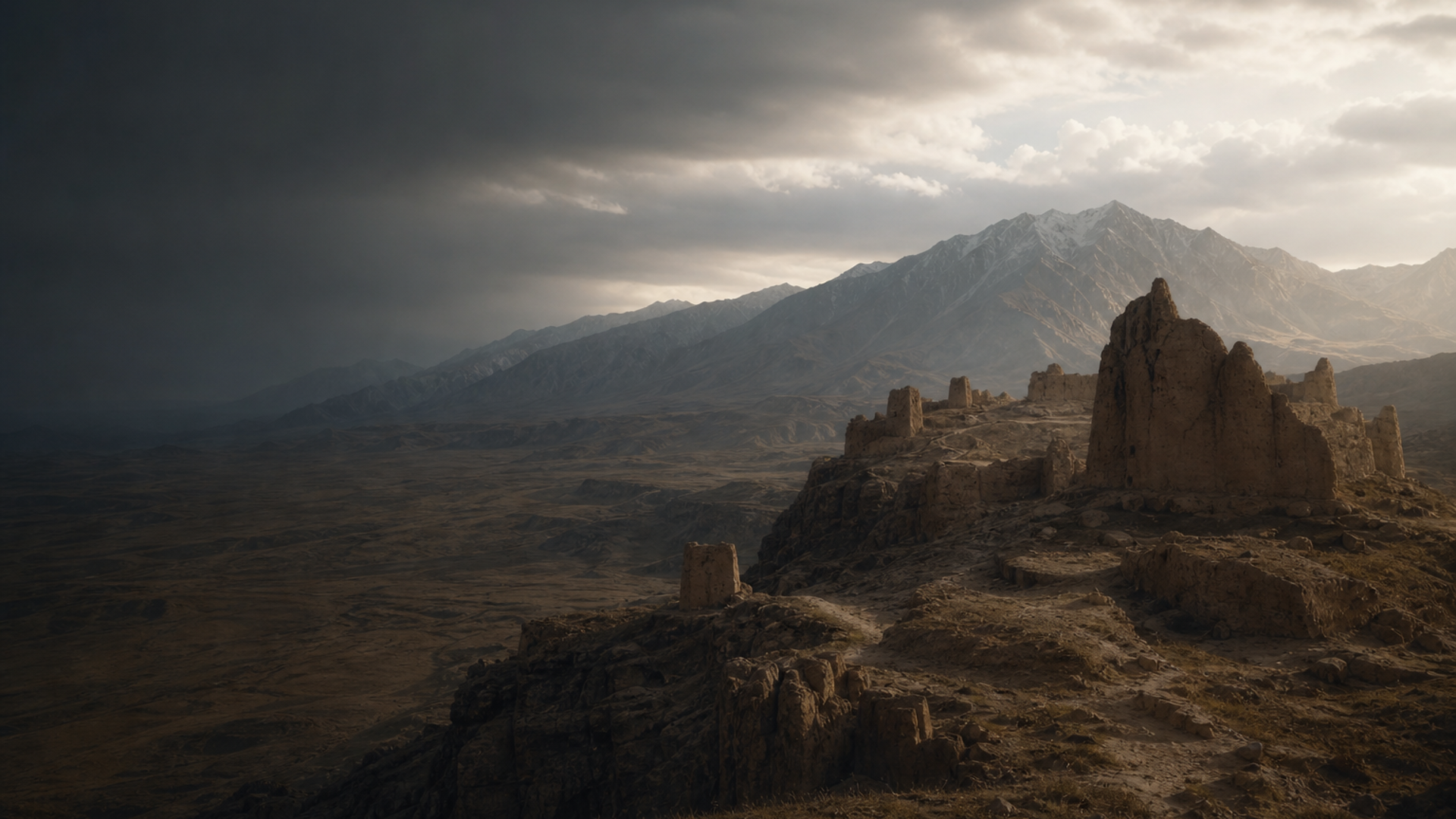
Rising like a panorama of wind-carved stone and irrigated terraces, the Dulan Wayan community occupied the northeastern margin of the Tibetan Plateau during the first centuries of the medieval era. Excavations at the Dulan Wayan reservoir site (Reshui town, Dulan County) produced stratified deposits and material culture dated to 605–884 CE by contextual and chronometric evidence. Archaeological data indicates a settlement horizon shaped by highland ecology: seasonal pasturing, irrigated agriculture in sheltered valleys, and localized craft production. Pottery styles and tool forms show affinities both with plateau traditions and with communities along the Hexi Corridor and the Tang frontier, suggesting cultural permeability rather than isolation.

Genetically, the assemblage reflects this borderland character. The ten ancient genomes sampled from graves at the reservoir demonstrate a predominance of East Asian maternal lineages (mtDNA haplogroups D and M) and a mixture of paternal markers (Y haplogroups O, N, and R). This constellation is consistent with an origin rooted in regional East Asian populations with episodic northern and western inputs. Limited sample size and uneven preservation mean these conclusions remain provisional; archaeogenetic results should be read alongside ongoing excavation and broader regional sampling to clarify migratory directions and the timing of admixture events.

  • Settlement dated 605–884 CE at Dulan Wayan reservoir (Reshui town)
  • Material culture shows plateau and frontier influences
  • Genetic picture indicates East Asian maternal continuity with mixed paternal inputs
Capítulo IV

Daily Life & Society

Archaeological deposits from the reservoir site paint a vivid portrait of everyday life on a highland border. Household zones and burial clusters suggest small, multi-family units tied to irrigation channels and seasonal pastures. Faunal remains indicate a mixed economy: caprine and bovine herding alongside cereal cultivation in valley plots. Tools and ornaments recovered in graves—simple metal fittings, glazed and unglazed ceramics, and worked bone—evoke the practical and ceremonial dimensions of a community negotiating both plateau demands and lowland connections.

Burial practices at Dulan Wayan reveal social gradations: some graves are modest and utilitarian, others include more elaborate offerings, hinting at differentiated status or age/sexed roles. Trade items and stylistic elements with Tang-era influence point to participation in wider exchange networks, whether through caravan routes or tributary interactions. Linguistic and cultural affiliations remain uncertain from material culture alone; here, genetics provides complementary insights into ancestry and mobility. Together, the evidence suggests resilient communities adapted to environmental constraints, maintaining local lifeways while engaging with broader medieval currents.

  • Mixed agropastoral economy with seasonal mobility
  • Burial variability indicates social differentiation and external connections
Capítulo V

Genetic Profile

Ten ancient genomes recovered from the Dulan Wayan reservoir site form the basis of the current genetic portrait. Maternal lineages are dominated by East Asian haplogroups: three individuals carry mtDNA D, two carry M, and singletons include D4, C4d, and A21. These maternal types are common across Northeast and East Asia and are frequently observed in highland and adjacent lowland groups, consistent with regional continuity of female-mediated ancestry.

Paternal diversity is more heterogeneous. Y-chromosome assignments include haplogroup O in two males (a lineage widespread among Sino-Tibetan and other East Asian populations), haplogroup N in one male (often associated with northern Eurasian groups), and haplogroup R in one male (a marker that can reflect western Eurasian or Central Asian influx). The presence of R and N alongside O suggests episodic male-mediated gene flow from northern and western directions into a predominantly East Asian genetic background.

Caveats are essential: with only ten genomes, statistical power is limited and sampling may not represent the full demographic complexity of the Dulan-Wayan Culture. Archaeological context and larger comparative datasets from neighboring plateau and corridor sites are required to test models of migration, patrilineal vs. matrilineal mobility, and the timing of admixture. Nonetheless, these early genetic results dovetail with archaeological indications of frontier contact and provide a framework for testing hypotheses about medieval highland population dynamics.

  • Maternal lineages dominated by East Asian mtDNA (D, M, D4, C4d, A21)
  • Paternal lineages show East Asian (O) with northern (N) and western (R) signals
Capítulo VI

Legacy & Modern Connections

The Dulan Wayan assemblage occupies a cinematic niche between plateau and plain: a community whose material and genetic traces suggest persistent local roots fused with episodic external influences. Modern populations in Qinghai and neighboring regions carry echoes of this mixed ancestry—East Asian maternal continuity combined with variable paternal inputs is a recurrent pattern in the region today. Yet direct lines of descent cannot be asserted from ten genomes alone; genetic continuity is plausible but must be demonstrated through denser temporal sampling and comparisons with modern genomes.

Archaeologically, Dulan Wayan contributes to a larger narrative of the medieval Tibetan edge as a dynamic contact zone. Genetically informed archaeology promises to reveal how trade, pastoral circuits, and political shifts—such as Tang-era frontier dynamics—shaped who lived, moved, and married in these highlands. Future work that integrates ancient DNA with isotopic mobility studies and continued excavation will refine how this community fits into the deep human tapestry of Qinghai and the broader plateau.

  • Signals suggest continuity with modern East Asian populations in Qinghai, but direct descent is not proven
  • Highlights the plateau margin as a long-term contact zone shaped by mobility and exchange
Com IA

Assistente de IA

Haz preguntas sobre la cultura Echoes at Dulan Wayan

Assistente de IA por DNAGENICS

Desbloquear esta função
Pregunta sobre la cultura Echoes at Dulan Wayan. El asistente con IA puede explicar hallazgos genéticos, contexto histórico, pruebas arqueológicas y conexiones modernas, con sus límites de interpretación.
Exemplo de análise com IA

La cultura Echoes at Dulan Wayan representa un capítulo de la historia humana...

A análise genética permite estudar semelhanças com populações anteriores e possíveis adaptações. As amostras de DNA antigo fornecem informações para investigar padrões migratórios e relações entre populações, com limites que dependem do estudo e do contexto arqueológico.

Esta é uma antevisão da análise com IA. Aceder ao assistente completo para explorar informações sobre:

  • Composição e similaridade genética
  • Padrões migratórios e origens
  • Vida cotidiana e práticas culturais
  • Contexto genético moderno

Explore mais culturas antigas

Descubra a história de civilizações de diferentes partes do mundo antigo