A preparar o relatório

A carregar as informações e as referências disponíveis

Consultando el registro arqueológico...

Recopilando registros antiguos

Saltar para o conteúdo principal
Echoes of West Byzantine Anatolia
Cultura de destaque

Echoes of West Byzantine Anatolia

Human stories from 400–800 CE around İznik and Bursa, seen through archaeology and DNA

400 CE - 800 CE
Marmara, Anatolia (İznik, Bursa)
Desplázate para começar
Capítulo I

A História

Comprender la cultura Echoes of West Byzantine Anatolia

Archaeological and genetic evidence from 13 individuals (400–800 CE) in the Marmara region (İlıpınar, Yenişehirkapı, Basilica/İznik) reveals maternal lineages common across Anatolia and the Mediterranean, suggesting local continuity with regional connections during the West Byzantine period.

Time Period

400–800 CE

Region

Marmara, Anatolia (İznik, Bursa)

Common Y-DNA

Not reported / limited data

Common mtDNA

T (3), H (2 incl. H87), J (1), U (1)

Capítulo II

Cronologia

Momentos-chave da história desta cultura

325 CE

First Council of Nicaea (near İznik)

The council convened at Nicaea (modern İznik) established key Christian doctrines and highlights the city's long importance as a religious center.

Capítulo III

Origins & Emergence

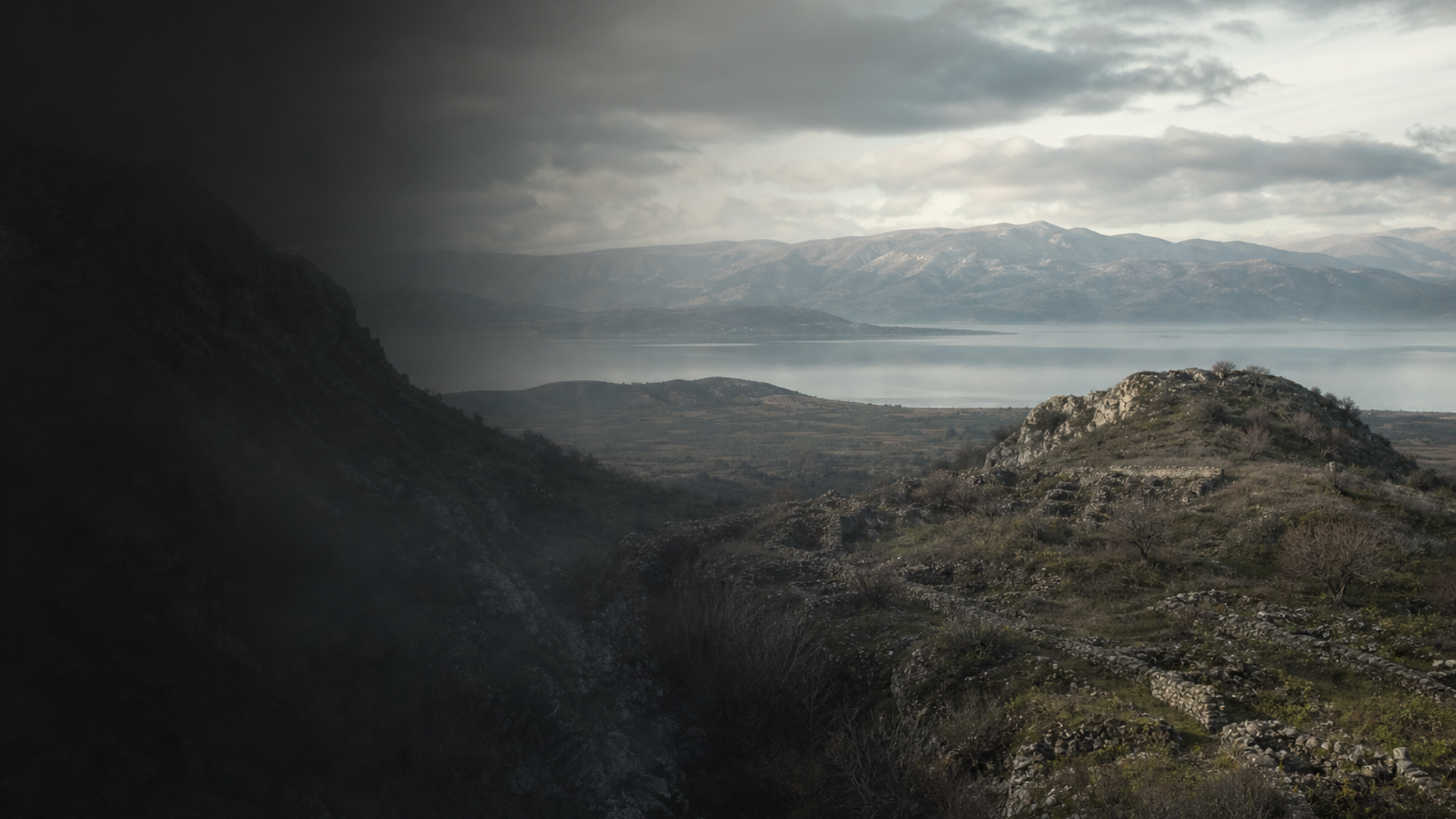
The West Byzantine presence in northwestern Anatolia unfolds across a landscape of lakes, trade routes and long-lived cities. Between 400 and 800 CE, sites such as Ilıpınar (Orhangazi district, Bursa) and the archaeological neighborhoods of İznik (Yenişehirkapı and the Basilica area) show continued occupation after the collapse of Western imperial authority. Archaeological data indicates reuse and adaptation of Roman and Late Antique urban cores: churches and basilica complexes persisted as focal points, while cemeteries and domestic quarters record changing burial practices and material culture.

Material traces—architecture, ceramics and funerary assemblages—evoke a world connected by maritime and overland exchange across the Marmara and Aegean. Limited evidence suggests communities here maintained local traditions while absorbing traders, soldiers and clerics passing through imperial networks. The DNA sampled from 13 individuals offers an opportunity to tie these archaeological patterns to biological ancestry, although the picture remains provisional: the sample size is modest and not every burial yielded genetic data.

  • Continuity of urban and religious centers in İznik and surrounding settlements
  • Archaeological remains point to active regional exchange across the Marmara
  • 13 genetic samples provide preliminary biological insight into community composition
Capítulo IV

Daily Life & Society

Daily life in West Byzantine Anatolia was lived in stone and clay, in churches and market alleys, in village plots north of the lake and in the shadow of basilicas. Archaeological contexts at İznik preserve evidence for liturgical architecture and associated burial grounds; modest domestic assemblages from nearby Ilıpınar suggest agricultural and craft production supporting urban centers. Mosaic pavements, reused architectural fragments and imported amphorae (where preserved) speak to long-distance connections that shaped diet, craft and status.

Social identity was negotiated through religion, language and mobility. The presence of clergy and monastic institutions in the archaeological record reflects Christian ritual life; contemporaneous economic ties reached across Anatolia and into the Aegean. Funerary practices visible in cemetery layouts and grave goods indicate variation in age, sex and possibly social rank, but small sample sizes mean careful interpretation. Archaeology reveals the textures of everyday life—work, worship, and burial—while genetics offers a complementary lens on where people and their ancestors came from.

  • Evidence for churches and associated burial grounds in İznik
  • Material culture shows both local production and long‑distance exchange
Capítulo V

Genetic Profile

Genetic data from 13 individuals dated to 400–800 CE in the Marmara region yields a maternal picture dominated by haplogroups common across Anatolia and the Mediterranean. Observed mtDNA lineages include T (3 individuals), H (2, including one assigned to an H87 subclade), J (1) and U (1). These maternal haplogroups are broadly distributed: H and U are frequent across Europe and Anatolia, while T and J have strong Near Eastern and Anatolian associations stemming from Neolithic and later demographic processes.

No consistent Y-DNA pattern is reported for this sample set, reflecting either preservation limits or that male-line data were not recovered in sufficient numbers. With only 13 sampled individuals and some incomplete genetic profiles, conclusions must remain cautious. Nevertheless, the mtDNA assemblage suggests local continuity with deep regional roots and a mosaic of maternal ancestries consistent with coastal Anatolia's role as a conduit between Europe and the Near East. Future larger datasets and autosomal analyses are needed to resolve questions of population continuity, migration and social structure.

  • mtDNA dominated by T and H lineages, reflecting Anatolian–Mediterranean connections
  • Y‑chromosome data not reported or insufficient; autosomal data needed for finer resolution
Capítulo VI

Legacy & Modern Connections

The people buried around İznik and Orhangazi inhabited a world of continuity and change whose biological echoes persist in the genetic tapestry of modern Anatolia. The maternal lineages recorded—H, T, J, U—are still part of present-day diversity in Turkey and neighboring regions, suggesting a degree of genetic continuity across more than a millennium. Archaeological continuity of settlements and sacred spaces reinforces this picture: churches and urban cores were repurposed, populations adapted, and cultural identities evolved rather than abruptly replaced.

However, the dataset is limited and should be read as an early window into a complex past. Broader sampling and integration of uniparental, autosomal and isotopic data will be necessary to trace migration events, marriage networks and kinship. Even now, combining the tangible archaeology of basilicas and cemeteries with genetic signals yields a vivid, humanized glimpse of West Byzantine Anatolia—communities anchored to place yet threaded into wider Mediterranean currents.

  • Maternal haplogroups suggest partial continuity between Late Antiquity and modern Anatolia
  • Integrated archaeological and genetic study provides a nuanced, cautious picture of population history
Com IA

Assistente de IA

Haz preguntas sobre la cultura Echoes of West Byzantine Anatolia

Assistente de IA por DNAGENICS

Desbloquear esta função
Pregunta sobre la cultura Echoes of West Byzantine Anatolia. El asistente con IA puede explicar hallazgos genéticos, contexto histórico, pruebas arqueológicas y conexiones modernas, con sus límites de interpretación.
Exemplo de análise com IA

La cultura Echoes of West Byzantine Anatolia representa un capítulo de la historia humana...

A análise genética permite estudar semelhanças com populações anteriores e possíveis adaptações. As amostras de DNA antigo fornecem informações para investigar padrões migratórios e relações entre populações, com limites que dependem do estudo e do contexto arqueológico.

Esta é uma antevisão da análise com IA. Aceder ao assistente completo para explorar informações sobre:

  • Composição e similaridade genética
  • Padrões migratórios e origens
  • Vida cotidiana e práticas culturais
  • Contexto genético moderno

Explore mais culturas antigas

Descubra a história de civilizações de diferentes partes do mundo antigo




