Saltar para o conteúdo principal
Cultura de destaque

Il'movaya Pad — Xiongnu Frontier

A Siberian edge of the Xiongnu world where steppe routes met Baikal landscapes

200 BCE - 100 CE
Buryatia, Russia (Il'movaya Pad)

A História

Genomic and archaeological data from Il'movaya Pad (Buryatia, Russia), 200 BCE–100 CE, reveal a small but revealing Xiongnu-period sample. Maternal lineages are dominantly East Asian; paternal markers show mixed steppe and Siberian inputs. Limited sample size makes conclusions preliminary.

Time Period

200 BCE - 100 CE

Region

Buryatia, Russia (Il'movaya Pad)

Common Y-DNA

Q (2), R (1), N (1)

Common mtDNA

D (3), C (1), G (1), A24 (1), A (1)

Cronologia

2500 BCE

Steppe pastoralism expands

The spread of mobile pastoral economies across the Eurasian steppe establishes long-term corridors of movement that later facilitate Iron Age interactions such as those of the Xiongnu.

Origins & Emergence

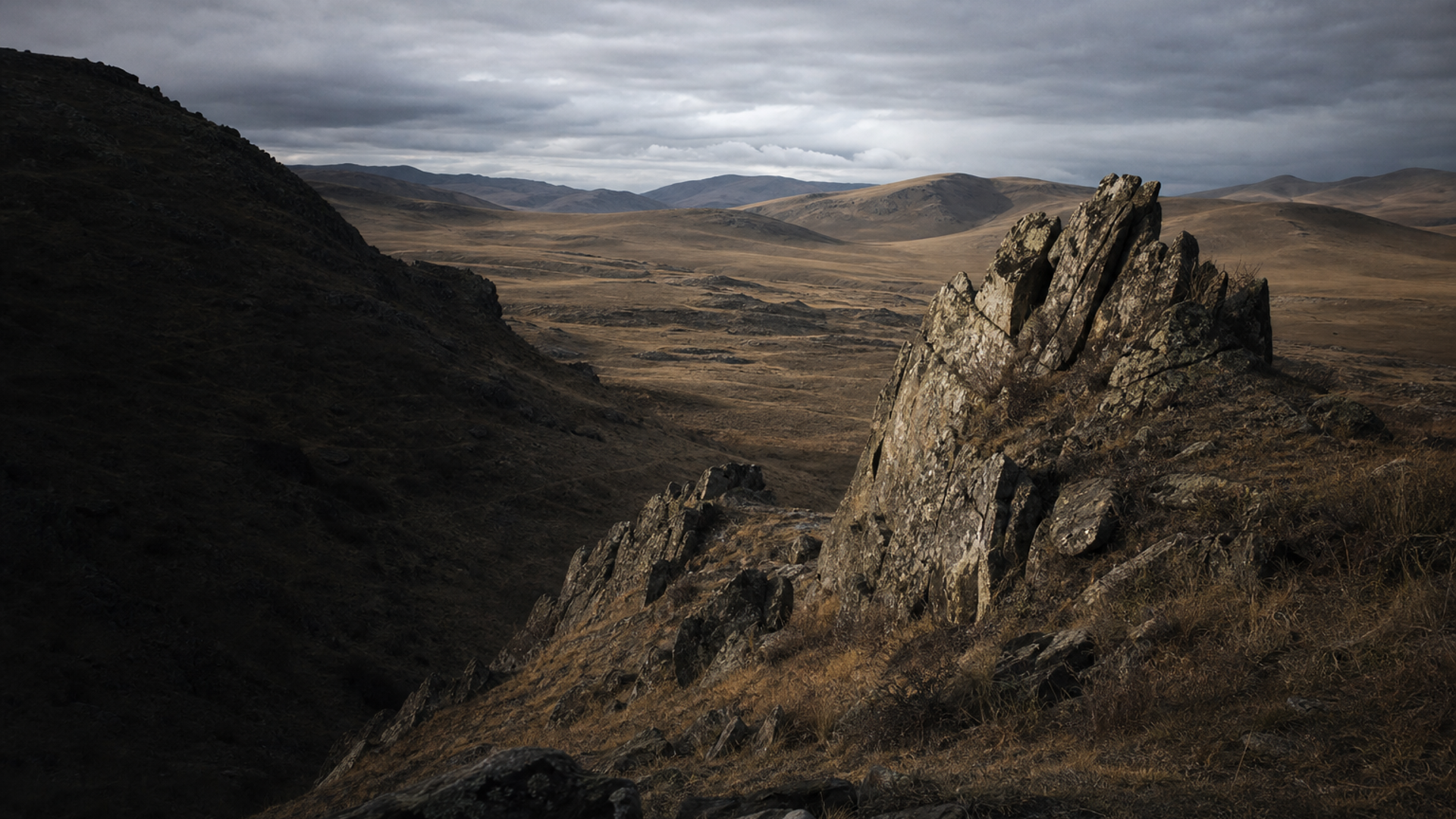
The Il'movaya Pad assemblage sits at the northern periphery of the Xiongnu horizon (ca. 200 BCE–100 CE). Archaeological data indicates pastoral and mobile lifeways tied into larger steppe networks: burial clusters, animal remains and portable metalwork recovered in the Baikal region suggest connection with Xiongnu-period burial traditions. The site occupies a landscape where forest, steppe and lake ecologies converge, producing a cultural frontier rather than a monolithic culture.

Limited evidence suggests that communities here were participants in long-distance exchange — not only east–west steppe contacts but also north–south movements tied to Baikal resources. Material signatures from Il'movaya Pad echo broader Xiongnu-era variability: local adaptation layered onto supra-regional stylistic influences. However, the archaeological sample from Il'movaya Pad remains modest and patchy; interpretations about political allegiance or direct governance by Xiongnu elites are tentative.

Cinematic vision: imagine horse-borne envoys threading between pine and grass, bringing objects and ideas inland from the steppe. Yet the ground-level record preserves a mosaic: local crafts, imported metalwork, and burial choices that together speak of negotiation — between local identity and steppe-wide dynamics.

  • Site located in Buryatia near Lake Baikal, dated 200 BCE–100 CE
  • Material culture indicates both local adaptation and steppe connections
  • Interpretations cautious due to limited and localized archaeological data

Daily Life & Society

Daily life at Il'movaya Pad can be reconstructed only in broad strokes. Archaeological traces point to a mixed subsistence economy: mobile pastoralism likely dominated, supplemented by hunting, fishing and exploitation of woodland resources typical of the Baikal fringe. Settlement evidence is sparse; burial contexts provide the richest behavioral signals — clothing, harness fittings and portable metal objects often survive as indirect testimony to social roles and craft skills.

Social organization in Xiongnu-period Buryatia appears flexible. Household and camp mobility would have shaped kin networks, seasonal rounds and control of pasture. Grave assemblages hint at status differentiation, but the small number of well-documented burials prevents confident generalizations about hierarchy. The presence of horse-related gear in some burials suggests that mounted mobility and horse economy played an important part in status display and everyday transport.

In cinematic terms, life unfolded as a series of seasonal movements beneath wide skies: tethered flocks, lakeside fishing in summer, metal-smithing near winter encampments, and exchange visits across steppe corridors. Yet each of these images is provisional — archaeology preserves fragments, and those fragments must be read with caution.

  • Economy centered on mobile pastoralism with local hunting and fishing
  • Burials provide primary evidence for social roles and craft activities

Genetic Profile

Ancient DNA from eight individuals at Il'movaya Pad (200 BCE–100 CE) offers a window into the biological composition of a Xiongnu-period community on the Baikal frontier. Maternal lineages are dominated by East Asian-associated mtDNA haplogroups: D (3 samples), C, G and A/A24, consistent with deep East Eurasian ancestry in the lake–forest zone. Paternal markers are more heterogeneous: Y haplogroups include Q (2), R (1) and N (1). This mix suggests that while maternal ancestry in this small sample is predominantly East Asian, male lineages record admixture between Siberian, steppe and possibly western Eurasian inputs.

These patterns are compatible with a scenario of sex-biased gene flow — a common theme in steppe frontier contexts — where local East Asian maternal pools combine with incoming or mobile male lineages from diverse steppe and forest-steppe sources. Archaeological signals of mobility and exchange at Il'movaya Pad align with this genetic heterogeneity: material connections across the steppe could reflect both cultural and biological mixing.

However, the sample count is very small (n=8). Conclusions about broader Xiongnu population dynamics or regional demographic models remain preliminary. Further sampling across Buryatia and neighboring regions is required to test whether the Il'movaya Pad profile represents local continuity, transient admixture, or a community-specific mosaic within the Xiongnu world.

  • mtDNA dominated by East Asian haplogroups (D, C, G, A/A24)
  • Y-DNA shows mixed inputs (Q, R, N), suggesting admixture and possible male-biased mobility; conclusions are preliminary (n=8)

Legacy & Modern Connections

The genetic and archaeological traces from Il'movaya Pad contribute to a larger picture in which the Xiongnu-era steppe was a mosaic of peoples and practices. Many mtDNA lineages found at the site (notably D and C) continue to appear in modern populations around Lake Baikal and across Siberia, hinting at partial matrilineal continuity in the region. Y haplogroup signals such as Q and N also persist today among Siberian and northern Eurasian groups, though later migrations and demographic upheavals complicate direct lineage-to-lineage narratives.

Archaeologically, the Il'movaya Pad record helps document how frontier communities negotiated identity and mobility at the margins of large polities. Genetically, these samples underscore the Xiongnu world’s heterogeneity: neither a single people nor a static frontier, but a dynamic corridor of interaction. Given the small sample size, these connections should be read as suggestive starting points rather than definitive ancestries.

  • mtDNA continuity with modern Siberian groups is plausible but not proven
  • Xiongnu-era populations were genetically heterogeneous; local legacies are complex and research is ongoing

Assistente de IA

Assistente de IA por DNAGENICS

Desbloquear esta função
Pregunta sobre la cultura Il'movaya Pad — Xiongnu Frontier. El asistente con IA puede explicar hallazgos genéticos, contexto histórico, pruebas arqueológicas y conexiones modernas, con sus límites de interpretación.

Exemplo de análise com IA

La cultura Il'movaya Pad — Xiongnu Frontier representa un capítulo de la historia humana...

A análise genética permite estudar semelhanças com populações anteriores e possíveis adaptações. As amostras de DNA antigo fornecem informações para investigar padrões migratórios e relações entre populações, com limites que dependem do estudo e do contexto arqueológico.

Esta é uma antevisão da análise com IA. Aceder ao assistente completo para explorar informações sobre:

  • Composição e similaridade genética
  • Padrões migratórios e origens
  • Vida cotidiana e práticas culturais
  • Contexto genético moderno