Saltar para o conteúdo principal
Cultura de destaque

Karasuk Horizon — Southern Siberia

Bronze Age communities of Khakassia revealed by graves, bronze, and ancient DNA.

1500 CE - 2001518 BCE
Khakassia & southern Siberia, Russia (Arban 1, Sabinka 2, Bystrovka)

A História

The Russia_Karasuk dataset (9 individuals, 1518–207 BCE) links Karasuk-period burials in Khakassia (Arban 1, Sabinka 2, Bystrovka) to a mixed genetic profile: predominant Y-lineage R with Q presence and maternal lineages D, U, A, C, H. Limited samples make conclusions preliminary.

Time Period

c. 1500–200 BCE (samples 1518–207 BCE)

Region

Khakassia & southern Siberia, Russia (Arban 1, Sabinka 2, Bystrovka)

Common Y-DNA

R (4), Q (1) — R dominant in samples

Common mtDNA

D (3), U (2), A, C, H — mixed East/West maternal lines

Cronologia

1500 BCE

Karasuk emergence in southern Siberia

Regional material culture and burial practices consolidate into the Karasuk horizon in Khakassia and the Minusinsk Basin, marking intensified metalworking and interregional contacts.

Origins & Emergence

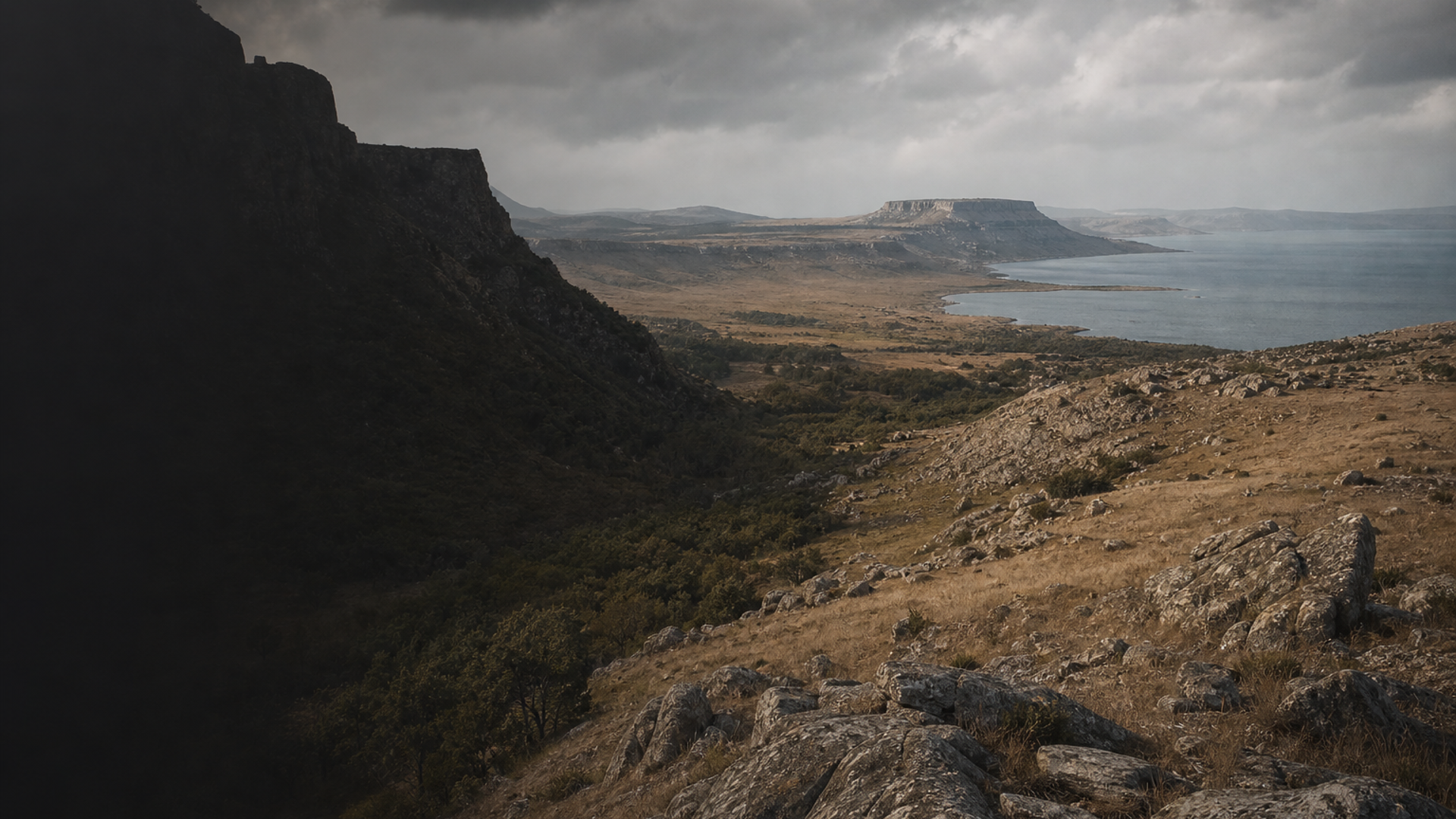
Across the wind-swept terraces of southern Siberia, the Karasuk horizon emerges in the archaeological record as a network of cemeteries and metalworking traditions stretching across Khakassia and neighboring steppe zones. Archaeological data indicates material continuity with earlier Andronovo groups but also distinct local developments in burial practice and metallurgy. Sites represented in the Russia_Karasuk dataset — Arban 1, Sabinka 2 (including Sabinka-2 in the Republic of Khakassia, Beysky District), and Bystrovka — date between 1518 and 207 BCE and reflect a long-lived cultural presence in the Minusinsk Basin and adjacent landscapes.

The picture is cinematic: low tumuli, graves with bronze implements glinting beneath peat-dark soils, and a landscape where mobility and tied-down settlement coexist. Limited evidence suggests that the Karasuk horizon formed through both the persistence of local hunter-pastoral traditions and influxes of people carrying steppe-related cultural packages. The archaeological record alone hints at interactions across vast distances; when combined with genetic data, this becomes a story of blended ancestries shaping a regional identity. However, site-to-site variation and sparse sampling mean our reconstruction remains provisional — archaeological patterns must be read alongside cautious genetic interpretation.

  • Emergence in southern Siberia with ties to Andronovo traditions
  • Key sites: Arban 1, Sabinka 2 (Sabinka-2), Bystrovka
  • Long occupational span shown in radiocarbon dates and material change

Daily Life & Society

Archaeological traces paint a society adapted to the mixed environments of forest-steppe margins: seasonal herding, exploitation of riverine resources, and skilled metalworking. Excavated burials often contain weaponry and tools, suggesting social roles tied to craft and mobility. The presence of bronze objects across Karasuk graves indicates access to regional exchange networks for raw materials and finished goods.

Settlement evidence is patchy, but the funerary record implies kin-based groups with durable social traditions. Animal bones and occasional botanical remains point to diets combining pastoral products and local wild foods. Limited evidence also suggests differential grave goods, which may reflect social differentiation or age/sex roles, but these patterns are not yet consistent enough to define strict hierarchies. The cinematic feel of the landscape — scorched bronze, ridge-lines of cairns, and smoke from transient camps — must be balanced with the careful caution of science: many everyday behaviors leave faint traces, and much of Karasuk life remains to be uncovered by future excavation and context-based study.

  • Economy: mixed herding and local resource use with metalworking
  • Burials show craft and perhaps social differentiation, but evidence is patchy

Genetic Profile

The Russia_Karasuk genetic sample comprises nine individuals dated between 1518 and 207 BCE, a small but informative window into Karasuk populations. Y-chromosome data show a dominance of haplogroup R (4/9) with at least one Q lineage (1/9). This distribution tentatively points to strong steppe-associated paternal ancestry (many R lineages are common across Bronze Age Eurasia) alongside contributions that may reflect eastern Eurasian or Siberian paternal inputs (Q is diverse and regionally frequent). Mitochondrial diversity is notable: D (3), U (2), A (1), C (1), and H (1) appear in the dataset, indicating a mixed maternal heritage with both East Eurasian (D, A, C) and West Eurasian (U, H) components.

Because the sample count is fewer than ten, all interpretations must be presented as preliminary. Archaeological context supports a model of population interaction: local maternal lineages and incoming steppe paternal signatures could reflect sex-biased mobility or the integration of immigrant males into local communities. Limited evidence suggests admixture across east–west genetic clines during the later Bronze Age in southern Siberia. Future, larger datasets and genome-wide analyses will be required to test hypotheses about directionality, timing, and social mechanisms behind these genetic patterns.

  • Small sample (n=9): preliminary but informative genetic snapshot
  • Paternal skew toward R; maternal mix of East and West Eurasian lineages

Legacy & Modern Connections

The Karasuk horizon left a subtle but persistent imprint on the human tapestry of Siberia. Archaeological forms and genetic signals together suggest that the region was a crossroads where steppe mobility met local forager-pastoral traditions, producing a blended heritage still detectable in some modern Siberian gene pools. Mitochondrial lineages such as D and C are today common across northern and eastern Eurasia, while some R and U lineages tie the past to broader West Eurasian movements.

Caution is vital: with only nine sampled individuals, we cannot map direct descent lines to contemporary populations. Instead, the Russia_Karasuk dataset offers a cinematic glimpse — a fragment of continuity and contact that hints at how Bronze Age lives were woven into later histories. As ancient DNA sampling grows, these preliminary threads will either strengthen into clearer patterns or be reshaped, deepening our understanding of how past peoples contributed to the genetic landscapes of Siberia and beyond.


  • Signals of east–west admixture may connect to later Siberian genetic landscapes
  • Current conclusions are provisional; broader sampling is needed for firm ties

Assistente de IA

Assistente de IA por DNAGENICS

Desbloquear esta função
Pregunta sobre la cultura Karasuk Horizon — Southern Siberia. El asistente con IA puede explicar hallazgos genéticos, contexto histórico, pruebas arqueológicas y conexiones modernas, con sus límites de interpretación.
Exemplo de análise com IA

La cultura Karasuk Horizon — Southern Siberia representa un capítulo de la historia humana...

A análise genética permite estudar semelhanças com populações anteriores e possíveis adaptações. As amostras de DNA antigo fornecem informações para investigar padrões migratórios e relações entre populações, com limites que dependem do estudo e do contexto arqueológico.

Esta é uma antevisão da análise com IA. Aceder ao assistente completo para explorar informações sobre:

  • Composição e similaridade genética
  • Padrões migratórios e origens
  • Vida cotidiana e práticas culturais
  • Contexto genético moderno