A preparar o relatório

A carregar as informações e as referências disponíveis

Consultando el registro arqueológico...

Recopilando registros antiguos

Saltar para o conteúdo principal
Kideksha, Modern Russia
Cultura de destaque

Kideksha, Modern Russia

A riverside hamlet of medieval stone and early modern genomes (1526–1936 CE)

1526 CE - 1936 CE
Kideksha, Vladimir Oblast, Russia
Desplázate para começar
Capítulo I

A História

Comprender la cultura Kideksha, Modern Russia

Archaeological and genetic glimpses from Kideksha (Vladimir Oblast) link medieval landmarks to three early modern individuals (1526–1936 CE). Limited DNA data hint at local continuity within the broader Russian genetic landscape; conclusions remain preliminary.

Time Period

1526–1936 CE

Region

Kideksha, Vladimir Oblast, Russia

Common Y-DNA

Undetermined (no Y-DNA reported)

Common mtDNA

I (1 sample)

Capítulo II

Cronologia

Momentos-chave da história desta cultura

1152 CE

Church of Boris and Gleb constructed

The 12th‑century church establishes Kideksha as a notable medieval settlement and sacred site.

1238 CE

Mongol invasion impacts the region

Mongol campaigns in northeastern Rus' affect settlement patterns and political authority across Suzdal lands.

1526 CE

Earliest sampled individual

One of the three genetic samples is dated to 1526, anchoring part of the dataset in the early modern period.

1936 CE

Latest sampled individual

The most recent sample reaches into the early 20th century, spanning several historical eras in the village record.

Capítulo III

Origins & Emergence

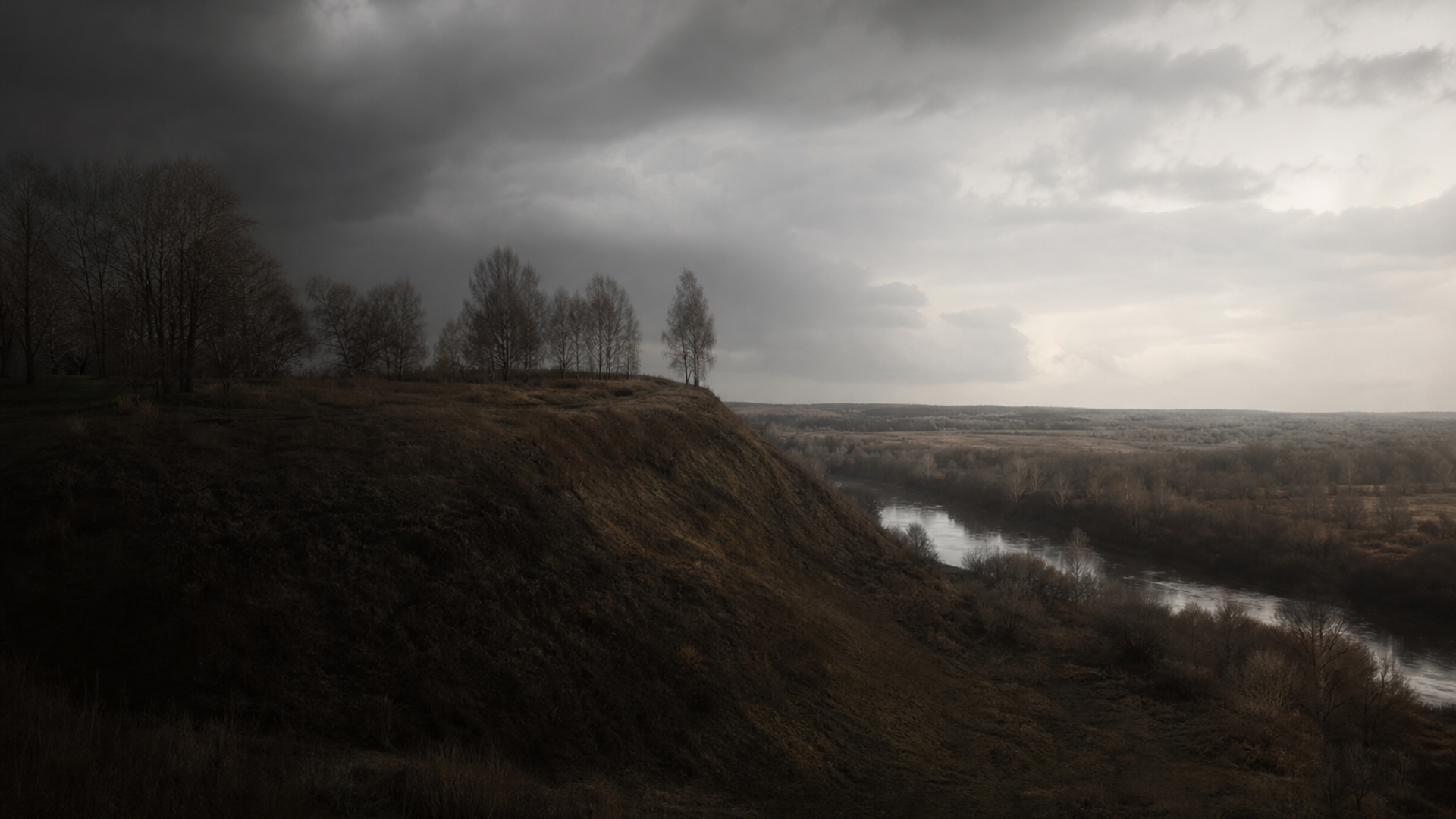
Kideksha sits like a memory on the Klyazma's banks, its skyline dominated by the 12th‑century Church of Boris and Gleb and the layered soils of centuries of human presence. Archaeological study of Kideksha emphasizes a long trajectory of settlement tied to the Suzdal principality and the medieval landscape of northeastern Rus'.

The molecular window provided by three sampled individuals (dated by context and archive to 1526–1936 CE) opens a narrow but vivid chapter: early modern villagers who lived after medieval consolidation, through the Muscovite period, and into the Russian Empire. Archaeological data indicates continuity of occupation rather than large-scale relocation across these centuries, but the small number of genetic samples precludes broad claims about population replacement or major demographic events.

Limited evidence suggests that built heritage—stone churches, compact settlement plans, and cemetery placements—reflect long-term, locally rooted communities. The samples come from funerary contexts near the village and church grounds; radiocarbon and archival correlations anchor them to the early modern era. While the deep origins of the settlement reach back to the 12th century and earlier, the genetic corpus here is modern-period and must be interpreted against a long archaeological timeline rather than as direct evidence for medieval population structure.

  • Settlement tied to Suzdal principality and medieval Rus' landscape
  • Samples dated to 1526–1936 CE from funerary contexts
  • Archaeological continuity suggested, but genetic sample size is very small
Capítulo IV

Daily Life & Society

The stones of Kideksha—church walls, foundations, and grave markers—speak to a community organized around Orthodox ritual, agrarian rhythms, and regional links to Suzdal and Vladimir. Archaeological traces in similar settlements in the Vladimir region typically include household debris, small agricultural plots, and material culture shaped by craft and liturgical life; for Kideksha, written records and standing architecture provide the clearest anchors.

Everyday existence for inhabitants between the 16th and early 20th centuries would have revolved around cereal cultivation, animal husbandry, seasonal labor, and church calendars. The village's proximity to transport routes along rivers and to larger market towns implies participation in regional exchange: produce, craft goods, and cultural practices circulated outward while ideas and occasional migrants arrived inward.

Burial practices recorded around the church reflect Orthodox Christian norms, with graves oriented and often associated with churchyards; these contexts are where the three genetic samples derive. Archaeological data indicates modest material wealth for many households, punctuated by church patronage and occasional elite investment from neighboring centers. Yet in Kideksha the lived landscape is best understood as a tapestry of domestic life overlaid on a medieval sacred core.

  • Life organized around church, agriculture, and riverine trade routes
  • Burials near churchyards provide primary archaeological contexts for samples
Capítulo V

Genetic Profile

The genetic portrait of Kideksha is currently a sketch rather than a painting. Three individuals sampled from church‑associated graves dated between 1526 and 1936 CE yield limited but informative data: one mitochondrial lineage identified as haplogroup I, and no published, consistent Y‑chromosome results across the small set. Because only three genomes are available, any population-level inference is highly provisional.

Haplogroup I is present in Europe at low to moderate frequencies and can occur in Slavic and neighboring groups; its detection in a single Kideksha individual aligns with what archaeogenetic surveys identify as part of the broader north‑east European mitochondrial landscape. Without replicates or broader autosomal data from the site, it is impossible to resolve whether this reflects long‑term local maternal continuity, recent gene flow, or drift in a small community.

Contextualizing these findings with regional genetic studies suggests several plausible scenarios: (1) continuity with earlier Slavic and Finno‑Ugric substrates in the Vladimir region, (2) admixture events across centuries including contacts with Tatar and other steppe groups during and after the medieval period, and (3) local endogamy inflating haplogroup signals. Each scenario remains speculative here. Archaeological and archival continuity supports the idea of a locally rooted population, but only expanded sampling (more individuals, autosomal data, and Y‑chromosome haplotypes) will permit robust demographic modeling.

Given the sample count (<10), emphasize preliminary nature: these results are pointers for future work rather than definitive statements about Kideksha's genetic history.

  • One mtDNA haplogroup I detected (1 of 3 samples); Y-DNA data undetermined
  • With only three samples, population-level conclusions are preliminary
Capítulo VI

Legacy & Modern Connections

Kideksha's stones are now part of the White Monuments of Vladimir and Suzdal World Heritage landscape; they anchor living memory and invite scientific inquiry. The tiny genetic dataset connects modern genomics to that enduring material heritage, offering the potential to trace lines of continuity between early modern villagers and present‑day inhabitants of Vladimir Oblast.

Applied carefully, archaeogenetics can illuminate migration, marriage networks, and the invisible threads that run through centuries of rural life. For Kideksha, however, the truth is humility: three samples hint at local maternal lineages consistent with a north‑east European profile but cannot map the village's full genetic tapestry. Future integration of more genomes, archaeological excavation, and historical sources will deepen understanding and connect DNA to named families, crafts, and the rhythms of village life.

This site exemplifies how small, well‑contextualized samples become keystones when combined with archaeology and archives—each genome adds a voice to the chorus, but it will take many more voices to sing the whole story.

  • Kideksha is part of the White Monuments of Vladimir and Suzdal heritage
  • Current DNA evidence is a starting point for connecting early modern locals to present populations
Com IA

Assistente de IA

Haz preguntas sobre la cultura Kideksha, Modern Russia

Assistente de IA por DNAGENICS

Desbloquear esta função
Pregunta sobre la cultura Kideksha, Modern Russia. El asistente con IA puede explicar hallazgos genéticos, contexto histórico, pruebas arqueológicas y conexiones modernas, con sus límites de interpretación.
Exemplo de análise com IA

La cultura Kideksha, Modern Russia representa un capítulo de la historia humana...

A análise genética permite estudar semelhanças com populações anteriores e possíveis adaptações. As amostras de DNA antigo fornecem informações para investigar padrões migratórios e relações entre populações, com limites que dependem do estudo e do contexto arqueológico.

Esta é uma antevisão da análise com IA. Aceder ao assistente completo para explorar informações sobre:

  • Composição e similaridade genética
  • Padrões migratórios e origens
  • Vida cotidiana e práticas culturais
  • Contexto genético moderno

Explore mais culturas antigas

Descubra a história de civilizações de diferentes partes do mundo antigo