A preparar o relatório

A carregar as informações e as referências disponíveis

Consultando el registro arqueológico...

Recopilando registros antiguos

Saltar para o conteúdo principal
Laikipia–Nakuru Iron‑Age Pastoralists
Cultura de destaque

Laikipia–Nakuru Iron‑Age Pastoralists

A small pastoral community in central Kenya seen through graves, grazing lands and ancient DNA

1296 CE - 950 BCE
Central Kenya (Nakuru, Laikipia)
Desplázate para começar
Capítulo I

A História

Comprender la cultura Laikipia–Nakuru Iron‑Age Pastoralists

Archaeological and genetic evidence from five burials (1296–950 BCE) in Nakuru and Laikipia suggests mobile Iron Age pastoralists in central Kenya. Limited sample size makes conclusions preliminary, but uniparental markers (Y E, mtDNA L) point to local eastern African lineages linked to early pastoral economies.

Time Period

1296–950 BCE

Region

Central Kenya (Nakuru, Laikipia)

Common Y-DNA

E (4/5 samples)

Common mtDNA

L (5/5 samples)

Capítulo II

Cronologia

Momentos-chave da história desta cultura

1296 BCE

Earliest dated burial (sampled)

One of the five sampled burials yields a calibrated date near 1296 BCE at Nakuru (Deloraine Farm).

1100 BCE

Regional pastoral consolidation

Archaeological indicators suggest increasing importance of mobile herding in Rift Valley landscapes (limited evidence).

950 BCE

Latest sampled burial

The most recent of the five genetic samples dates to ca. 950 BCE in the Laikipia–Nakuru area.

Capítulo III

Origins & Emergence

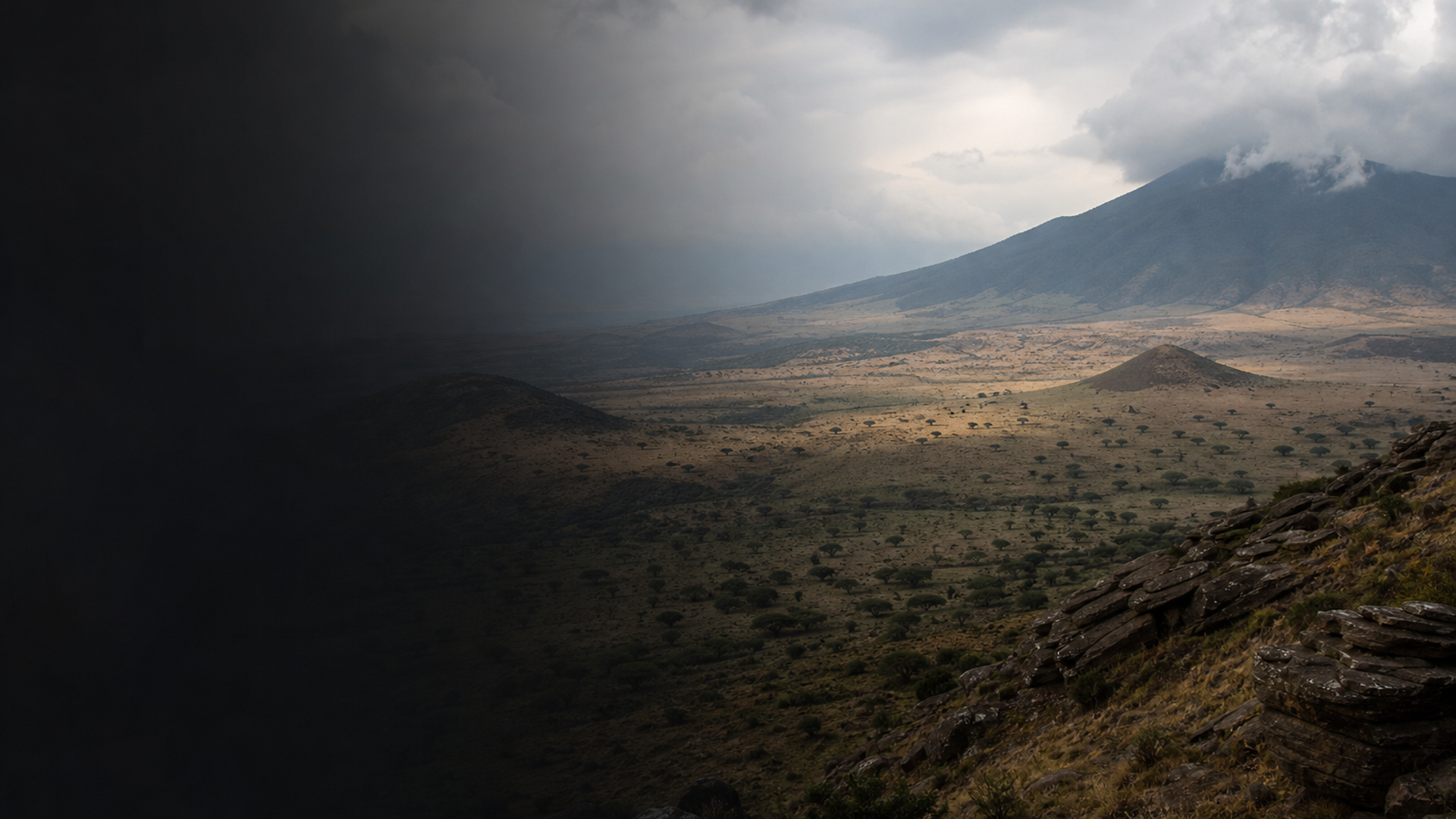
On the high plains and rolling mounds between Nakuru and Laikipia, a quiet pastoral horizon appears in the archaeological record in the late second and early first millennium BCE. Excavations at named localities — Deloraine Farm (GqJh6), Kasiole 2 (GvJh54), Kisima Farm (KFR-C4), Ilkek Mounds (GsJj66) and a Laikipia District burial (GoJl45) — reveal burial contexts and material traces consistent with mobile herding lifeways. Radiocarbon-calibrated contexts from the sampled individuals fall between 1296 and 950 BCE, situating these people within Kenya’s Iron Age pastoral transformations.

Archaeological data indicates a landscape of temporary settlements, livestock management, and funerary mounds rather than dense sedentary villages. Material culture recovered with burials is sparse but consistent with pastoral use of space: isolated grave offerings, traces of domesticates in faunal assemblages, and features interpreted as ephemeral corrals or kraals. Limited evidence suggests connections of these groups to broader East African pastoral networks, likely involving livestock movement across the Rift Valley.

Because only five individuals have yielded genetic data, any narrative of origin must remain tentative. Still, the combined archaeological footprint and the uniparental signals offer a first, evocative glimpse of early Iron Age pastoral communities in central Kenya.

  • Burials dated 1296–950 BCE from Nakuru and Laikipia
  • Material culture consistent with mobile herding and burial mounds
  • Evidence points to local pastoral emergence within the Rift Valley
Capítulo IV

Daily Life & Society

The daily world of these Iron Age pastoralists can be imagined in broad strokes: grasslands grazed by cattle, goats and sheep; temporary encampments; and social rhythms keyed to herd movement and water availability. Archaeological indicators in the region — ephemeral hearths, storage pits, and faunal remains dominated by domesticated species — suggest economies organized around livestock rather than intensive crop cultivation.

Burial practices recorded at Ilkek Mounds and the Laikipia district burial site are evocative: interments placed in shallow mound contexts with modest grave goods. Such funerary expressions point to communities that invested symbolic labor in marking death even as their lifeways remained mobile. Monumental architecture is absent; social visibility may have been produced through livestock wealth, seasonal aggregation, and oral traditions.

Gendered division of labor is inferred from ethnographic analogies and wear patterns on tools elsewhere in the region, but direct osteological and contextual evidence from these five burials is limited. Archaeological data indicates variation in mortuary treatment, suggesting social differentiation, but this remains a tentative reading until larger samples and more detailed analyses are available.

  • Economy organized around livestock and mobility
  • Burial mounds and modest grave goods suggest community identity
Capítulo V

Genetic Profile

Ancient DNA from five individuals (sampled from Nakuru and Laikipia sites) provides a compact but informative genetic snapshot. All five individuals carry mtDNA haplogroups in macro-haplogroup L, the dominant maternal lineages across sub-Saharan Africa. Four of the five male-associated samples show Y-chromosome lineage E, a broad and long-standing paternal lineage in eastern and southern Africa.

These uniparental results concord with an expectation of deep regional continuity in eastern Africa: maternal L lineages and paternal E haplogroups are consistent with local population histories rather than wholesale replacement from distant regions. However, uniparental markers capture only a narrow slice of ancestry. Autosomal data (where available) and comparisons to later pastoral and agricultural groups are necessary to test hypotheses about gene flow, population continuity, or admixture events.

Importantly, the genetic sample size is low (n = 5). Limited evidence suggests local eastern African ancestry dominated these individuals, but the small number of genomes makes all broader demographic inferences provisional. Future sampling and more comprehensive genomic analyses will be needed to resolve patterns of migration, sex-biased admixture, and links to later Iron Age pastoralists across East Africa.

  • All five individuals: mtDNA L (local sub‑Saharan maternal lineages)
  • Four males carry Y haplogroup E, indicating regional paternal continuity
Capítulo VI

Legacy & Modern Connections

The material and genetic echoes of these Iron Age pastoralists may persist in the cultural landscapes of modern Kenya. Today’s Maasai, Samburu, and other pastoral groups inhabit parts of the same Rift Valley corridors and practice herding lifeways that resonate with the mobility suggested by the archaeological record. Genetic continuity in uniparental markers (Y E, mtDNA L) hints at long-standing regional lineages that could contribute to modern diversity, but links must be made cautiously.

Archaeogenetic work on these five burials opens a dialogue between deep time and living communities, but it does not by itself trace direct descent lines. Limited sampling and the complexity of later population movements mean that any genealogical connection remains a hypothesis to be tested. What is clear is that central Kenya was an active stage for early Iron Age pastoral economies, and future multidisciplinary research will better illuminate how those ancient lifeways shaped subsequent cultural and genetic landscapes.

  • Modern pastoral groups occupy related ecological corridors; connections are plausible but not proven
  • Small sample size means genetic continuity claims are preliminary
Com IA

Assistente de IA

Haz preguntas sobre la cultura Laikipia–Nakuru Iron‑Age Pastoralists

Assistente de IA por DNAGENICS

Desbloquear esta função
Pregunta sobre la cultura Laikipia–Nakuru Iron‑Age Pastoralists. El asistente con IA puede explicar hallazgos genéticos, contexto histórico, pruebas arqueológicas y conexiones modernas, con sus límites de interpretación.
Exemplo de análise com IA

La cultura Laikipia–Nakuru Iron‑Age Pastoralists representa un capítulo de la historia humana...

A análise genética permite estudar semelhanças com populações anteriores e possíveis adaptações. As amostras de DNA antigo fornecem informações para investigar padrões migratórios e relações entre populações, com limites que dependem do estudo e do contexto arqueológico.

Esta é uma antevisão da análise com IA. Aceder ao assistente completo para explorar informações sobre:

  • Composição e similaridade genética
  • Padrões migratórios e origens
  • Vida cotidiana e práticas culturais
  • Contexto genético moderno

Explore mais culturas antigas

Descubra a história de civilizações de diferentes partes do mundo antigo