A preparar o relatório

A carregar as informações e as referências disponíveis

Consultando el registro arqueológico...

Recopilando registros antiguos

Saltar para o conteúdo principal
Ottoman Marmara (1479–1652 CE)
Cultura de destaque

Ottoman Marmara (1479–1652 CE)

Three Ottoman‑era individuals from Marmara reveal tentative maternal lineages and the region's layered history.

1479 CE - 1652 CE
Marmara, Anatolia (Turkey)
Desplázate para começar
Capítulo I

A História

Comprender la cultura Ottoman Marmara (1479–1652 CE)

Small-sample ancient DNA from Zeytinliada (Erdek) and Yenişehirkapı (İznik), Turkey (1479–1652 CE) shows mtDNA haplogroups H, T, and U. Archaeological context and genetic hints point to local continuity and regional connectivity; conclusions remain preliminary due to n=3.

Time Period

1479–1652 CE

Region

Marmara, Anatolia (Turkey)

Common Y-DNA

Not reported (no Y-DNA data for these 3 samples)

Common mtDNA

H, T, U (each observed once; n=3)

Capítulo II

Cronologia

Momentos-chave da história desta cultura

1453 CE

Fall of Constantinople

The Ottoman capture of Constantinople (1453) reshaped regional politics and trade, setting the stage for Ottoman-era developments in Marmara.

1479 CE

Treaty of 1479 and Regional Consolidation

Late 15th-century treaties and campaigns consolidated Ottoman control in northwestern Anatolia and the Aegean coastal zones where the samples were later found.

1520 CE

Beginning of Suleiman’s Reign

The reign of Suleiman the Magnificent (beginning 1520) marked a period of political centralization and cultural florescence across Ottoman lands.

Capítulo III

Origins & Emergence

The Ottoman-era individuals sampled from the Marmara region belong to a historical landscape shaped by centuries of migration, trade and imperial administration. Archaeological data indicates these remains derive from late 15th to mid-17th century contexts at coastal Zeytinliada (Erdek, Balıkesir) and the inland lakeside town of Yenişehirkapı (İznik). This period follows the consolidation of Ottoman rule across northwestern Anatolia and the eastern Mediterranean.

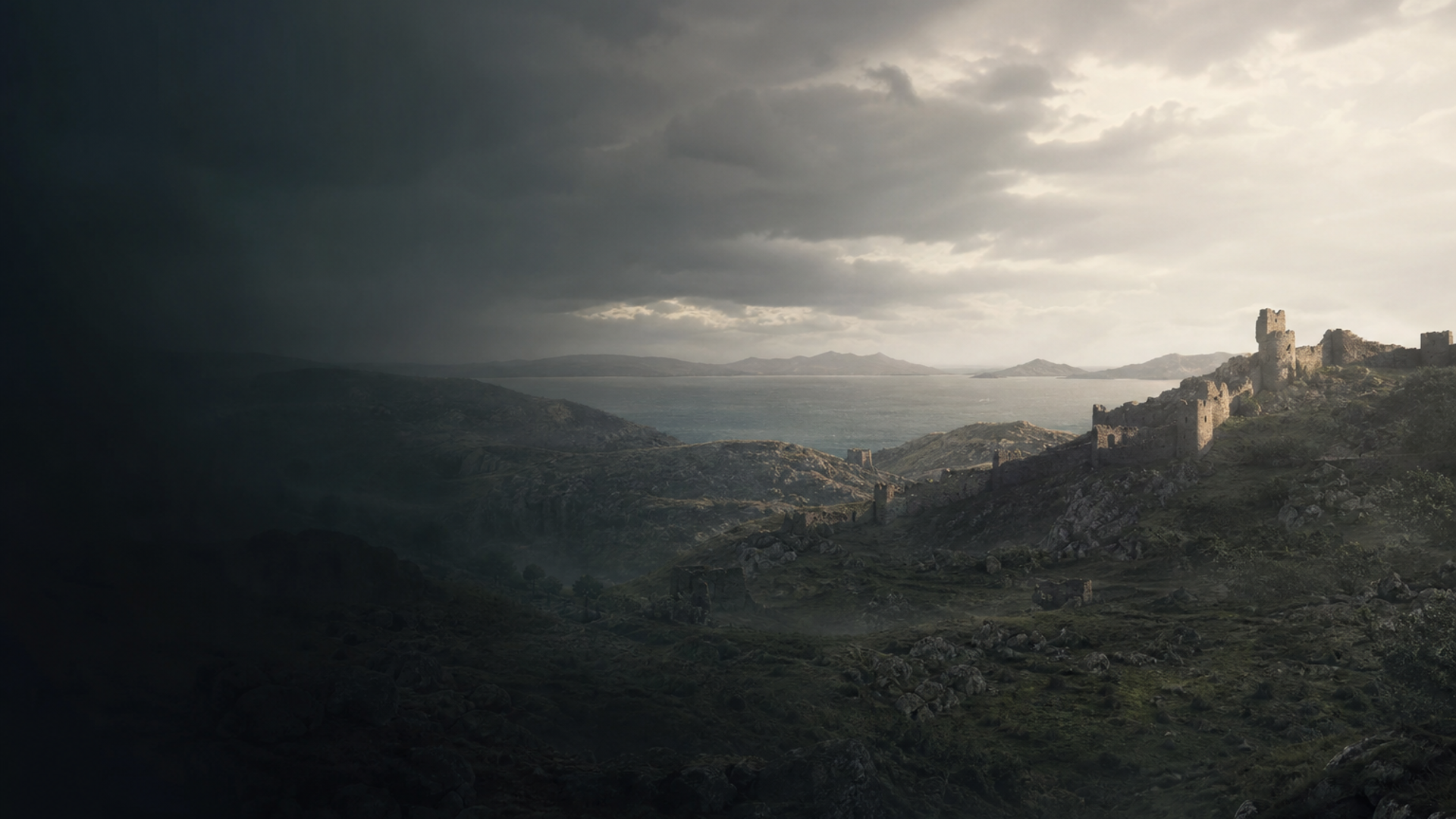
Visually cinematic: the narrow straits, salt-swept harbors and fortified towns formed arteries of movement—soldiers, artisans, merchants and seafarers—that left traces in material culture and in human bodies. Limited evidence suggests local burial practices persisted alongside imported goods and styles, reflecting a fusion of provincial Anatolian traditions with imperial cosmopolitanism.

Archaeological indicators at both sites—stratified Ottoman layers, funerary deposits and associated artifacts—anchor the samples in place and time, but the small sample size constrains broad claims about population turnover or continuity. Instead, these three genomes offer snapshots: moments in a long, evolving story of Anatolian occupancy that would be better resolved with larger, spatially varied datasets.

  • Samples from Zeytinliada (Erdek) and Yenişehirkapı (İznik)
  • Dates anchored to 1479–1652 CE within Ottoman provincial contexts
  • Evidence suggests interaction between local Anatolian traditions and imperial networks
Capítulo IV

Daily Life & Society

The Ottoman Marmara world evoked by archaeology is one of layered routines and mobility. Towns like İznik retained long histories as craft centers—ceramics, trade and administration—while coastal Erdek served as a node in maritime networks across the Aegean and Sea of Marmara. Objects recovered in Ottoman strata—ceramic types, metalwork fragments and household items—speak to domestic life, commerce and the movement of goods and people.

Archaeological data indicates that households were diverse in status and origin: provincial farmers, urban craftsmen and families connected to imperial institutions likely coexisted within these communities. The cinematic image is of narrow streets and harbor quays where languages and foodstuffs mixed, and where seasonal migration for work or military service was common.

Skeletal remains can encode traces of diet, workload and disease; combined with artefactual context, they illuminate routines of childbirth, labor and care. For these particular samples, osteological and contextual information is limited in published form, so reconstructions of daily life remain tentative. Larger and better-documented assemblages would permit richer reconstructions of social roles, mobility and health in Ottoman Marmara.

  • Iznik and Erdek were craft, trade and maritime hubs
  • Material culture indicates daily life influenced by both local traditions and imperial links
Capítulo V

Genetic Profile

Genome-wide resolution is limited for this set: three mitochondrial genomes were recovered, yielding haplogroups H, T and U (one each). These mtDNA lineages are widespread across Europe and West Eurasia and have previously been observed in Anatolian and Mediterranean populations. Archaeological context and the mtDNA evidence together suggest matrilineal continuity with long-standing West Eurasian maternal lineages in the region, but the signal is necessarily narrow.

Critically, no Y‑chromosome data are reported for these three individuals, so paternal ancestry, patrilineal continuity and sex-biased migration cannot be assessed. With n=3, statistical power is extremely low: patterns could reflect chance sampling of diverse maternal lines rather than population-level structure. Where broader ancient and modern datasets are available, Anatolia shows complex ancestry reflecting local Neolithic roots combined with subsequent interactions across the Balkans, Caucasus and Near East; these larger patterns offer a context for interpreting Ottoman-era diversity but do not substitute for direct, well-sampled genomic evidence from the period.

In sum: the mtDNA results are informative as individual life histories and as prompts for further study, but any demographic inference must be framed as preliminary until larger, sex-balanced and genome-wide samples are analyzed.

  • mtDNA haplogroups: H, T, U (each observed once; n=3)
  • No Y-DNA reported — paternal lineages unresolved; conclusions are preliminary
Capítulo VI

Legacy & Modern Connections

The Ottoman Empire left a genetic and cultural palimpsest across Anatolia and beyond. These three mitochondrial lineages—H, T and U—are part of a tapestry that connects present-day Anatolian populations with centuries of local inhabitation and long-distance contacts. Archaeological continuity in settlement and craft traditions around İznik and coastal Marmara implies that modern inhabitants may carry echoes of the same maternal lineages, but direct inference is limited by the very small sample size.

Genetic links in the region are best appreciated as gradients rather than discrete breaks: historical movements, trade and empire-building produced layers of ancestry. The cinematic image of Marmara—harbors lit at dusk, wooden ships unloading spices and ceramics—mirrors a genomic mosaic. Future, larger-scale ancient DNA studies across Ottoman urban and rural sites would clarify how imperial-era mobility shaped the genetic landscape inherited by modern Turkish and neighbouring populations.

  • mtDNA lineages align with widespread West Eurasian maternal ancestry
  • Larger, geographically diverse ancient DNA sampling is needed to trace Ottoman-era contributions to modern populations
Com IA

Assistente de IA

Haz preguntas sobre la cultura Ottoman Marmara (1479–1652 CE)

Assistente de IA por DNAGENICS

Desbloquear esta função
Pregunta sobre la cultura Ottoman Marmara (1479–1652 CE). El asistente con IA puede explicar hallazgos genéticos, contexto histórico, pruebas arqueológicas y conexiones modernas, con sus límites de interpretación.
Exemplo de análise com IA

La cultura Ottoman Marmara (1479–1652 CE) representa un capítulo de la historia humana...

A análise genética permite estudar semelhanças com populações anteriores e possíveis adaptações. As amostras de DNA antigo fornecem informações para investigar padrões migratórios e relações entre populações, com limites que dependem do estudo e do contexto arqueológico.

Esta é uma antevisão da análise com IA. Aceder ao assistente completo para explorar informações sobre:

  • Composição e similaridade genética
  • Padrões migratórios e origens
  • Vida cotidiana e práticas culturais
  • Contexto genético moderno

Explore mais culturas antigas

Descubra a história de civilizações de diferentes partes do mundo antigo