A preparar o relatório

A carregar as informações e as referências disponíveis

Consultando el registro arqueológico...

Recopilando registros antiguos

Saltar para o conteúdo principal
Plovdiv Today: Threads of an Ancient Landscape
Cultura de destaque

Plovdiv Today: Threads of an Ancient Landscape

A concise archaeological and genetic snapshot of Modern Bulgaria centered on Plovdiv

2000 CE
Plovdiv, Bulgaria (Balkans)
Desplázate para começar
Capítulo I

A História

Comprender la cultura Plovdiv Today: Threads of an Ancient Landscape

Archaeological context and preliminary genetic notes for 10 modern samples from Plovdiv, Bulgaria (2000 CE). Connects urban material culture, historical continuity in the Balkans, and what limited DNA sampling suggests about modern ancestry patterns.

Time Period

2000 CE (Modern)

Region

Plovdiv, Bulgaria (Balkans)

Common Y-DNA

Undetermined (no consensus from these samples)

Common mtDNA

Undetermined (no consensus from these samples)

Capítulo II

Cronologia

Momentos-chave da história desta cultura

2500 BCE

Bronze Age influences in the Balkans

Bronze Age networks and steppe-related movements shape the genetic and cultural substrate of the central Balkans, a deep ancestor to later populations in the Plovdiv region.

Capítulo III

Origins & Emergence

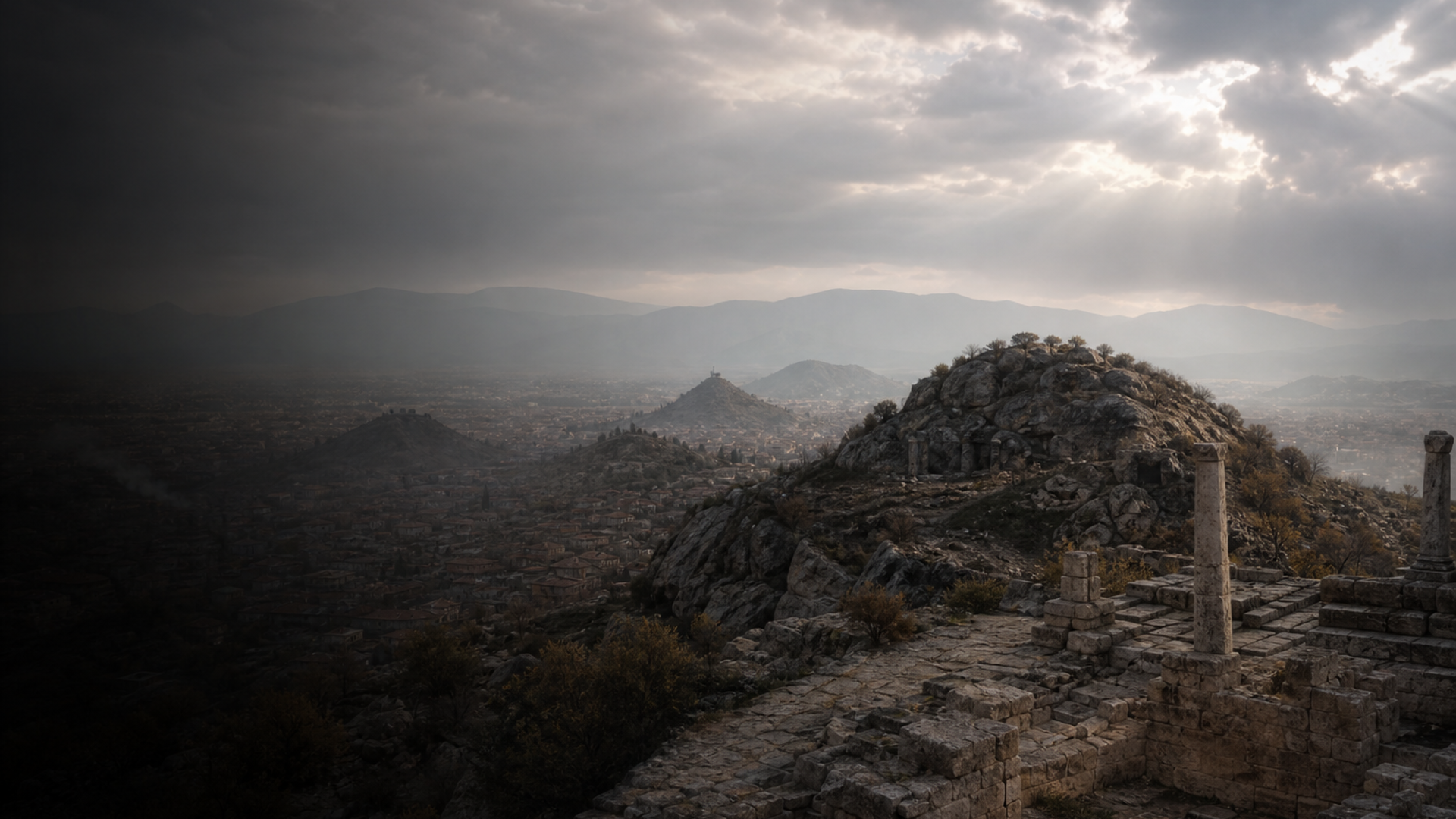
Plovdiv sits on a palimpsest of human occupation: Neolithic tells, Thracian tumuli, Roman stones and Ottoman streets. Modern Bulgaria — and Plovdiv in particular — is the product of millennia of migrations, trade and cultural layering. Archaeological data from the city and surrounding plains document continuous settlement, urban reorganization, and shifts in material culture from antiquity to the present.

For the modern era (2000 CE), archaeological relevance is often indirect: built heritage, cemetery reuse, and the persistence of craft traditions reveal cultural continuity even when the people and languages have shifted. Historical records from the Byzantine and Ottoman periods show administrative and demographic changes that shape the modern population.

Archaeological evidence indicates durable landscape use around the Maritsa River corridor that funnels movements through the central Balkans; this corridor has long connected Anatolia, the Aegean and the Eurasian steppe. Limited archaeological signals can hint at continuity in village locations and agricultural practice, but material culture alone cannot resolve recent genealogies. Where archaeology meets documentary history and linguistics, a richer picture of the origins of modern Plovdiv emerges — yet for biological ancestry, DNA data are essential to quantify admixture and demographic events.

  • Plovdiv built atop multi-period occupation layers (Neolithic to modern)
  • Maritsa River corridor shaped regional connectivity
  • Material culture reveals continuity but cannot alone define ancestry
Capítulo IV

Daily Life & Society

Modern life in Plovdiv mixes ancient streets with contemporary urban rhythms. Archaeological traces relevant to everyday life include reused masonry from Roman and medieval buildings, cemeteries that document changing burial practice, and industrial-era sites that record 19th–20th century economic shifts. Ethnographic and archaeological observations show how crafts, foodways and religious practices inherit motifs from earlier periods while adapting to modernity.

Pulse points for archaeologists studying modern Plovdiv include household assemblages (ceramics, glass, metal), urban stratigraphy in renovation trenches, and documentary archives that complement material finds. These sources reveal patterns of migration into the city in the 19th and 20th centuries—rural-to-urban movement, refugee influxes, and population exchanges—that have shaped family histories and demographic structure.

Archaeological investigations of modern contexts require careful ethics and collaboration with descendant communities. Recent digs and building works sometimes expose recent burials or heritage layers, creating opportunities to link lived history with genetic sampling — always subject to legal and ethical oversight. In sum, daily life in modern Plovdiv is both historically deep and continuously remade, and archaeology documents the tangible traces of that ongoing process.

  • Urban stratigraphy reveals reuse of older architectural materials
  • 19th–20th century migrations left strong documentary and material traces
Capítulo V

Genetic Profile

The genetic notes here derive from a small set of 10 samples collected in Plovdiv in 2000 CE. With n = 10, conclusions must remain provisional: limited sample size constrains population-level inference and regional diversity. Broadly, numerous published studies of modern Bulgarians show multi-layered ancestry reflecting Anatolian Neolithic farmers, Bronze Age steppe-related influxes, Balkan Chalcolithic and Iron Age components, and later medieval contributions associated with Slavic and other movements.

For these specific samples, archaeological context can inform interpretation: proximity to historic neighborhoods, family histories and burial contexts (if any) help link DNA to local demographic processes. However, because this dataset lacks a reported consensus of common Y- or mtDNA haplogroups, we cannot attribute specific paternal or maternal lineages to the sampled group here. Instead, genetic analysis of modern Bulgarian populations typically finds a mix of haplogroups common across Southeast Europe; patterns are heterogeneous at the city level.

Integrating ancient DNA from regional archaeological contexts (Thracian-era burials, Roman-period remains, medieval cemeteries) with modern sampling is the strongest approach to mapping continuity and change. Given the small sample count, researchers should treat any allele frequency or ancestry proportion estimates from these 10 individuals as preliminary and seek broader, stratified sampling across Plovdiv and surrounding regions.

  • Small sample (n=10) — results are preliminary and not population-representative
  • Modern Bulgarian genomes typically reflect layered Anatolian, Steppe and Balkan contributions
Capítulo VI

Legacy & Modern Connections

Plovdiv’s modern inhabitants inherit a landscape shaped by millennia of human movement. Archaeology preserves the stones and strata of that history; genetics adds the molecular record of mixture, kinship and migration. Together they show that modern Bulgarian identity is neither purely ancient nor solely recent but a composite formed by long-term demographic processes.

Practically, linking archaeological context with genetic sampling in Plovdiv can illuminate questions such as persistence of local lineages, the scale of urban in-migration, and familial continuity in particular neighborhoods. Ethical engagement with communities and transparent reporting are essential when presenting ancestry narratives from modern individuals. Finally, expanding sample sizes and combining modern and ancient datasets will turn evocative hypotheses into robust conclusions about the biological and cultural tapestry of modern Bulgaria.

  • Archaeology and genetics together reveal layered ancestry and cultural continuity
  • Expanded, ethically conducted sampling is needed to move from suggestion to certainty
Com IA

Assistente de IA

Haz preguntas sobre la cultura Plovdiv Today: Threads of an Ancient Landscape

Assistente de IA por DNAGENICS

Desbloquear esta função
Pregunta sobre la cultura Plovdiv Today: Threads of an Ancient Landscape. El asistente con IA puede explicar hallazgos genéticos, contexto histórico, pruebas arqueológicas y conexiones modernas, con sus límites de interpretación.
Exemplo de análise com IA

La cultura Plovdiv Today: Threads of an Ancient Landscape representa un capítulo de la historia humana...

A análise genética permite estudar semelhanças com populações anteriores e possíveis adaptações. As amostras de DNA antigo fornecem informações para investigar padrões migratórios e relações entre populações, com limites que dependem do estudo e do contexto arqueológico.

Esta é uma antevisão da análise com IA. Aceder ao assistente completo para explorar informações sobre:

  • Composição e similaridade genética
  • Padrões migratórios e origens
  • Vida cotidiana e práticas culturais
  • Contexto genético moderno

Explore mais culturas antigas

Descubra a história de civilizações de diferentes partes do mundo antigo