A preparar o relatório

A carregar as informações e as referências disponíveis

Consultando el registro arqueológico...

Recopilando registros antiguos

Saltar para o conteúdo principal
Riverine Farmers of Early Austria
Cultura de destaque

Riverine Farmers of Early Austria

LBK communities around Asparn Schletz revealed by archaeology and ancient DNA

5500 CE - 4500 BCE
Lower Austria (Central Europe)
Desplázate para começar
Capítulo I

A História

Comprender la cultura Riverine Farmers of Early Austria

Neolithic farmers of the Linear Pottery tradition (5500–4500 BCE) in Lower Austria: archaeological sites like Asparn-Schletz and Brunn Wolfholz paired with 89 aDNA samples show Anatolian-farmer ancestry with varied paternal lineages.

Time Period

5500–4500 BCE

Region

Lower Austria (Central Europe)

Common Y-DNA

C (26), G (14), J (5), H (5), BT (1)

Common mtDNA

H (13), K (10), J (10), T2b (9), T (7)

Capítulo II

Cronologia

Momentos-chave da história desta cultura

5500 BCE

Early LBK settlements in Lower Austria

Initial establishment of LBK villages along river floodplains (Asparn-Schletz, Brunn Wolfholz), marking the spread of Neolithic farming into Austria.

Capítulo III

Origins & Emergence

The Austria_N_LBK assemblage represents the Linear Pottery Culture (LBK) settling the fertile floodplains of Lower Austria between c. 5500 and 4500 BCE. Archaeological data indicates longhouses, dentate-decorated pottery, and linear-impressed ceramics across sites such as Asparn-Schletz and Brunn Wolfholz. These material markers trace a migration and cultural spread that archaeologists link to early farming groups that moved north and west from southeastern Europe.

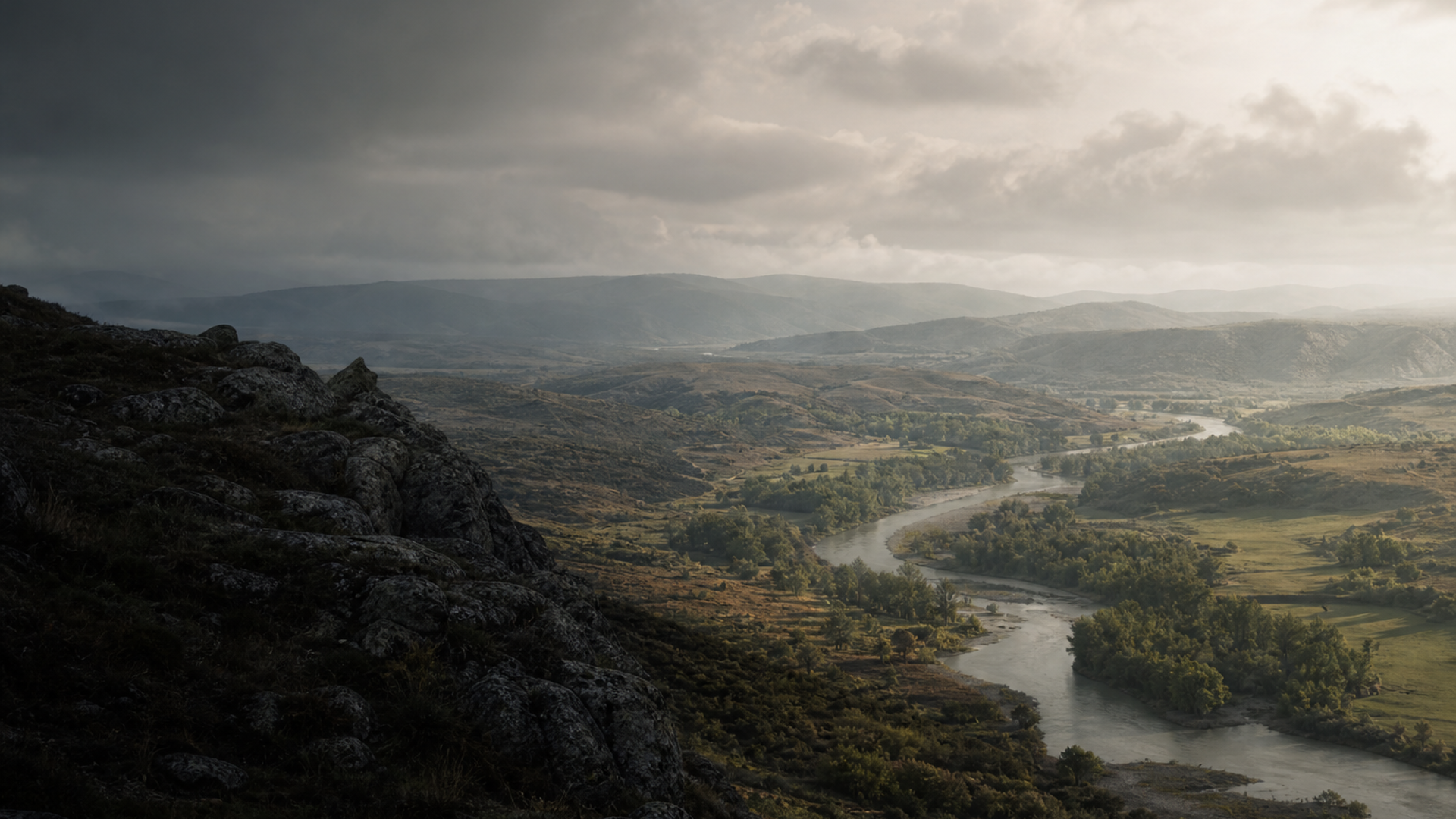
Genetic data from 89 individuals strengthens this picture: autosomal profiles are broadly consistent with Anatolian Neolithic-derived farmer ancestry, the genetic signature associated with the first widespread farming communities in Europe. At the same time, variable admixture from local Mesolithic hunter-gatherers is evident in some individuals, suggesting interaction and biological exchange at settlement frontiers. The convergence of material culture and DNA presents a cinematic landscape: new villages springing up along river valleys, wooden longhouses aligned like ships, and populations with a largely Anatolian-farmer genetic core adapting to Central European woodlands.

Limited evidence suggests regional diversity in timing and intensity of contact with indigenous groups, and the archaeological record preserves episodes of both coexistence and conflict. While the LBK package defines a cultural horizon, local trajectories in Austria show a tapestry of interaction rather than a simple replacement.

  • LBK longhouses and pottery found at Asparn-Schletz and Brunn Wolfholz
  • Anatolian-farmer ancestry is dominant but mixed with local hunter-gatherers
  • Settlement of floodplains between 5500–4500 BCE
Capítulo IV

Daily Life & Society

Archaeological contexts from Asparn-Schletz (including a water well and mass burial contexts) and Brunn Wolfholz sketch daily rhythms of an early farming economy. Crops such as einkorn and emmer, alongside cattle and pig husbandry, are inferred from regional archaeobotanical and faunal assemblages; pottery and polished stone tools speak to food preparation and storage. Longhouses—elongated timber structures—anchored family groups and craft activities, while pits and wells mark communal investment in water and refuse management.

Material traces suggest a community with specialized craft production: flint-knapping debris, early polished axes, and ornamented ceramics indicate skill transmission across generations. At Asparn-Schletz, archaeological data indicates episodes of interpersonal violence and rapid burial of multiple individuals; interpretations vary and must be cautious, but these layers hint at social stress, perhaps tied to competition over arable land or resources.

Social organization likely ranged from household-centered labor to broader cooperative ventures, such as ditch-digging and longhouse construction. Burial practices differ across sites, and mortality patterns recorded in cemeteries and wells reveal both the vulnerabilities of early farming life and the resilience of communities forging new lifeways in Central Europe.

  • Farming economy of einkorn, emmer, cattle, and pigs
  • Evidence for craft specialization and communal infrastructure
Capítulo V

Genetic Profile

The Austria_N_LBK dataset comprises 89 ancient individuals from sites including Asparn-Schletz (Niederösterreich, Mistelbach) and Brunn Wolfholz. This sample size allows more robust inferences than many early aDNA studies: genetic data indicate a dominant Anatolian-farmer autosomal ancestry with measurable admixture from Western Hunter-Gatherer (WHG) lineages in varying proportions across individuals.

Paternal haplogroups are notable for an unexpectedly high count of haplogroup C (26 individuals), alongside G (14), J (5), H (5), and single BT. Haplogroup G is commonly associated with Neolithic farmers in Europe, while the prominence of C and presence of J and H underscore regional complexity in male lineages. These patterns demand careful interpretation: they may reflect localized founder effects, post-migration male-mediated gene flow, or sampling biases tied to particular burial contexts. Maternal lineages show a diversity typical of Neolithic Europe: mtDNA haplogroups H (13), K (10), J (10), T2b (9), and T (7), consistent with maternal ancestry derived largely from early farming groups but including lineages that later became widespread in Europe.

Archaeogenetic models for Austria_N_LBK support a scenario of incoming farming populations carrying Anatolian-derived genomes, subsequently admixing with local foragers. Given the relatively large sample size, these conclusions are stronger than for many early-era datasets, but regional heterogeneity and chronological changes across the 1000-year span (5500–4500 BCE) mean some sub-patterns remain provisional. Where sample counts in sub-sites are small, interpretations should be treated as preliminary.

  • 89 samples show Anatolian-farmer autosomal ancestry with WHG admixture
  • High counts of Y haplogroup C and diverse mtDNA (H, K, J, T2b)
Capítulo VI

Legacy & Modern Connections

The genetic and archaeological imprint of Austria_N_LBK resonates through later European prehistory. The Anatolian-derived farmer ancestry carried by LBK communities contributed a substantial portion of the gene pool of Central Europe and seeded agricultural lifeways that reshaped landscapes and diets. Over millennia, this farmer ancestry mixed further with incoming groups (for example, later Bronze Age steppe-related migrations), producing the genetic mosaic seen in modern European populations.

Archaeological legacies—longhouse architecture, land-clearance practices, and pottery traditions—persist in cultural memory through regional Neolithic sequences. Genetic signals from Austria_N_LBK, especially maternal haplogroups like H and K, are ancestral components that remain detectable in later populations, though reshaped by subsequent movements. While direct lines of descent are complex and mediated by many events after 4500 BCE, these early farmers set trajectories of settlement, agriculture, and community that echo in the archaeological and genetic record of Europe today.

  • Contributed Anatolian-farmer ancestry to Central Europe
  • Material and genetic traces persist but were later reshaped by migrations
Com IA

Assistente de IA

Haz preguntas sobre la cultura Riverine Farmers of Early Austria

Assistente de IA por DNAGENICS

Desbloquear esta função
Pregunta sobre la cultura Riverine Farmers of Early Austria. El asistente con IA puede explicar hallazgos genéticos, contexto histórico, pruebas arqueológicas y conexiones modernas, con sus límites de interpretación.
Exemplo de análise com IA

La cultura Riverine Farmers of Early Austria representa un capítulo de la historia humana...

A análise genética permite estudar semelhanças com populações anteriores e possíveis adaptações. As amostras de DNA antigo fornecem informações para investigar padrões migratórios e relações entre populações, com limites que dependem do estudo e do contexto arqueológico.

Esta é uma antevisão da análise com IA. Aceder ao assistente completo para explorar informações sobre:

  • Composição e similaridade genética
  • Padrões migratórios e origens
  • Vida cotidiana e práticas culturais
  • Contexto genético moderno

Explore mais culturas antigas

Descubra a história de civilizações de diferentes partes do mundo antigo