A preparar o relatório

A carregar as informações e as referências disponíveis

Consultando el registro arqueológico...

Recopilando registros antiguos

Saltar para o conteúdo principal
Shum Laka Foragers (Cameroon SMA)
Cultura de destaque

Shum Laka Foragers (Cameroon SMA)

Early Holocene hunter-gatherers from Shum Laka—where stones and genomes speak together

6058 CE - 1055 BCE
Shum Laka, Northwest Cameroon
Desplázate para começar
Capítulo I

A História

Comprender la cultura Shum Laka Foragers (Cameroon SMA)

Archaeological and ancient-DNA evidence from Shum Laka (6058–1055 BCE) reveals a small sample of West-Central African foragers with deep African Y haplogroups (A00, B, B2b) and mtDNA L lineages; interpretations remain preliminary.

Time Period

6058–1055 BCE

Region

Shum Laka, Northwest Cameroon

Common Y-DNA

A00, B, B2b (observed)

Common mtDNA

L (all 4 samples)

Capítulo II

Cronologia

Momentos-chave da história desta cultura

6058 BCE

Earliest dated occupation at Shum Laka

Radiocarbon dates mark the beginning of the site's recorded sequence; archaeological deposits record episodic use across millennia.

Capítulo III

Origins & Emergence

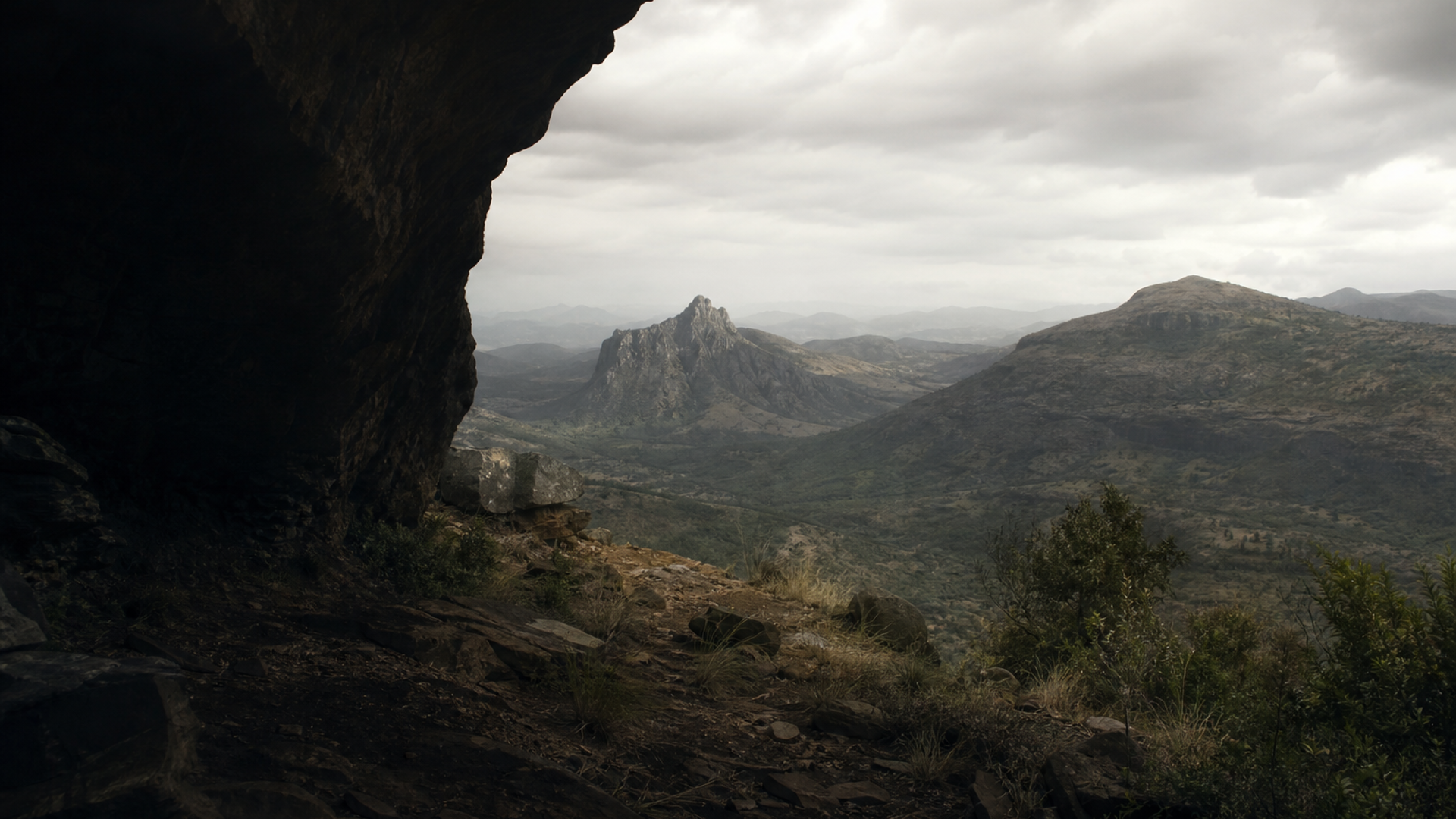
In the cool, shadowed entrance of Shum Laka rockshelter in northwest Cameroon, human presence is recorded across millennia. Archaeological deposits dated between 6058 and 1055 BCE preserve layered evidence of repeated occupation: stone tools, organic remains and burials contribute to a long human story in the forest–savanna ecotone. The culture label "Cameroon_SMA" (Stone Mound Architecture context) connects these deposits to broader Holocene settlement patterns in the region, although direct links between the Shum Laka sequence and later mound-building traditions remain uncertain.

Paleoenvironmental shifts during the Holocene—periodic drying and rearrangement of local waterways—likely shaped mobility and resource use. Limited evidence suggests these groups adapted through flexible subsistence strategies, exploiting forest and open-country resources. The archaeological record at Shum Laka preserves episodic human activity rather than a single, uniform lifeway: hearths and tool scatters indicate short-term camps and repeated returns, a rhythm of life shaped by seasonal abundance.

Archaeological data indicates a long-term human presence in this part of Central Africa, but many questions remain. The site offers a rare, multi-millennial window into West-Central African prehistory, yet regional synthesis awaits more excavations and securely dated comparative sequences.

  • Occupations dated 6058–1055 BCE at Shum Laka rockshelter
  • Archaeology shows episodic camps, lithics, organic remains and burials
  • Connections to later Stone Mound Architecture are plausible but not settled
Capítulo IV

Daily Life & Society

Daily life at Shum Laka is best imagined through fragmentary traces: chipped stone tools, ephemeral hearths and the bones of hunted animals. Archaeological sediments hint at small groups moving across a mosaic landscape—riverine corridors, gallery forest and open patches—harvesting tubers, wild fruits, and game. Seasonal mobility was likely central: campsites appear in stratified layers, suggesting returns to favored shelters across generations.

Material culture recovered from the site suggests technological adaptability rather than fixed craft traditions. Toolkits emphasize cutting and scraping, consistent with hunting, butchery and plant processing. There are hints of changing contact networks through the Holocene: occasional pottery and exotic raw materials imply exchanges with neighboring groups. Social life likely revolved around small kin networks; burials show care in interment, signaling remembered individuals and social bonds. However, the archaeological sample is limited and cannot fully reconstruct social complexity—interpretations must remain cautious.

  • Small mobile groups exploiting forest–savanna resources
  • Toolkits reflect hunting, butchery and plant processing; evidence for exchange is limited
Capítulo V

Genetic Profile

Ancient DNA from four individuals at Shum Laka provides a vivid, if tentative, genetic portrait. All four sampled individuals carry mitochondrial haplogroups within macro-haplogroup L, a lineage widespread across sub-Saharan Africa—suggesting maternal continuity in the region. On the paternal side, observed Y-DNA haplogroups include A00, B, and B2b (counts: A00:1, B:1, B2b:1); one individual lacked a resolvable Y assignment in the published summary or was female. These Y lineages are deep-rooted within African paternal diversity: A00 is particularly basal relative to other known Y lineages, and B/B2b reflect ancient branches with long histories in Africa.

When archaeology and genetics are read together, Shum Laka appears inhabited by populations carrying deep, regionally characteristic African ancestries rather than the lineages associated with later widespread expansions. Yet with only four genome-wide samples, conclusions are preliminary. Limited sample size (<10) means population-level patterns—such as continuity with earlier or later groups, or the degree of genetic interaction with incoming food-producing communities—cannot be robustly resolved. Future sampling across more sites and times will be essential to move from intriguing snapshots to a fuller demographic narrative.

  • All four individuals have mtDNA haplogroup L (maternal continuity)
  • Y-DNA shows rare, deep African lineages (A00, B, B2b); sample size is small and conclusions are preliminary
Capítulo VI

Legacy & Modern Connections

The voices from Shum Laka whisper into the present through genetic threads and archaeological echoes. The deep maternal lineages and rare paternal haplogroups found in these few individuals remind us that West-Central Africa harbors long-standing genetic diversity. However, the small sample and temporal gap to living communities mean direct genealogical links to specific modern ethnic groups cannot be firmly established.

For museums and DNA-ancestry platforms, Shum Laka illustrates how ancient genomes can illuminate past population structure while also warning against overinterpretation. These four genomes are powerful windows, not mirrors. Expanding the ancient dataset across time and landscape will clarify how much of the region’s genetic landscape reflects deep local persistence, versus later movements and cultural change.

  • Ancient genomes indicate deep-rooted regional diversity but do not map one-to-one onto modern groups
  • More ancient DNA and archaeological sampling are needed to trace continuity through the Holocene
Com IA

Assistente de IA

Haz preguntas sobre la cultura Shum Laka Foragers (Cameroon SMA)

Assistente de IA por DNAGENICS

Desbloquear esta função
Pregunta sobre la cultura Shum Laka Foragers (Cameroon SMA). El asistente con IA puede explicar hallazgos genéticos, contexto histórico, pruebas arqueológicas y conexiones modernas, con sus límites de interpretación.
Exemplo de análise com IA

La cultura Shum Laka Foragers (Cameroon SMA) representa un capítulo de la historia humana...

A análise genética permite estudar semelhanças com populações anteriores e possíveis adaptações. As amostras de DNA antigo fornecem informações para investigar padrões migratórios e relações entre populações, com limites que dependem do estudo e do contexto arqueológico.

Esta é uma antevisão da análise com IA. Aceder ao assistente completo para explorar informações sobre:

  • Composição e similaridade genética
  • Padrões migratórios e origens
  • Vida cotidiana e práticas culturais
  • Contexto genético moderno

Explore mais culturas antigas

Descubra a história de civilizações de diferentes partes do mundo antigo