A preparar o relatório

A carregar as informações e as referências disponíveis

Consultando el registro arqueológico...

Recopilando registros antiguos

Saltar para o conteúdo principal
Voices from Blatterhohle
Cultura de destaque

Voices from Blatterhohle

Middle Neolithic cave burials in Germany illuminated by archaeology and ancient DNA

3725 CE - 3024 BCE
Blatterhole Cave, Germany (North Rhine-Westphalia)
Desplázate para começar
Capítulo I

A História

Comprender la cultura Voices from Blatterhohle

Human remains from Blatterhohle Cave (3725–3024 BCE) reveal a small, mixed Middle Neolithic population. Archaeological context and genomes point to farmer–hunter–gatherer interaction; conclusions are preliminary because only four samples are available.

Time Period

3725–3024 BCE (Middle Neolithic)

Region

Blatterhole Cave, Germany (North Rhine-Westphalia)

Common Y-DNA

R / R1 (observed), I (observed)

Common mtDNA

U (2), H5 (1), J (1)

Capítulo II

Cronologia

Momentos-chave da história desta cultura

3725 BCE

Earliest dated individual in Blatterhohle sequence

Radiocarbon dates place one of the human remains near 3725 BCE, marking early Middle Neolithic use of the cave.

Capítulo III

Origins & Emergence

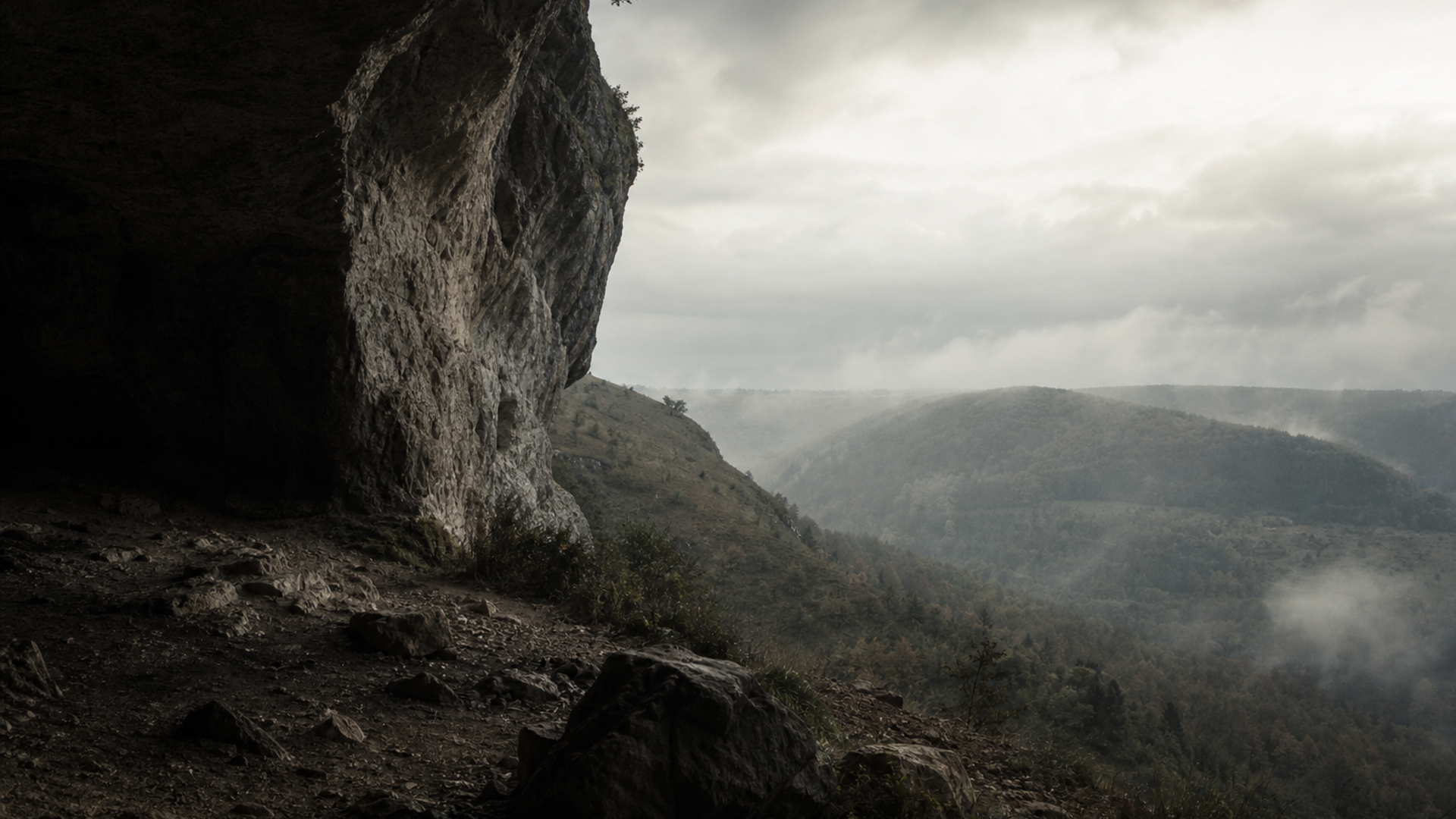
Beneath a cool, shadowed ledge of Blatterhohle Cave, people returned across generations. Radiocarbon dates from human remains span roughly 3725–3024 BCE, placing these individuals in the Middle Neolithic of Central Europe. Archaeological data indicates the cave functioned as a recurrent mortuary and activity locale rather than a single catastrophic deposit: bones, isolated artifacts, and stratigraphic complexity suggest episodic use over centuries.

Culturally, the horizon is one of interaction. Material cultures across Germany at this time show the legacy of early farming communities alongside persistent hunter‑gatherer traditions. Limited evidence from the Blatterhohle assemblage—both bone and artifact—is consistent with a population situated within that mosaic: farmers and locally rooted forager-descended people living in proximity and, at times, intermingling.

Geography matters. Blatterhohle sits in a landscape of mixed forest and river valleys that supported crops, livestock, wild game, and rich seasonal resources. While archaeological indicators imply agricultural practice and sedentism nearby, the cave’s deposits preserve a more complex story of mobility, ritual deposition, and social memory.

Because the genomic dataset for this site consists of only four individuals, interpretations about population dynamics remain provisional. Still, when combined with the archaeological record, these remains open a cinematic window onto the slow, textured emergence of Middle Neolithic life in this region.

  • Human remains in Blatterhohle dated to 3725–3024 BCE
  • Cave used episodically as mortuary and activity site
  • Archaeological evidence suggests farmer–forager interaction
Capítulo IV

Daily Life & Society

Archaeological traces from the Blatterhohle assemblage evoke hands busy with both fieldwork and foraging. Pottery sherds and worked bone in nearby contexts indicate domestic crafts; faunal remains across the region point to mixed subsistence strategies that combined domesticated animals and hunted resources. Pollen and environmental reconstructions for North Rhine-Westphalia suggest a patchwork landscape of cleared fields and wooded corridors—an environment where small farming communities could exploit both cultivated and wild resources.

Caves in this period often carried social and symbolic weight. The deposition of human remains within Blatterhohle implies deliberate choices about ancestry, place, and memory: some individuals may have been interred in ritual contexts, others placed in less formal ways. Archaeological data indicates variability in treatment of the dead across contemporaneous Middle Neolithic sites, pointing to social differentiation or changing practices over time.

Material culture from the greater region shows evidence of exchange and interaction: pottery styles, raw material sourcing for stone tools, and shared technological traditions suggest networks linking households across river valleys. Yet at the scale of Blatterhohle itself, the paucity of associated grave goods and the fragmented nature of the remains counsel caution: the picture is intimate and incomplete.

Taken together, these strands suggest a community negotiating new lifeways—sedentary farming, persistent wild-resource use, and evolving social rites centered on landscape and place.

  • Mixed subsistence: agriculture alongside hunting and gathering
  • Cave deposits indicate varied mortuary practices and social memory
Capítulo V

Genetic Profile

Ancient DNA from four individuals recovered at Blatterhohle provides a preliminary genetic snapshot of a Middle Neolithic population. The Y‑chromosome results include lineages labeled R and I (with one R1), while mitochondrial haplogroups include U (two individuals), H5, and J. These uniparental markers reflect a mixture of ancestries commonly observed in Neolithic Europe: maternal U lineages are often associated with Mesolithic hunter‑gatherers, while H and J lineages are frequent among Neolithic farming populations.

Genome-wide studies in Central Europe have documented a broad admixture between Anatolian-derived early farmers and indigenous Western Hunter‑Gatherers (WHG). Although genome-wide data from Blatterhohle are limited, the uniparental pattern—Y diversity including I (frequent among hunter‑gatherers) alongside R/R1, and mtDNA showing both hunter‑gatherer‑linked U and farmer‑associated H/J—aligns with an interpretation of local admixture between farmer and forager ancestries.

Important caveats apply: with only four samples, statistical power is low and any population-level claims are tentative. The presence of R/R1 in the Neolithic context does not by itself indicate later Steppe-derived ancestry (which becomes more prominent after the third millennium BCE); similarly, mtDNA U does not prove exclusive hunter‑gatherer identity for those individuals. Archaeological context, broader regional genomic datasets, and future additional samples will be essential to refine these initial genetic signals.

Nonetheless, these four genomes from Blatterhohle resonate with a larger continental story: the slow blending of peoples and genomes that reshaped European populations in the Neolithic.

  • Uniparental markers: Y = R/R1 and I; mtDNA = U (2), H5, J
  • Patterns suggest local admixture between Neolithic farmers and hunter‑gatherers, but sample size is small
Capítulo VI

Legacy & Modern Connections

The human story emerging from Blatterhohle is a fragment of the deep ancestry that contributes to modern European genetic diversity. Haplogroups observed at the site—both maternal U and farmer‑associated lineages—persist in varying frequencies across Europe today, signposting long threads of continuity and replacement. Archaeological and genetic traces from this cave illuminate how local hunter‑gatherer lineages could survive and intermingle with incoming farming groups, a pattern replicated in many regions of Neolithic Europe.

However, caution is crucial: direct lineal descent from these four individuals to any living community cannot be claimed on the basis of the current data. Instead, Blatterhohle offers a cinematic, human-scale vignette of processes—migration, contact, and cultural transformation—that over millennia produced the mosaic of ancestries seen in present populations.

As ancient DNA sampling expands and new sites are analyzed, the Blatterhohle individuals will form part of a richer comparative database, helping to map who moved where, when, and how often people’s genomes blended across the European landscape.

  • Findings illustrate persistence and mixing of hunter‑gatherer and farmer lineages
  • Current conclusions are preliminary; more samples will clarify long-term connections
Com IA

Assistente de IA

Haz preguntas sobre la cultura Voices from Blatterhohle

Assistente de IA por DNAGENICS

Desbloquear esta função
Pregunta sobre la cultura Voices from Blatterhohle. El asistente con IA puede explicar hallazgos genéticos, contexto histórico, pruebas arqueológicas y conexiones modernas, con sus límites de interpretación.

Exemplo de análise com IA

La cultura Voices from Blatterhohle representa un capítulo de la historia humana...

A análise genética permite estudar semelhanças com populações anteriores e possíveis adaptações. As amostras de DNA antigo fornecem informações para investigar padrões migratórios e relações entre populações, com limites que dependem do estudo e do contexto arqueológico.

Esta é uma antevisão da análise com IA. Aceder ao assistente completo para explorar informações sobre:

  • Composição e similaridade genética
  • Padrões migratórios e origens
  • Vida cotidiana e práticas culturais
  • Contexto genético moderno

Explore mais culturas antigas

Descubra a história de civilizações de diferentes partes do mundo antigo