Saltar para o conteúdo principal
Cultura de destaque

Voices of Modern Tajikistan

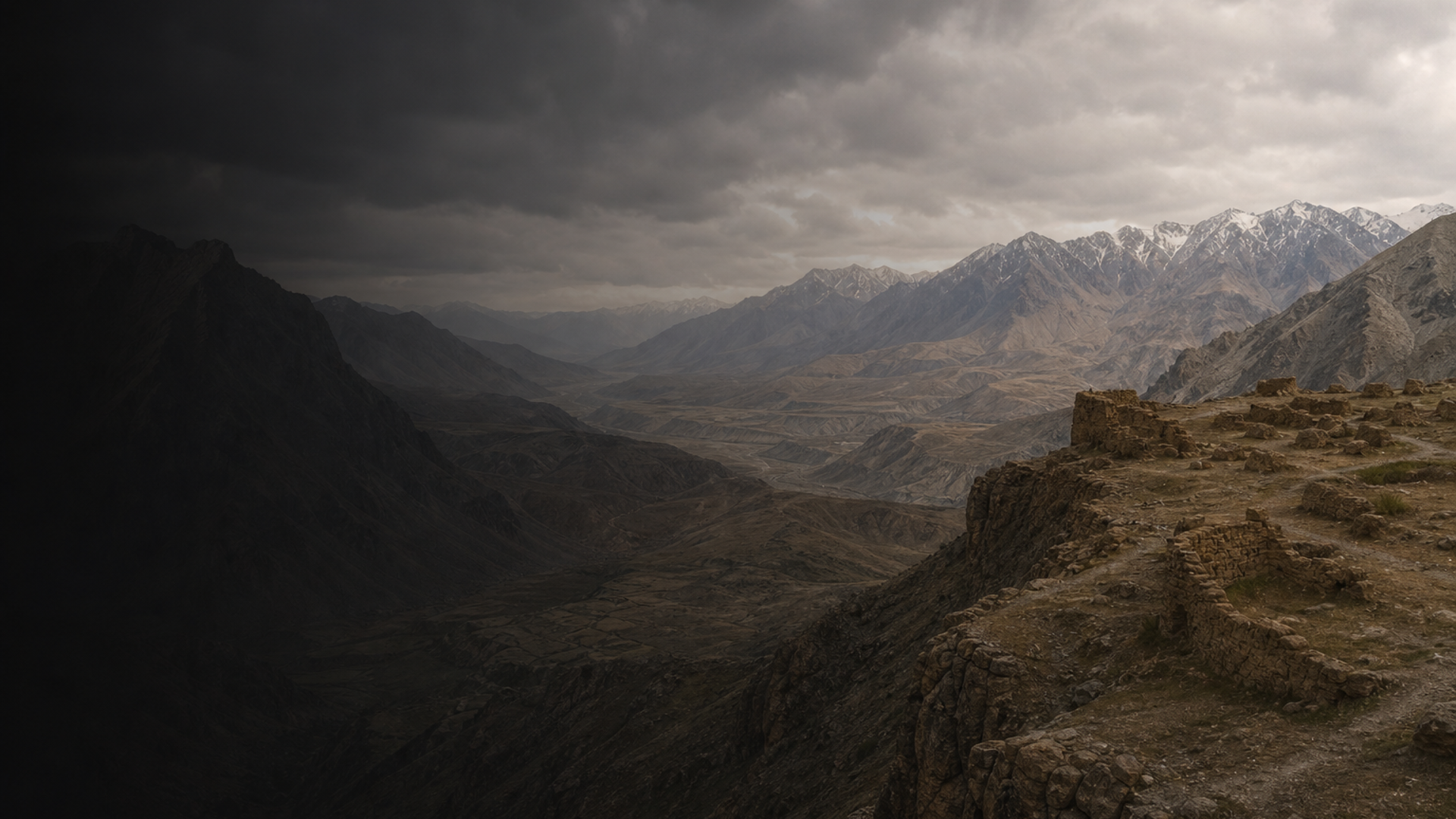
Contemporary landscapes and genetic echoes across the high Pamirs and river valleys

2000 CE
Tajikistan (Gorno-Badakhshan; Gissar; Kulyab)

A História

Modern Tajikistan samples (n=41) capture genetic and archaeological continuity across Gorno-Badakhshan, Gissar and Kulyab. Archaeological landscapes and DNA point to layered West Eurasian, steppe and regional influences shaped by trade, mountain isolation and historical migrations.

Time Period

2000 CE (modern)

Region

Tajikistan (Gorno-Badakhshan; Gissar; Kulyab)

Common Y-DNA

Diverse/varied; no single dominant haplogroup reported

Common mtDNA

Diverse maternal lineages; regionally heterogeneous

Cronologia

600 BCE

Early urban and trade networks (regional foundations)

Emerging urbanism and trade in the broader Central Asian region establish long-distance connections predating Silk Road prominence.

600 CE

Sogdian commercial florescence

Sogdian merchants link Central Asian valleys to Silk Road trade, leaving cultural and material traces across Tajik territories.

1220 CE

Mongol-era upheavals

Large-scale movements and political realignments reshape population distributions in Central Asia, including Tajik lands.

1991 CE

Independence of Tajikistan

Modern national boundaries and demographic policies influence patterns of mobility and genetic sampling in the region.

Origins & Emergence

The modern peoples of Tajikistan occupy an ancient crossroads where towering ranges funnel human movement through narrow valleys. Archaeological data indicates long-term settlement in river basins such as the Gissar and along routes that later became arteries of the Silk Road. Sites in Shughnon, Rushan, Ishkasim and the Murgab plateau preserve terrace agriculture, pastoral camps and trade-layer deposits that speak to adaptive lifeways.

Linguistically and culturally, Tajiks are primarily Persian-speaking, a connection that reflects deep historical ties to Iranian-speaking populations of the Iranian plateau and trans-Hoxud cultural zones. Limited evidence suggests that mountain communities — particularly in Gorno-Badakhshan and Shughnon District — maintained distinct material cultures and burial traditions that overlap partially with broader Central Asian patterns.

Archaeology points to layered processes: earlier Iron Age and Sogdian-era connections across the plains and valleys, medieval merchant networks, and later movements tied to steppe dynamics. These layers created a palimpsest of settlement and mobility; where the mountains limit travel they also preserve local traditions. The modern DNA samples (see Genetics) offer a way to read these layers alongside the surviving archaeological record, highlighting both long-range connections and localized persistence.

  • Modern populations inhabit valleys and high pastures with long archaeological continuity
  • Material traces show interaction with Silk Road networks and local mountain traditions
  • Cultural identity shaped by Iranian-language heritage and regional isolation

Daily Life & Society

Daily life in the regions sampled — from Kulyab and Gissar lowlands to the high camps of Shughnon and the Murgab basin — reflects an interplay between agriculture, pastoralism and long-distance exchange. Archaeological remains such as field terraces, irrigation channels, house foundations and refuse scatters demonstrate intensive cultivation in river valleys and seasonal transhumance higher up. Markets and caravan stops historically anchored towns where coins, imported ceramics and craft debris accumulate in stratified layers.

Communities balanced grain cultivation in irrigated plains with sheep and yak herding in alpine pastures. Architectural evidence and ethnographic continuity point to courtyard houses and clustered villages in valleys, while stone shelters and summer encampments survive higher on slopes. Religious and social change over the last millennium — notably the spread of Islam and later administrative reorganizations — layered new practices onto older patterns.

Material culture shows skilled textile work, metal tools, and locally produced pottery alongside imported goods, indicating both local craft traditions and participation in wider exchange networks. Archaeology thus paints a picture of resilient, adaptive societies tuned to steep terrain and seasonal rhythms.

  • Mixed economy: irrigated agriculture in valleys, transhumant pastoralism in highlands
  • Markets and caravan routes linked local craft and imported goods

Genetic Profile

The genetic dataset for this Modern_Tajikistan grouping comprises 41 contemporary samples drawn from across Tajikistan, including sites in Shughnon District, Rushan, Ishkasim, Aininsky, Murgab, Kulyab and Gissar. While 41 samples provide a meaningful regional snapshot, they remain geographically uneven and cannot capture the full diversity of all Tajik and Pamiri subgroups.

Genomic signals in Tajikistan reflect a mosaic heritage. Archaeogenetic research in Central Asia more broadly documents major ancestral components: an Iran-related (West Eurasian) substratum associated with early agricultural and urban societies, contributions linked to Bronze Age and Iron Age steppe populations, and varying inputs from South and East Asian sources over millennia. Modern Tajik genomes typically show admixture of these elements; in mountainous locales greater continuity with local lineages is often detectable due to reduced gene flow.

Specific Y‑DNA and mtDNA haplogroup summaries are not reported here as dominant single-lineage patterns are not evident in the dataset; instead, the samples show varied paternal and maternal lineages consistent with a history of migration and local continuity. Interpretation should remain cautious: population movements, recent historical events (medieval trade, Mongol-era upheavals, and Russian/Soviet-era mobilities) all reshaped genetic landscapes. Future, denser sampling and ancient DNA from regional archaeological layers would refine models of timing and source contributions.

  • 41 modern samples from diverse Tajik districts provide a regional genetic snapshot
  • Genomes indicate mixed West Eurasian, steppe and regional mountain ancestry

Legacy & Modern Connections

The living cultural landscape of Tajikistan preserves threads that stretch deep into antiquity: language, agricultural systems, and localized mountain traditions persist alongside modern state structures. DNA ancestry platforms can reveal how present-day Tajik communities carry admixture signals from ancient Iranian-speaking populations, steppe migrations, and contacts with South and East Asia.

Archaeological continuity in valley settlements and persistent highland lifeways suggest that genetic signals of continuity coexist with detectable layers of admixture from episodic migration and trade. For users of genetic ancestry services, this means that a Tajik genetic profile often reflects both deep regional roots and broader Central Asian connections. Ongoing collaboration between archaeologists and geneticists — and expanded sampling that includes both modern and ancient remains — will sharpen our understanding of how landscapes, trade, and mountain isolation together shaped the genomes of modern Tajik populations.


  • Modern Tajik identities reflect deep regional roots and layered historical connections
  • Combined archaeological and genetic study refines understanding of local continuity vs. migration

Assistente de IA

Assistente de IA por DNAGENICS

Desbloquear esta função
Pregunta sobre la cultura Voices of Modern Tajikistan. El asistente con IA puede explicar hallazgos genéticos, contexto histórico, pruebas arqueológicas y conexiones modernas, con sus límites de interpretación.
Exemplo de análise com IA

La cultura Voices of Modern Tajikistan representa un capítulo de la historia humana...

A análise genética permite estudar semelhanças com populações anteriores e possíveis adaptações. As amostras de DNA antigo fornecem informações para investigar padrões migratórios e relações entre populações, com limites que dependem do estudo e do contexto arqueológico.

Esta é uma antevisão da análise com IA. Aceder ao assistente completo para explorar informações sobre:

  • Composição e similaridade genética
  • Padrões migratórios e origens
  • Vida cotidiana e práticas culturais
  • Contexto genético moderno