A preparar o relatório

A carregar as informações e as referências disponíveis

Consultando el registro arqueológico...

Recopilando registros antiguos

Saltar para o conteúdo principal
West Liao River Mid‑Neolithic Echoes
Cultura de destaque

West Liao River Mid‑Neolithic Echoes

Small skeletal sample from Banla Mountain reveals threads of Neolithic northeastern China

3550 CE - 3050 BCE
Liaoning, Northeast China (Banla Mountain, Chaoyang)
Desplázate para começar
Capítulo I

A História

Comprender la cultura West Liao River Mid‑Neolithic Echoes

Archaeological and genetic snapshots from Banla Mountain (Liaoning) dating 3550–3050 BCE link Middle Neolithic lifeways on the West Liao River to deep East Asian maternal lineages and a common O2a paternal signal. Limited samples mean conclusions are provisional.

Time Period

3550–3050 BCE

Region

Liaoning, Northeast China (Banla Mountain, Chaoyang)

Common Y-DNA

O2a (1 sample)

Common mtDNA

D (2 samples)

Capítulo II

Cronologia

Momentos-chave da história desta cultura

3300 BCE

Occupation at Banla Mountain

Mid‑Neolithic occupation layers at Banla Mountain record seasonal settlements and material culture typical of the West Liao River basin.

Capítulo III

Origins & Emergence

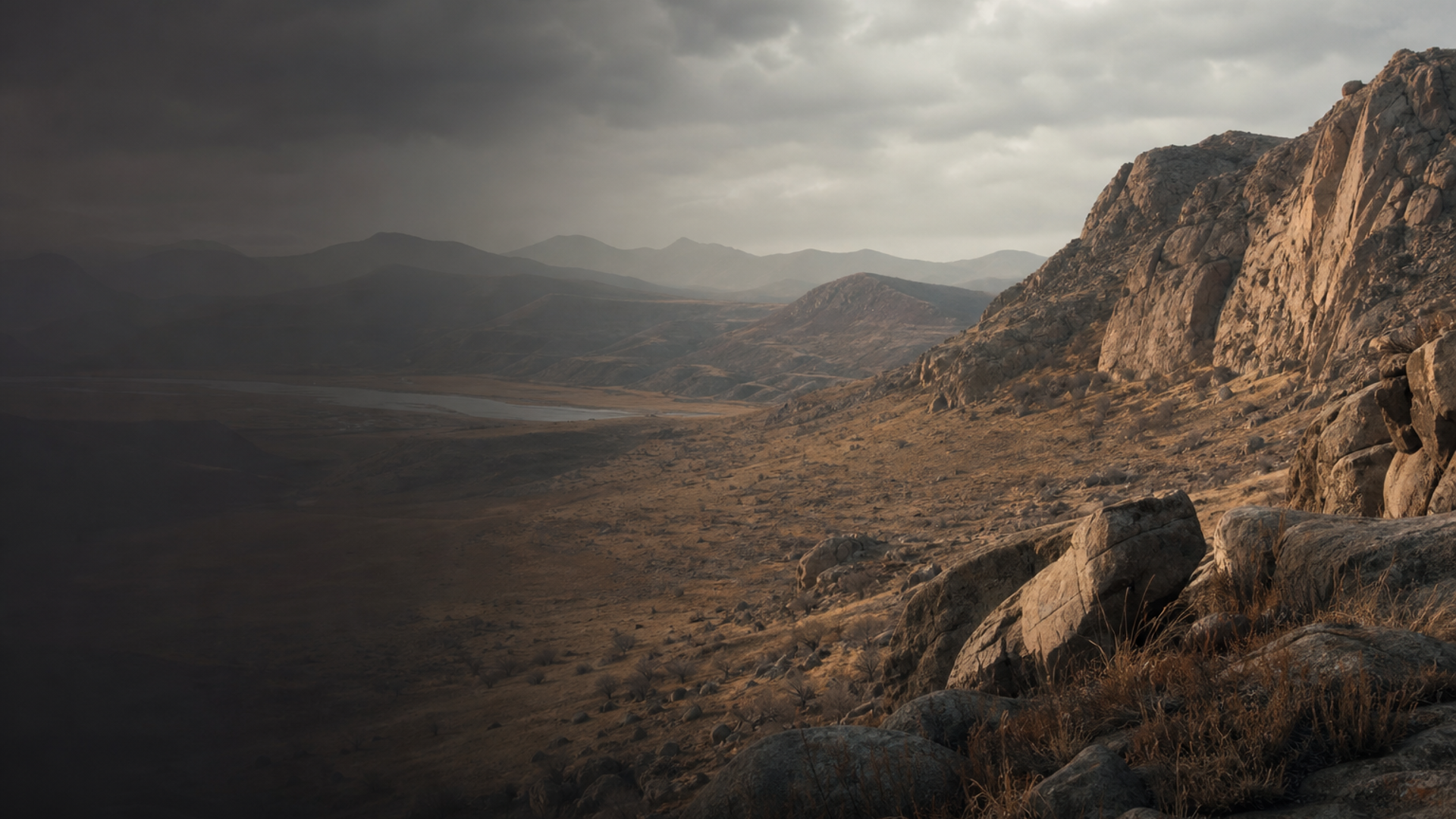
The China_WLR_MN group, sampled at Banla Mountain near Chaoyang city in Liaoning, sits within the Middle Neolithic phase of the West Liao River valley (c. 3550–3050 BCE). Archaeological data indicates a landscape of river terraces and loess that supported expanding wetland hunting, fishing and early dryland cultivation. Material culture shows tempered pottery with corded and incised decoration, small ground stone tools, and site patterns that echo other West Liao River communities.

These communities likely emerged from earlier Neolithic populations in northeastern China, adapting to seasonal resources and intensifying millet cultivation across the river basin. Limited evidence suggests interactions—trade or shared ritual vocabulary—with contemporaneous lowland and upland neighbors rather than sweeping population replacements. At Banla Mountain the stratigraphy and features imply repeated seasonal occupations; midden deposits and hearths preserve a tangible record of how people rooted themselves in a watery, wooded world.

Because only a handful of genetic samples are available, connecting material-cultural sequences to demographic events remains tentative. Archaeological contexts provide the scaffold; the genetic data offer the first, still-fragile threads tying these sites to broader East Asian prehistoric lineages.

  • Middle Neolithic West Liao River context (3550–3050 BCE)
  • Banla Mountain site in Chaoyang city, Liaoning
  • Material culture: pottery, ground stone, seasonal occupation
Capítulo IV

Daily Life & Society

Daily life in the West Liao River Middle Neolithic conjures a rhythm of seasons: planting and harvesting small-grained crops, hunting deer and boar, fishing riverine species, and collecting wild plants. Archaeological features at Banla Mountain and nearby sites indicate semi-subterranean dwellings or pit houses, storage pits for grain and caches of ground stone tools for processing millet and other plants. Pottery shapes—bowls and deep vessels—suggest cooking and communal feasting played roles in social cohesion.

Burial evidence in the broader region hints at varied mortuary treatment: isolated burials, occasional grave goods, and spatial differentiation that may reflect emerging social distinctions. Craft specialization appears modest but present; polished bone and antler tools, simple ornaments, and deliberate pottery styles reveal aesthetic choices and local traditions. Seasonal mobility likely coexisted with increasing sedentism as agriculture intensified, producing settlements that balanced mobility with anchored resource zones along the river and its tributaries.

  • Millet cultivation, hunting, fishing, and plant gathering
  • Semi-subterranean dwellings, storage pits, communal pottery
Capítulo V

Genetic Profile

Genetic sampling from Banla Mountain currently comprises three individuals dated between 3550 and 3050 BCE. Uniparental markers show one individual carrying Y‑DNA haplogroup O2a and two individuals carrying mitochondrial haplogroup D. Haplogroup O2a is widespread in modern East and Southeast Asia and is often associated with Neolithic agricultural expansions in East Asia; haplogroup D is a common maternal lineage in northern and northeastern Asian populations.

These findings tentatively suggest continuity of East Asian paternal and maternal lineages in the West Liao River area during the Middle Neolithic. However, with only three samples the picture is fragmentary: patterns of sex-biased migration, local continuity, or admixture with neighboring groups cannot be robustly resolved. Autosomal genome-wide data would be required to test hypotheses about population structure, gene flow, and relationships to later Bronze Age groups.

In sum, the genetic evidence complements archaeological indications of a region rooted in local Neolithic traditions, but its limited sample size (<10) mandates caution—these are early genetic glimpses, not definitive population histories.

  • Y‑DNA O2a present (1/3 samples); widespread in Neolithic East Asia
  • mtDNA D found in 2 samples; consistent with northeastern maternal lineages
Capítulo VI

Legacy & Modern Connections

Archaeological and genetic threads from Banla Mountain weave into the long tapestry of northeastern China. Material culture and subsistence strategies practiced by Middle Neolithic West Liao River communities—millet agriculture, riverine resource exploitation, pottery traditions—helped shape later cultural developments in Liaoning and beyond. The presence of O2a and mtDNA D suggests some genetic continuity with present-day populations of Northeast Asia, though the extent of that continuity awaits broader sampling.

Culturally, practices refined in the Neolithic—storage, sedentism, craft conventions—may have laid groundwork for regional complexity in the Bronze Age. Genetically, these early individuals offer anchor points for modeling ancestry in later populations, but any direct lines of descent should be treated as provisional until larger datasets permit finer resolution. The legacy of China_WLR_MN is thus both material and genomic: local lifeways seen in potsherds and hearths, and nascent genetic signals that hint at deep roots in East Asia.

  • Contributes to regional Neolithic cultural continuity and subsistence practices
  • Preliminary genetic ties to modern Northeast Asian lineages; more samples needed
Com IA

Assistente de IA

Haz preguntas sobre la cultura West Liao River Mid‑Neolithic Echoes

Assistente de IA por DNAGENICS

Desbloquear esta função
Pregunta sobre la cultura West Liao River Mid‑Neolithic Echoes. El asistente con IA puede explicar hallazgos genéticos, contexto histórico, pruebas arqueológicas y conexiones modernas, con sus límites de interpretación.
Exemplo de análise com IA

La cultura West Liao River Mid‑Neolithic Echoes representa un capítulo de la historia humana...

A análise genética permite estudar semelhanças com populações anteriores e possíveis adaptações. As amostras de DNA antigo fornecem informações para investigar padrões migratórios e relações entre populações, com limites que dependem do estudo e do contexto arqueológico.

Esta é uma antevisão da análise com IA. Aceder ao assistente completo para explorar informações sobre:

  • Composição e similaridade genética
  • Padrões migratórios e origens
  • Vida cotidiana e práticas culturais
  • Contexto genético moderno

Explore mais culturas antigas

Descubra a história de civilizações de diferentes partes do mundo antigo