A preparar o relatório

A carregar as informações e as referências disponíveis

Consultando el registro arqueológico...

Recopilando registros antiguos

Saltar para o conteúdo principal
Wulanbuluke Iron Age Voices
Cultura de destaque

Wulanbuluke Iron Age Voices

A small genetic window into 385–197 BCE life on the Yili steppe

385 CE - 197 BCE
Xinjiang (Yili Region), China
Desplázate para começar
Capítulo I

A História

Comprender la cultura Wulanbuluke Iron Age Voices

Archaeological and genetic evidence from three Iron Age individuals at Wulanbuluke (Nileke County, Xinjiang; 385–197 BCE) reveals maternal lineages C and D. Limited samples suggest East Asian/Siberian affinities, but conclusions remain preliminary.

Time Period

385–197 BCE (Late Iron Age)

Region

Xinjiang (Yili Region), China

Common Y-DNA

Not reported / no consensus

Common mtDNA

C (2), D (1)

Capítulo II

Cronologia

Momentos-chave da história desta cultura

385 BCE

Earliest dated individuals at Wulanbuluke

The Wulanbuluke human remains date to the Late Iron Age (c. 385 BCE), offering a limited genetic and archaeological snapshot of Yili region populations.

Capítulo III

Origins & Emergence

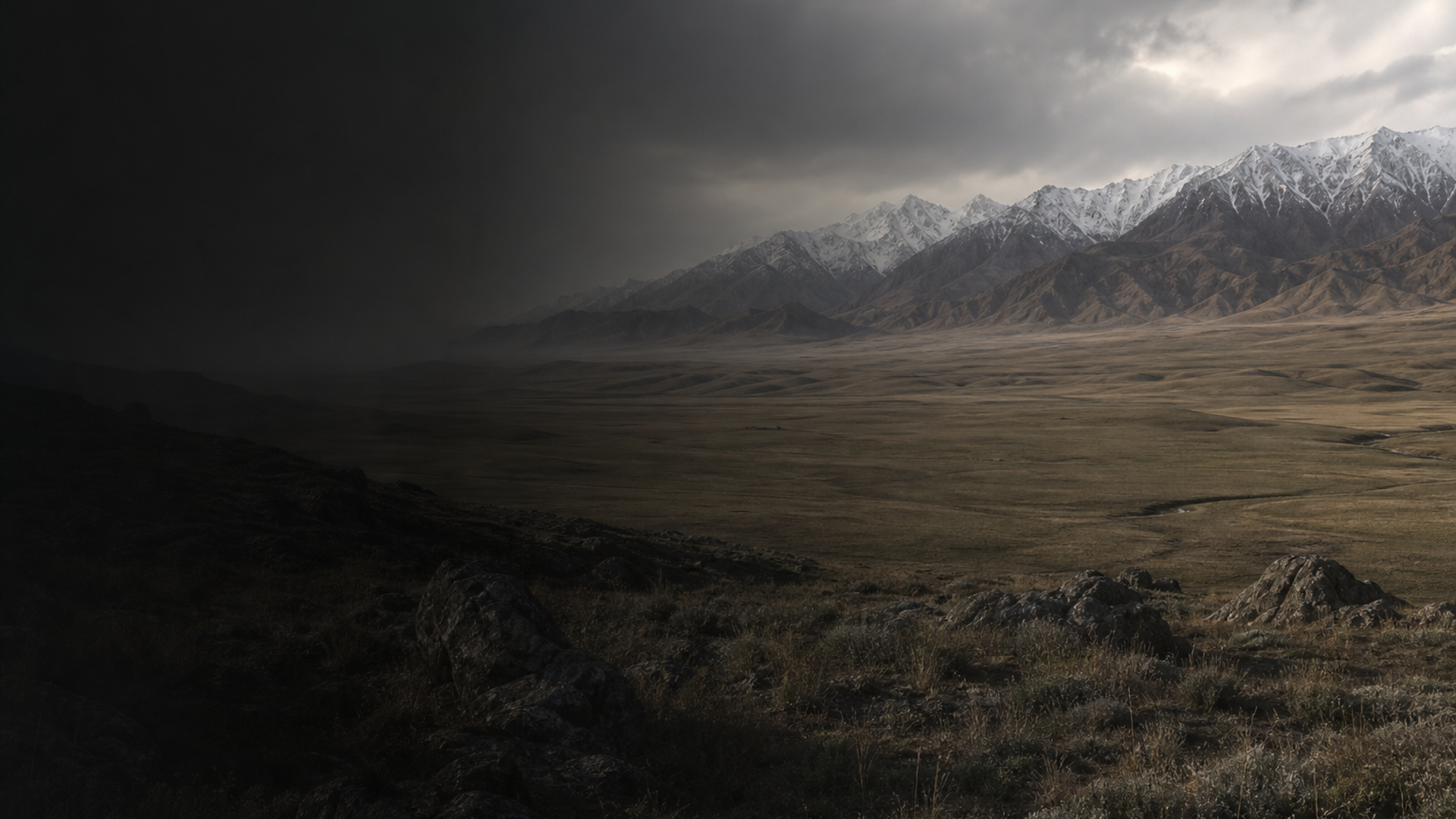
The Wulanbuluke assemblage sits at the crossroads of the northern Himalayan foothills and the open plains of the Yili basin. Archaeological data indicates human activity in this locality during the Late Iron Age (circa 385–197 BCE), a period of increasing mobility across northern Xinjiang. Limited excavations and survey work at Wulanbuluke (Nileke County) have produced a small number of human remains and associated material traces that form the basis of our genetic window.

Cinematic asides aside, the material footprint at Wulanbuluke is modest — fragmentary burials and surface finds rather than large settlement complexes — which constrains firm cultural attributions. Limited evidence suggests these people participated in the pastoral and interregional exchange networks characteristic of Iron Age Xinjiang, where mountain pastures, river corridors, and steppe routes funneled people and goods. The genetic data (three sampled individuals) provide tantalizing but preliminary clues to maternal ancestry; they must be read alongside the archaeological record, which currently offers only a narrow, local snapshot rather than a comprehensive cultural portrait.

Taken together, Wulanbuluke likely reflects a community negotiating local lifeways and broader connections across Inner Asia. However, with such slim archaeological and genetic samples, any narrative of origin remains provisional and open to revision as new data emerge.

  • Site: Wulanbuluke, Nileke County, Yili Region, Xinjiang, China
  • Date range: 385–197 BCE (Late Iron Age)
  • Evidence base is small—interpretations are provisional
Capítulo IV

Daily Life & Society

Archaeological indicators from Late Iron Age Xinjiang emphasize mobility, pastoral strategies, and seasonal use of landscapes; Wulanbuluke likely participated in this ecology. Portable material culture, ephemeral hearths, and burial traces in comparable regional sites suggest communities balanced herding, small-scale cultivation in river valleys, and exchange along upland corridors. At Wulanbuluke, the archaeological footprint appears limited, but the site's location in the Yili basin places it within a mosaic of pastureland and transregional routes that would have shaped daily rhythms.

Social life in such settings is often structured around kin groups, herd management, and the maintenance of networks for marriage, trade, and information. Ritual practices and funerary variability across Xinjiang's Iron Age show a range of mortuary behaviors; however, the Wulanbuluke sample is too small to characterize local rites confidently. Material remains that do occur—ceramics, metal fragments, or textile impressions at contemporaneous sites—hint at skilled craftwork and long-distance connections. Archaeological data indicates that communities here were neither isolated nor static: seasonal movement, exchange of animals and goods, and episodic contacts with neighboring highland and steppe groups were probably part of everyday life.

Because evidence at Wulanbuluke is fragmentary, reconstructions of social structure and economy must remain cautious and comparative, drawing on broader regional patterns rather than site-specific certainties.

  • Likely pastoral and seasonally mobile lifeways shaped by the Yili basin
  • Material record is sparse—regional comparisons inform social reconstructions
Capítulo V

Genetic Profile

Three individuals from Wulanbuluke were analyzed for mitochondrial DNA, revealing two members with haplogroup C and one with haplogroup D. Both C and D are deep-rooted maternal lineages common across northern and eastern Asia and are frequently detected in ancient Siberian, Mongolic, and East Asian contexts. Their presence at Wulanbuluke is consistent with maternal ancestry connected to the broader East Asian–Siberian genetic continuum that influenced Xinjiang populations during the Iron Age.

Crucially, no consistent Y-chromosome signal is reported for these samples, so paternal heritage and potential sex-biased mobility remain unresolved. With only three genomes, statistical power is very limited: if the sample count were greater than ten we could begin to test population structure, but with n = 3 our interpretations must be cautious. Limited evidence suggests maternal continuity with regional East Asian/Siberian lineages, but alternative scenarios—small local founder groups, episodic migration, or admixture with steppe-origin people—cannot be excluded.

These mitochondrial signatures do not speak to cultural identity directly but provide a biological dimension to archaeological narratives. Future genome-wide sampling and larger Y-DNA datasets will be necessary to resolve questions about admixture, sex-specific mobility, and connections to contemporary Xinjiang populations.


  • mtDNA: C (2 individuals), D (1 individual) — East Asian/Siberian maternal affinities
  • Y-DNA: not reported; sample size (n=3) is too small for firm demographic conclusions
Capítulo VI

Legacy & Modern Connections

Wulanbuluke's small genetic snapshot offers a poetic reminder that the Yili landscape has been a conduit of people and genes for millennia. The maternal haplogroups detected—C and D—persist in many modern populations across northern and eastern Eurasia, suggesting threads of biological continuity, even as cultures and languages shifted around them. Archaeological data indicates that Iron Age communities in Xinjiang were dynamic participants in regional networks; the genetic evidence from Wulanbuluke reinforces the theme of connectivity rather than isolation.

At the same time, the tiny sample set constrains claims about direct ancestry to any specific modern group. Limited evidence suggests affinities rather than direct lines of descent. As more sites are examined and more genomes sequenced, Wulanbuluke will form one piece in a larger puzzle tracing how maternal lineages moved and merged across Inner Asia. For now, it stands as an evocative, preliminary window into the living tapestry of Iron Age Xinjiang.

  • Maternal haplogroups C and D echo regional continuity across northern and eastern Eurasia
  • Conclusions about modern ancestry are tentative—more samples are needed
Com IA

Assistente de IA

Haz preguntas sobre la cultura Wulanbuluke Iron Age Voices

Assistente de IA por DNAGENICS

Desbloquear esta função
Pregunta sobre la cultura Wulanbuluke Iron Age Voices. El asistente con IA puede explicar hallazgos genéticos, contexto histórico, pruebas arqueológicas y conexiones modernas, con sus límites de interpretación.
Exemplo de análise com IA

La cultura Wulanbuluke Iron Age Voices representa un capítulo de la historia humana...

A análise genética permite estudar semelhanças com populações anteriores e possíveis adaptações. As amostras de DNA antigo fornecem informações para investigar padrões migratórios e relações entre populações, com limites que dependem do estudo e do contexto arqueológico.

Esta é uma antevisão da análise com IA. Aceder ao assistente completo para explorar informações sobre:

  • Composição e similaridade genética
  • Padrões migratórios e origens
  • Vida cotidiana e práticas culturais
  • Contexto genético moderno

Explore mais culturas antigas

Descubra a história de civilizações de diferentes partes do mundo antigo