Menu
Store
Blog
Arroyo Seco II, Pampas, Argentina

Arroyo Seco II — Voices of the Pampas

Early Holocene inhabitants of the Argentine Pampas revealed by archaeology and ancient DNA

7010 CE - 5350 BCE
Scroll to begin
Chapter I

The Story

Understanding the Arroyo Seco II — Voices of the Pampas culture

Arroyo Seco II (c. 7010–5350 BCE) preserves early Holocene burials and tools in the Pampas. Genetic data from five individuals shows predominance of Y-haplogroup Q and maternal lineages A2, C1b, D1, suggesting connections to early Native American populations. Conclusions are preliminary.

Time Period

7010–5350 BCE

Region

Arroyo Seco II, Pampas, Argentina

Common Y-DNA

Q (predominant)

Common mtDNA

C1b, D1, A2, D1g

Chapter II

Timeline

Key moments in the history of this culture

7010 BCE

Early Holocene occupation at Arroyo Seco II

Radiocarbon-dated materials indicate human activity and burials at Arroyo Seco II beginning around 7010 BCE, marking early Holocene presence in the Pampas.

Chapter III

Origins & Emergence

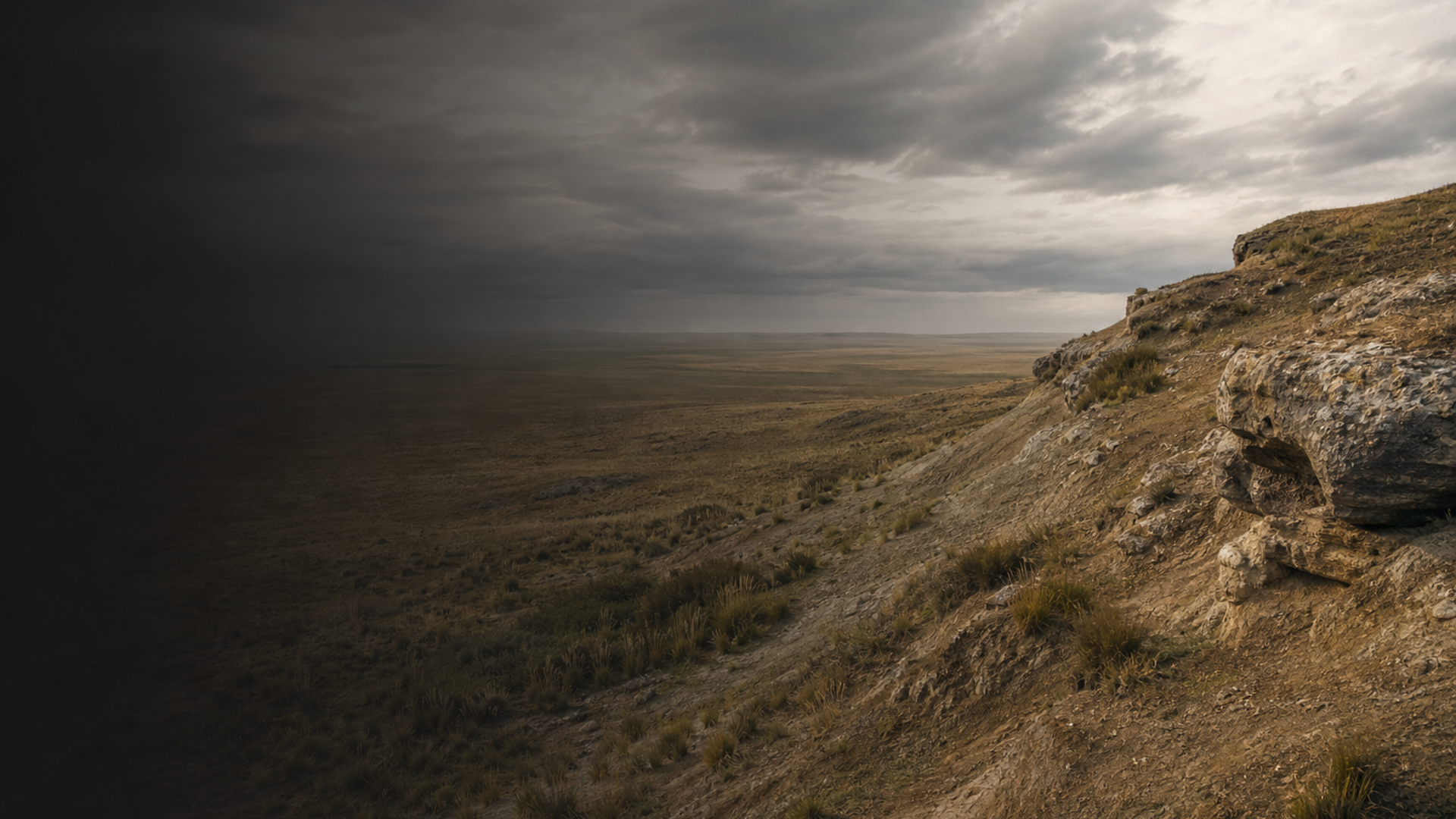
Arroyo Seco II sits like a time capsule in the windswept Pampas of central Argentina. Archaeological data indicates repeated human presence in the early Holocene, with materials dated between c. 7010 and 5350 BCE. Excavations have recovered burials and associated lithic artefacts that speak to long-lived foraging lifeways on open grasslands and river margins.

Geographically this site occupies a key corridor between the southern cone's interior plains and coastal systems, hinting at mobility and resource flexibility among its inhabitants. Paleoenvironments reconstructed from pollen and sediment (regional studies) suggest a cooler, drier interval early in the sequence with increasing humidity over time, which would have altered resource distribution and settlement patterns.

Genetically, the recovered individuals belong to lineages common across the Americas, which supports archaeological interpretations of early pan-American dispersals and subsequent regional differentiation. However, the total sample count is five; limited evidence suggests caution in broad generalizations about population structure or continuity. Archaeology and DNA together illuminate a portrait of resilient hunter-gatherer communities adapting to shifting Holocene landscapes.

  • Early Holocene occupation: c. 7010–5350 BCE
  • Burials and lithic tools recovered at Arroyo Seco II
  • Environmental change likely shaped mobility and diet
Chapter IV

Daily Life & Society

The material traces from Arroyo Seco II evoke a daily life shaped by open plains, seasonal wetlands, and riverine resources. Archaeological data indicates stone tool production and use—projectile points, cutting tools and flakes—consistent with hunting and butchery activities. Shell, bone, and faunal remains recovered regionally point to a broad-spectrum subsistence strategy that may have included small- to medium-sized terrestrial mammals, riverine fish, and gathered plants.

Mortuary evidence at the site—human burials with variable orientation and treatment—offers glimpses into social behaviors and group identity. Burial practices can encode kinship, status or ritual, but with a small number of interments interpretation remains cautious. Spatial patterns of occupation features suggest seasonal aggregation sites rather than dense permanent settlements, implying flexible groups that moved across the Pampas to track resources.

Artisanal skill in lithic knapping and possible use of organic technologies (perishable artifacts rarely preserved) would have complemented social networks for exchange and marriage across the landscape. The cinematic image of small bands lighting fires under vast skies and moving along river corridors is consistent with both archaeological assemblages and the genetic signals of relatedness and mobility.

  • Broad-spectrum hunting and gathering economy
  • Burials hint at social practices but sample size limits interpretation
Chapter V

Genetic Profile

Five ancient individuals from Arroyo Seco II provide a rare genetic window into early Holocene South America. The Y-chromosome profile is dominated by haplogroup Q (4 of 5 males), a lineage widely associated with Native American paternal ancestry and inferred to descend from the Beringian-derived founding population(s). On the maternal side, mitochondrial haplogroups include C1b (2), D1 (1), A2 (1) and D1g (1). These mtDNA clades are among the canonical founding lineages observed across the Americas.

Together, the paternal and maternal signals are consistent with ancestry that traces to the initial peopling of the continents, followed by regional diversification in South America. Genetic affinities to other early South American individuals point toward broad relatedness rather than extreme isolation. Yet with only five samples, statistical power is low: patterns of substructure, sex-biased migration, and long-term continuity cannot be robustly resolved.

Archaeogenetic analyses can test hypotheses raised by material culture—such as whether mobility corridors inferred from artifacts correlate with gene flow—but for Arroyo Seco II conclusions must remain tentative. Future sampling, particularly larger numbers and comparisons across neighboring sites, will be essential to move from suggestive patterns to confident reconstructions of demographic history.

  • Y-haplogroup Q predominant among male samples
  • mtDNA: C1b, D1, A2, D1g — typical early American maternal lineages
Chapter VI

Legacy & Modern Connections

The genetic and archaeological imprint of Arroyo Seco II resonates in the deep past of the southern cone. The lineages observed echo those found across contemporary and ancient Native American populations, suggesting threads of biological continuity that link early Holocene foragers to later peoples of South America. Archaeological signals of mobility and regional interaction complement genetic perspectives on how small groups maintained networks across broad landscapes.

At the same time, it is critical to frame these connections carefully: the small sample count (five individuals) makes broader claims preliminary. Community engagement and expanded sampling are needed to better understand ancestry dynamics, patterns of kinship, and the cultural meanings of burial practices. When archaeology and DNA are read together—bones, stones and genomes—they create a cinematic but evidence-rooted narrative of survival, movement and adaptation in the ancient Pampas.


  • Lineages connect Arroyo Seco II to wider early American ancestry
  • Small sample size means modern links are suggestive, not definitive
AI Powered

AI Assistant

Ask questions about the Arroyo Seco II — Voices of the Pampas culture

AI Assistant by DNAGENICS

Unlock this feature
Ask questions about the Arroyo Seco II — Voices of the Pampas culture. Our AI assistant can explain genetic findings, historical context, archaeological evidence, and modern connections.
Sample AI Analysis

The Arroyo Seco II — Voices of the Pampas culture represents a fascinating chapter in human history...

Genetic analysis reveals connections to earlier populations while showing evidence of unique adaptations and cultural innovations. The ancient DNA samples provide insights into migration patterns, social structures, and the biological relationships between ancient populations.

This is a preview of the AI analysis. Unlock the full AI Assistant to explore detailed insights about:

  • Genetic composition and ancestry
  • Migration patterns and origins
  • Daily life and cultural practices
  • Modern genetic legacy
Use code for 40% off Expires Feb 26