跳转到主内容
mtDNA · 母亲 lineage

I3

mtDNA Haplogroup I3

一个家族分支的参考简介 。 共享haplogroups 无法建立家庭关系或文化认同 。

参考简介

部门背景

mtDNA 谱系分支 I3 的历史背景

Origins and Evolution

mtDNA haplogroup I3 sits as a daughter clade of I2'3, itself part of the broader haplogroup I which is nested within macro-haplogroup N. Haplogroup I most likely formed in Western Eurasia or the Near East during the Late Upper Paleolithic or the Last Glacial Maximum, and its internal branching has continued through the early Holocene. I3 is best interpreted as a Holocene-age subclade (early post-glacial / early Neolithic), arising roughly in the range of ~10–15 kya based on its phylogenetic position relative to other I subclades and the typical coalescence times observed for similarly placed lineages within haplogroup I.

Because I3 is an intermediate clade in the phylogeny (deriving from I2'3), it helps connect the parent and downstream child lineages; however, the fine-scale chronology and diagnostic mutation set for I3 and its internal substructure remain incompletely resolved in published datasets, so precise dating and internal branching are subject to refinement as more complete mtDNA genomes are added to reference trees.

Subclades

At present, I3 is best regarded as a defined branch under I2'3, but well-documented downstream subclades are limited in the public literature and in Phylotree builds relative to major I subclades. Some population sequencing projects and full mitogenome surveys have reported variants that cluster under the I3 node, suggesting the existence of I3a/I3b-like lineages in different regions, but these require fuller characterization (more complete mitogenomes and broader population sampling) before a stable subclade nomenclature is established.

Geographical Distribution

Observations of haplogroup I and its subclades indicate a patchy, generally low-frequency distribution across Europe, the Near East, the Caucasus and parts of South/Central Asia. For I3 specifically, reported occurrences are sparse but consistent with a Western Eurasian/Anatolian origin and subsequent dispersal:

  • Europe (southern and eastern): low-to-moderate frequencies in some Mediterranean and Balkan populations, consistent with post-glacial re-expansion and later Neolithic/demic diffusion.
  • Near East / Anatolia: presence in limited samples and likely a primary region for origin or early diversification.
  • Caucasus / Iran / South Asia: occasional occurrences reflecting either ancient shared ancestry or later long-distance gene flow.

Overall, I3 is not a high-frequency continental lineage but contributes to regional maternal diversity where it occurs.

Historical and Cultural Significance

Because of its likely early Holocene age and Western Eurasian/Anatolian association, I3 may have been carried both by Late Glacial/epipalaeolithic hunter-gatherer groups and by migrating early farmers during the Neolithic transition. In demographic terms, I3's role is more subtle than that of very common lineages (e.g., H, U), but it can serve as a marker in studies looking at fine-scale maternal ancestry, micro-differentiation among neighboring populations, and the movement of small maternal lineages with archaeological cultures.

Ancient DNA sampling to date has more often recovered other I subclades in Neolithic and Bronze Age contexts; targeted retrieval of I3 in well-dated archaeological samples would clarify whether it tracked Neolithic farmer expansions (Anatolian/Levantine routes), represented lingering Mesolithic refugial lineages that joined later demographic events, or a mixture of both processes.

Conclusion

mtDNA I3 is a modestly diversified, regionally distributed maternal lineage derived from I2'3 that likely arose in the Near East / Western Eurasia during the early Holocene (~12 kya). It occurs at low to moderate frequencies across parts of Europe, the Near East and adjacent regions and remains under-characterized at high resolution. Broader mitogenome sequencing and ancient DNA recovery focused on the I clade will be required to resolve I3's internal structure, precise age, and detailed migratory history.

关键点

  • Origins and Evolution
  • Subclades
  • Geographical Distribution
  • Historical and Cultural Significance
  • Conclusion
参考简介

树形关系( N)

phylgenetic 上下文和子拼写

进化路径

沿已记录的上级分支追溯至 I3。年代为估计值,可能随参考数据更新而调整。

步骤 单倍群 年龄估计 考古时代 时间流逝 直系后裔 被测试的现代后裔 古代连接
1 I3 当前 ~12,000 years ago Neolithic 12,000 years 2 15 0
2 I2'3 - - - 2 282 0
3 I ~25,000 years ago Paleolithic 25,000 years 7 557 66
4 N1A1B ~9,000 years ago Neolithic 9,000 years 2 581 8
5 N1A1 ~12,000 years ago Neolithic 12,000 years 2 660 0
6 N1A1'2 - - - 2 662 0
7 N1A ~13,000 years ago Mesolithic 13,000 years 2 688 6
8 N1 ~45,000 years ago Paleolithic 45,000 years 3 906 21
9 N1'5 - - - 2 955 0
10 N ~60,000 years ago Paleolithic 60,000 years 16 26,150 13
11 L3 ~70,000 years ago Paleolithic 70,000 years 7 30,162 6
12 L3'4 - - - 2 30,212 0
13 L3'4'6 - - - 2 30,216 0
14 L2'3'4'6 - - - 2 31,333 0
15 L2'3'4'5'6'7 - - - 2 31,349 0
16 L1'2'3'4'5'6'7 - - - 2 31,852 0
17 L ~160,000 years ago Paleolithic 160,000 years 2 32,236 5

Siblings (1)

来自同一父分支的分支( oplogroup)

参考简介

哪里是这个世界

地理分布和现代存在

记录来源

Near East / Western Eurasia

现代发行

The populations where mtDNA haplogroup I3 is found include:

  1. Southern European populations (Italy, Greece, Balkan populations)
  2. Near Eastern populations (Anatolia, Levant)
  3. Caucasus and Iranian highlands (occasional occurrences)
  4. South Asian populations at low frequency (sporadic reports)
  5. Small/isolated community samples in Western Eurasia (including occasional findings in historical diaspora groups)
历史背景

分枝穿越时间

大致历史时间范围内的估计形成情况:周期标志提供了背景,并不意味着与特定文化的联系。

  1. ~12k 年前

    Haplogroup I3

    此 mtDNA 分支的形成时间为推定值,日期和地点仅作参考。

    这个分支
  2. ~10k 年前

    新石器革命

    农业开始,定居社区形成

  3. ~5k 年前

    青铜时代

    金属加工、书写和早期文明

  4. ~3k 年前

    铁器时代

    铁工具,扩大贸易网络

  5. ~2.5k 年前

    古典时代

    希腊和罗马文明蓬勃发展

  6. 现

    现日

    现代时代

参考简介

考古学背景

已记录的 mtDNA 分支 I3 考古关联

有记录的协会

这些标签描述与 I3 相关的参考样本所处的考古背景。仅凭这种关联,无法判断所有携带者都属于某种文化或沿同一路线迁徙。

Bell Beaker Gonur Culture Iron Gates Langobard Culture Norse Iron Age Poltavka PPNC Steppe Eneolithic Viking Welsh Bronze Age Yamnaya Culture
文化任务基于古代DNA样本的考古背景,可能代表特定时期的区域协会.
参考简介

样本目录

单倍群 I3 的直接携带者 6 名,子分支携带者 16 名

10 显示 ^ 22 匹配样本

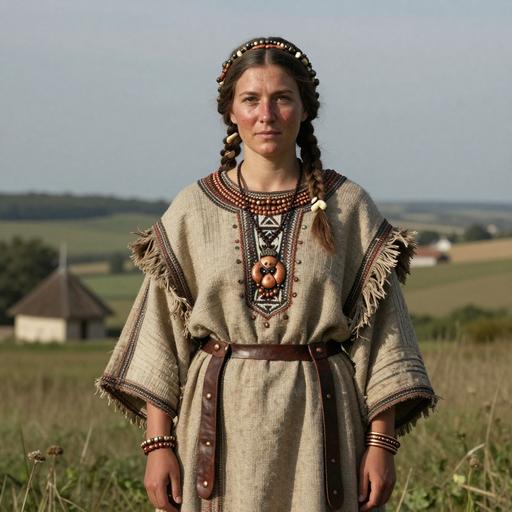
Portraits是AI生成的插图,样本标签和加入ID识别参考记录.

纵向 样本 国家 大纪元 日期 文化 mtDNA 匹配
AI生成的示例性肖像 Norse individual, Nor South. Telemark, Norway (400-600 CE)
Sample ID: VK391
Norway Norway IA 400 CE - 600 CE Norse Iron Age I3 Direct
AI生成的示例性肖像 Nordic Ia individual, Nor South. Telemark, Norway (400-600 CE)
Sample ID: VK391
Norway Iron Age Nordic Region 400 CE - 600 CE I3 Direct
AI生成的示例性肖像 Lombards individual, Szólád, Hungary (412-604 CE)
Sample ID: SZ14
Hungary Langobard Period Hungary 400-650 CE Langobard Culture I3 Direct
AI生成的示例性肖像 Norse individual, Gotland. Frojel, Sweden (900-1,050 CE)
Sample ID: VK460
Sweden Sweden Viking 900 CE - 1050 CE Viking I3 Direct
AI生成的示例性肖像 Viking individual, Gotland. Frojel, Sweden (900-1,050 CE)
Sample ID: VK460
Sweden The Viking Age 900 CE - 1050 CE I3 Direct
AI生成的示例性肖像 Wales EBA individual, Wales. North Wales. Llandudno. Great Orme, United Kingdom (1,731-1,536 BCE)
Sample ID: I1775
United Kingdom Chalcolithic to Early Bronze Age Wales 1731-1536 calBCE (3344±27 BP, OxA-14308) Welsh Bronze Age I3 Direct
AI生成的示例性肖像 England Early Medieval-o individual, England. Sussex. Bishopstone. Rookery Hill, United Kingdom (500-700 CE)
Sample ID: I14539
United Kingdom England EarlyMedieval 500-700 CE Anglo-Saxon I3a 下游分支
AI生成的示例性肖像 Norse individual, England. Oxford. St John's College Oxford, United Kingdom (880-1,000 CE)
Sample ID: VK164
United Kingdom England Viking 880 CE - 1000 CE Viking I3a1 下游分支
AI生成的示例性肖像 Viking individual, England. Oxford. St John's College Oxford, United Kingdom (880-1,000 CE)
Sample ID: VK164
United Kingdom The Viking Age 880 CE - 1000 CE I3a1 下游分支
AI生成的示例性肖像 Western European individual, Cancelleria, Italy (1,350-1,500 CE)
Sample ID: R1288
Italy Medieval to Early Modern Italy 1350 CE - 1500 CE Medieval Italian I3a1 下游分支
MATERNAL LINEAGE · ANCIENT DNA

古代世系证据地图

跟随母舰飞向这个分支 探索古代载体的发现地点

正在装入古老的观测...

标记是考古发现地点。一个破碎的连接器是连续分支之间一种不确定的、拟议中的地理过渡,辅以多个日期的观察;它不是一个准确的旅行路线、出生地或直接血统的证明。父系样本可能属于其他后代分支。在证据不足的地方,差距依然存在。样本日期与随机群形成日期不同。

参考简介

载体分布图

22 个古代 DNA 样本的地理分布,涵盖 I3 及其下游分支的携带者

直接承运人 子舱载体
时间段过滤器
所有时间段
显示全部样本
参考简介

时间分布

载体在考古时期的分布

参考简介

地理分布

按有记录的抽样国家计算,反映的是现有的参考选择,而不是人口频率。

参考简介

国家 × 大纪元发行

比较各国和考古时期记录的样本数量。选择一个人口密集的细胞来检查样本。

数据

数据证明( P)

来源信息和数据质量

上次更新 2026-06-14
信心分数 50/100
覆盖范围 Low

数据来源

分类、估计日期和地理背景反映了所记录的参考数据,随着证据的修订而可能发生变化,样本覆盖范围不均匀;所记录的地点和考古协会没有确定个人出身或文化特征。