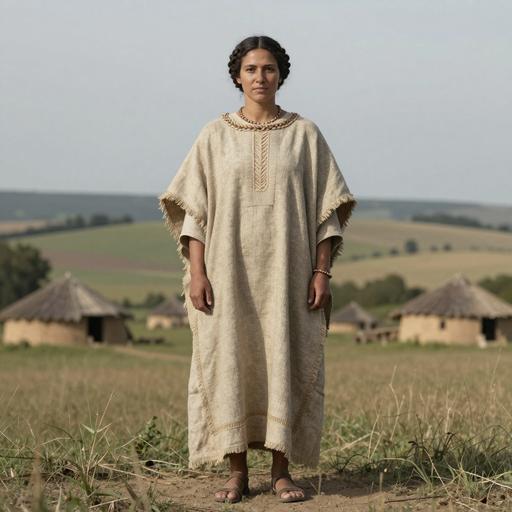
部门背景
mtDNA 谱系分支 J1C3F 的历史背景
Origins and Evolution
mtDNA haplogroup J1C3F is a terminal subclade of J1C3, itself a branch of haplogroup J1C. Haplogroup J lineages are widely interpreted in population genetics as important markers of post‑glacial and Neolithic female-mediated movements that originated in or near the Near East and adjacent regions. Given the phylogenetic position of J1C3F beneath J1C3 (origin ca. 9 kya), J1C3F most likely arose during the late Neolithic or the early post‑Neolithic period (here estimated ~6 kya) in the Near East / Caucasus region and subsequently dispersed with populations involved in Mediterranean and continental Neolithic expansions and later regional demographic processes.
Genetically, J1C3F inherits the defining mutations of J1C3 and carries additional private mutations that mark it as a distinct maternal lineage. Like other mtDNA haplogroups, its modern distribution reflects a combination of initial spread with early farmers, later migrations, founder effects and local drift.
Subclades (if applicable)
As a named terminal subclade, J1C3F may contain further rare downstream branches detectable only with high-resolution sequencing (complete mitochondrial genomes). Published and database records indicate that many J1C3 sub-branches show localized substructure (for example regional clusters in the Mediterranean and Caucasus). If new deep sequencing uncovers further mutations within J1C3F, these would be designated as J1C3F1, J1C3F2, etc., and could help refine microgeographic histories.
Geographical Distribution
Modern samples assigned to J1C3F are concentrated in areas that mirror the broader J1C3 distribution but often show higher relative frequencies in zones closest to the inferred origin. Key geographic patterns include:
- Presence in the Near East and the Caucasus, consistent with an origin and long-term presence there.
- Detection in southern Europe and Mediterranean populations, reflecting maritime and coastal Neolithic dispersals (Cardial/Impressed Ware and later movements).
- Occurrence in North African coastal populations, likely via prehistoric and historic Mediterranean contacts and gene flow.
- Low to sporadic representation in parts of Western Europe and Central Asia, reflecting later long‑distance movements or rare founder events.
- Identification in Jewish populations (Ashkenazi and Sephardi) at low frequencies, consistent with Near Eastern maternal ancestry entering diaspora communities.
In ancient DNA datasets, J1C3 and its subclades have been reported in Neolithic and post‑Neolithic contexts; J1C3F-specific ancient occurrences are fewer but align with Neolithic to Bronze Age archaeological horizons in the Mediterranean and Near East.
Historical and Cultural Significance
Because J1C3F is nested within a branch associated with Neolithic farmers from the Near East, its presence in Europe and North Africa is best interpreted in the context of agricultural expansions and subsequent regional demographic processes. It likely moved with Early Neolithic farming communities that spread along both inland and coastal routes into southern Europe and the western Mediterranean. Later cultural processes — including Bronze Age mobility, classical-era trade, and historic migrations — could further redistribute isolated J1C3F lineages.
In Jewish communities, the occurrence of J1C3F fits a pattern where multiple Near Eastern maternal lineages became incorporated into diaspora gene pools through founding events and local admixture. In the Caucasus, persistence of J1C3F and related lineages points to continuity and microregional differentiation since the Neolithic.
It is important to emphasize that mtDNA reports only the maternal lineage and can be strongly affected by founder effects and drift; therefore, the presence or absence of J1C3F in a population does not alone define that population's overall ancestry but contributes to a multilocus picture.
Conclusion
J1C3F is a geographically informative maternal lineage whose phylogenetic placement and distribution are consistent with a Near Eastern/Caucasus origin in the post‑glacial to Neolithic period and subsequent spread into the Mediterranean, southern Europe and North Africa. Continued sampling, especially full mitogenome sequencing and ancient DNA recovery, will refine its age, internal structure and precise dispersal routes.
关键点
- Origins and Evolution
- Subclades (if applicable)
- Geographical Distribution
- Historical and Cultural Significance
- Conclusion