部门背景
mtDNA 谱系分支 L0D1C 的历史背景
Origins and Evolution
mtDNA haplogroup L0D1C is a subclade within the broader L0d branch of macro-haplogroup L0, one of the earliest-diverging maternal lineages in anatomically modern humans. L0 lineages are among the deepest mtDNA branches and are strongly associated with populations indigenous to southern Africa. Given its phylogenetic position under L0d1 (and the intermediate grouping L0D1A'C'D), L0D1C likely arose during the Late Pleistocene to early Holocene, representing a local diversification of maternal lineages among southern African hunter-gatherer groups.
Subclades (if applicable)
At present, L0D1C is an intermediate subclade in the L0d phylogeny. Published public phylogenies and population surveys show that some branches of L0d1 have further internal structure restricted geographically; however, detailed, well-sampled subclade definitions for L0D1C require additional sequencing from under-sampled southern African groups. Future whole-mitochondrion surveys and ancient DNA from Late Pleistocene–Holocene southern Africa may reveal finer substructure and dates for child clades.
Geographical Distribution
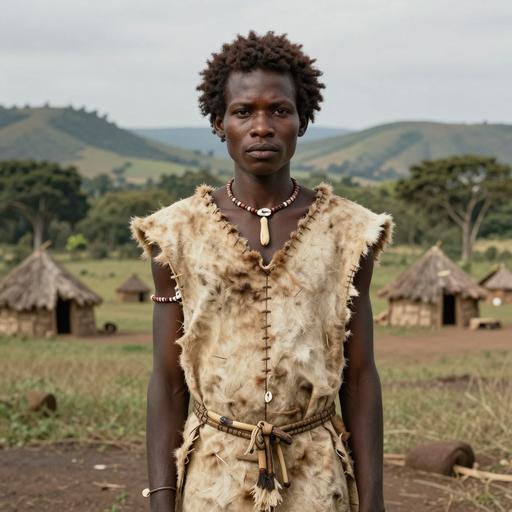
L0D1C is principally localized to southern Africa, where its highest frequencies are documented among Khoe‑San (often broadly labeled “San” or “Khoisan”) and related groups in the Kalahari, Cape, and adjacent regions. It occurs at lower frequencies among neighboring populations, including some Khoe-speaking pastoralist groups and Bantu-speaking communities that have experienced historical admixture with indigenous southern African populations. Rare occurrences further afield (e.g., eastern or southeastern Africa) most likely reflect recent gene flow rather than primary distribution.
Historical and Cultural Significance
Because L0d lineages are strongly enriched in the Khoe‑San and correlate with archaeological and anthropological evidence for deep continuity of foraging populations in southern Africa, L0D1C contributes to reconstructions of pre-agricultural population structure in the region. It helps trace maternal continuity through the Later Stone Age and into the Holocene, and is informative for studies of the impact of the Bantu expansion and later pastoralist movements on indigenous maternal ancestry. While not associated with named Eurasian archaeological cultures (e.g., Bell Beaker or Yamnaya), L0D1C is archaeologically relevant for local southern African Later Stone Age contexts.
Conclusion
L0D1C is a regionally important maternal lineage for southern Africa that reflects an ancient component of human diversity in the Kalahari/Cape area. Its study helps clarify the deep demographic history of Khoe‑San populations and the interactions between indigenous hunter-gatherers and later-arriving groups. Additional targeted sampling and ancient DNA from southern Africa are needed to resolve finer-scale branching, time estimates, and migrations associated with this haplogroup.
关键点
- Origins and Evolution
- Subclades (if applicable)
- Geographical Distribution
- Historical and Cultural Significance
- Conclusion