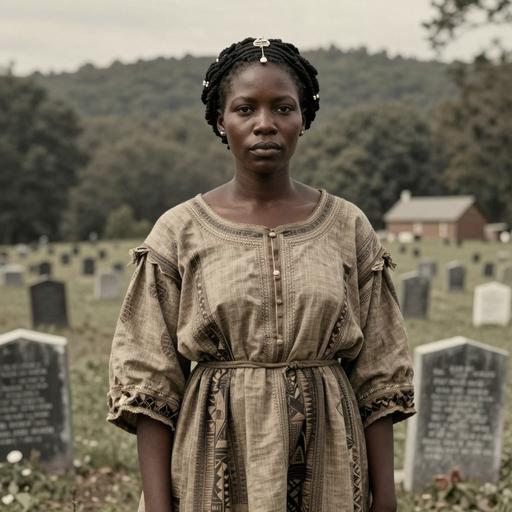
部门背景
mtDNA 谱系分支 L2B1A 的历史背景
Origins and Evolution
mtDNA haplogroup L2b1a is a daughter clade of L2b1 and is nested within the broader L2b branch of African mitochondrial diversity. Given the estimated time depth of its parent clade (L2b1, ~9 kya) and the phylogenetic position of L2b1a as a downstream lineage, L2b1a most plausibly arose in West/Central Africa during the early to mid-Holocene (roughly 7 kya). Its origin fits the pattern of Holocene population growth and regional differentiation of maternal lineages in West and Central Africa associated with climatic stabilization after the African Humid Period and the rise of more sedentary and complex foraging/farming societies.
Genetically, L2b1a is defined as a subclade below the diagnostic mutations of L2b and L2b1; as with many African mtDNA subclades, its internal phylogeny likely records both localized micro-differentiation and later dispersals driven by cultural and demographic processes.
Subclades
As a named terminal or near-terminal clade (L2b1a), this lineage may include further substructure detectable with full mitogenome sequencing. Published population surveys and phylogenies of L2 lineages sometimes resolve additional branches under L2b1a in large-sample mitogenomes; however, many routine HVR/partial-sequence screens do not resolve deep internal structure. Targeted whole-mitochondrial sequencing of L2b1a carriers in different regions (e.g., coastal West Africa, Central Africa, diaspora populations) would clarify subclades, coalescence times, and geographic substructure.
Geographical Distribution
L2b1a today is most frequent in West and parts of Central Africa, reflecting the origin of its parent clade. Modern population surveys identify the haplogroup among groups such as the Yoruba, Akan, Mande speakers, Kongo and Bantu-speaking communities in Cameroon/Angola, and among Sahelian groups (Fulɓe/Fulani) at lower frequencies. Because of the trans-Atlantic slave trade and subsequent diaspora movements, L2b1a also appears in Afro-Brazilian, African American, and Afro-Caribbean populations, and in Atlantic island populations (e.g., Cape Verde) where West African maternal lineages are common. Low-frequency occurrences in North Africa and southern Europe are best interpreted as recent admixture from sub-Saharan sources rather than long-standing autochthonous presence.
The haplogroup has been identified in a small number of ancient samples (three in the referenced database), indicating that L2b1a (or lineages indistinguishable at the tested resolution) was present in past Holocene contexts in regions that match its modern distribution.
Historical and Cultural Significance
L2b1a captures demographic processes important to West/Central African history. Its early Holocene origin places it within the timeframe of post-Pleistocene population increases and cultural shifts in the Sahel and West Africa. Later, the Bantu expansions (beginning ~3–4 kya) redistributed many maternal and paternal lineages across Central, Eastern, and Southern Africa; where L2b1a occurs in Bantu-speaking groups today it may reflect either pre-Bantu West/Central distributions incorporated during expansions or subsequent regional admixture.
In the last 500 years, the Atlantic slave trade moved large numbers of West African maternal lineages, including L2b1a, to the Americas and Atlantic islands; this historic movement explains the presence of L2b1a in Afro-Brazilian, African American, and Caribbean maternal lineages. Thus L2b1a is useful in genetic genealogy and population history for tracing maternal ancestry to specific West/Central African source regions when combined with autosomal and paternal markers.
Conclusion
mtDNA L2b1a is a regionally informative West/Central African maternal lineage that arose in the Holocene and subsequently reflects both local demographic processes and large-scale historical movements such as the Bantu expansions and the Atlantic slave trade. Continued mitogenome sequencing and denser sampling across West and Central Africa and in diaspora communities will refine its internal structure, age estimates, and the fine-scale geographic signal useful for maternal ancestry inference.
关键点
- Origins and Evolution
- Subclades
- Geographical Distribution
- Historical and Cultural Significance
- Conclusion