部门背景
mtDNA 谱系分支 L3F1B4 的历史背景
Origins and Evolution
L3F1B4 is a terminal subclade nested within the L3F lineage of macro-haplogroup L3. Macro-haplogroup L3 arose in Africa during the Upper Paleolithic and has given rise to many sublineages distributed across the continent. The deeper L3F clade is African-restricted and several of its subclades show distributions concentrated in Central and West Africa. Given its position as a narrow, derived branch under L3F1BA1, L3F1B4 most likely emerged in the Late Holocene (a few thousand years ago) rather than in the deep Pleistocene, consistent with the time depth of many localized L3 subclades.
Because L3F1B4 is a relatively specific terminal lineage with limited public sampling reported in large databases and Phylotree references, estimates of its age and origin remain provisional and should be refined with ancient DNA and broader modern sampling.
Subclades
As a terminal/leaf-level subclade (L3F1B4) the haplogroup itself may not have widely recognized downstream subclades in current references; it is best treated as a fine-scale marker within L3F → L3F1 → L3F1B → L3F1BA1. Its parent, L3F1BA1, serves as the intermediate node connecting older L3F diversity to this derived lineage. Future sampling could reveal additional sub-branches derived from L3F1B4 in specific populations.
Geographical Distribution
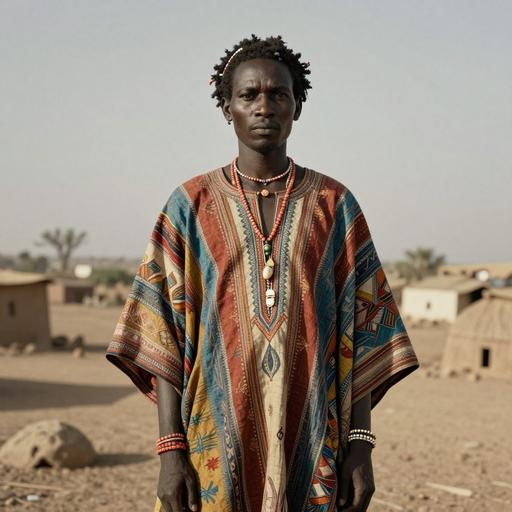
Available evidence and reasonable phylogeographic inference indicate a concentration of L3F1B4 in Central and adjacent West Africa, reflecting the broader distribution of L3F subclades. It is likely present at low-to-moderate frequency in Bantu-speaking populations of Central Africa and may also appear among West African coastal groups. Through historical translocations (including the trans-Atlantic slave trade) and modern migration, derived instances of L3F1B4 may be detected at low frequency in the African diaspora in the Americas and in urban populations of Europe.
Field sampling to date has been sparse for this exact lineage, so its apparent rarity could be genuine or an artifact of limited sequencing in specific regions.
Historical and Cultural Significance
While there is no direct archaeological culture uniquely associated with a single rare mtDNA terminal clade, L3F1B4's inferred age and geography make it compatible with demographic processes of the Late Holocene in Central/West Africa, notably the Bantu expansion (beginning roughly 3–5 kya) which redistributed maternal lineages across much of sub-Saharan Africa. It may also reflect continuity in local Central African populations (including rainforest and savanna groups) and interactions between forager and agricultural communities over the last several thousand years.
In the recent historical period, carriers of L3F1B4 in source regions could have been transported to the Americas and Europe, explaining potential low-frequency occurrences outside Africa among Afro-descended populations.
Conclusion
L3F1B4 is best understood as a localized, recently derived maternal lineage within the African L3F clade. Current knowledge is limited by sparse sampling; therefore, the most robust conclusions are tentative: it likely originated in Central/West Africa in the last few thousand years and reflects regional demographic processes (e.g., Bantu-associated dispersals and local continuity). Expanded modern and ancient mtDNA sampling in Central and West Africa will be required to confirm its precise geographic origin, age, and internal diversity.
关键点
- Origins and Evolution
- Subclades
- Geographical Distribution
- Historical and Cultural Significance
- Conclusion