部门背景
mtDNA 谱系分支 L3F2A1 的历史背景
Origins and Evolution
mtDNA haplogroup L3F2A1 is a subclade of L3F2A, itself nested within the broader L3 macro-haplogroup that has deep roots in Africa. Based on the phylogenetic position of L3F2A1 relative to its parent clades and available coalescent estimates for related lineages, L3F2A1 most plausibly arose in the Horn of Africa / eastern African region during the Early Holocene (roughly ~8 kya). The lineage represents a localized diversification event within populations of the Horn and adjacent eastern African areas after the Last Glacial Maximum, in a period characterized by demographic changes, regional population structure, and increasing mobility linked to environmental shifts and the spread of new subsistence strategies.
Subclades (if applicable)
As a downstream branch of L3F2A, L3F2A1 is itself a terminal or near-terminal subclade in many published datasets; designation of further internal substructure depends on high-resolution mitogenomes and continued sampling across underrepresented African populations. Where additional private mutations are observed in full mitochondrial genome data, these can define local sub-branches of L3F2A1 restricted to particular ethnic groups or geographic pockets, but at present L3F2A1 is most commonly treated as a discrete lineage within L3F2A in population studies.
Geographical Distribution
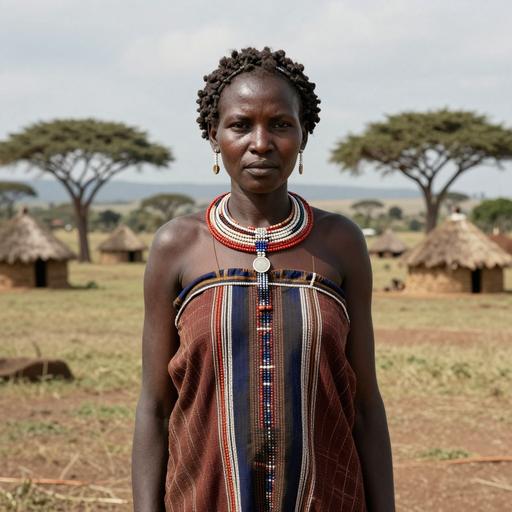
L3F2A1 shows its highest relative representation in the Horn of Africa and adjacent East African coastal areas, consistent with an origin in that region. It also appears at lower frequencies in parts of Central and West Africa, and rarely in southern African groups. These broader occurrences are best explained by a combination of historic and prehistoric gene flow: regional movements within eastern Africa (including pastoralist and farmer expansions), long-distance contacts along Indian Ocean and inland trade routes, westward dispersal events, and the more recent forced migrations of the Atlantic slave trade that introduced East and Central African maternal lineages into the Americas. The haplogroup is recorded at very low frequencies in African-descended populations in the Americas, consistent with diaspora ancestry.
Historical and Cultural Significance
L3F2A1 is not known as a marker of any large, continent-spanning prehistoric migration on its own, but its distribution provides useful resolution for reconstructing regional maternal histories in eastern Africa. The lineage's presence in Horn populations (for example Oromo, Amhara, Somali) and in some coastal and inland groups supports a pattern of long-term local continuity with episodes of gene flow connecting eastern Africa to central and western regions. In archaeological contexts, detection of L3F2A1 in ancient DNA (even if rare) helps anchor models of continuity versus replacement in particular sites and time periods. The haplogroup's low-to-moderate frequency today reflects both localized persistence and demographic processes (e.g., drift, population expansions, and admixture) that shape mitochondrial diversity.
Conclusion
L3F2A1 is a geographically informative maternal lineage tied to the Horn and eastern Africa with a likely Early Holocene origin. While not a high-frequency or broadly diagnostic haplogroup across Africa, its localized distribution and presence in both modern and occasional ancient samples make it valuable for fine-scale reconstructions of maternal ancestry, regional population structure, and historical connections including coastal trade and the African diaspora.
关键点
- Origins and Evolution
- Subclades (if applicable)
- Geographical Distribution
- Historical and Cultural Significance
- Conclusion