部门背景
mtDNA 谱系分支 P1D2 的历史背景
Origins and Evolution
mtDNA haplogroup P1D2 derives from the deeper clade P1D, itself a branch of haplogroup P that is characteristic of populations associated with Sahul (the combined landmass of Australia and New Guinea) and adjacent islands. Given its placement as a subclade of P1D, P1D2 most likely arose in Near Oceania / Island Southeast Asia during the late Pleistocene to early Holocene period, after the initial P1D split (parent P1D has estimated age ~28 kya). A reasonable age estimate for P1D2 is in the order of the early Holocene (~12 kya), reflecting diversification events that occurred as small coastal and island populations persisted, fragmented, and occasionally expanded following the Last Glacial Maximum.
The evolutionary history of P1D2 is shaped by long-term local continuity in Sahul and nearby islands, retention of ancient maternal lineages through relatively small, structured populations, and later interactions with incoming Austronesian-speaking groups. Its phylogenetic position indicates an origin local to Near Oceania rather than stemming from more recent trans-Pacific dispersals.
Subclades
As a named subclade (P1D2), it may itself contain downstream derivatives identified in high-resolution mtDNA sequencing; however, many P1 sublineages remain sparsely sampled in public databases. Where downstream branches exist, they typically show geographically localized patterns (single-island or single-region occurrences), consistent with strong founder effects and genetic drift in island and highland communities. Continued ancient DNA sampling and full mitogenome sequencing in Papuan, Melanesian and Indigenous Australian contexts are likely to reveal additional fine-scale substructure within P1D2.
Geographical Distribution
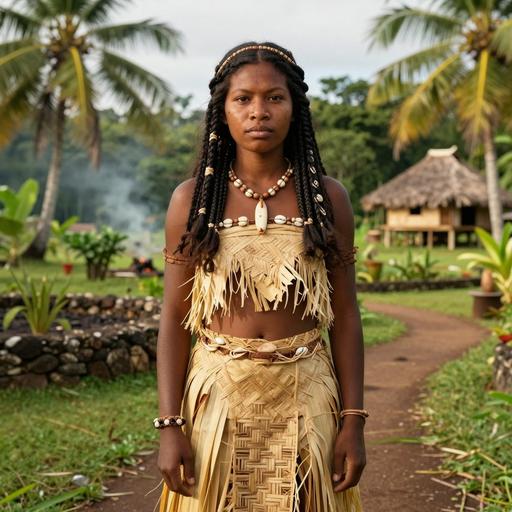
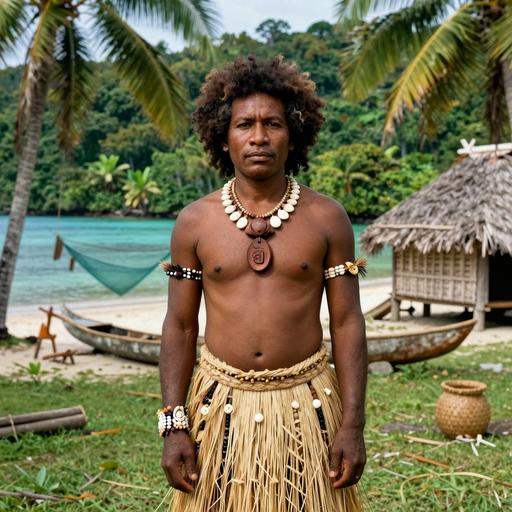
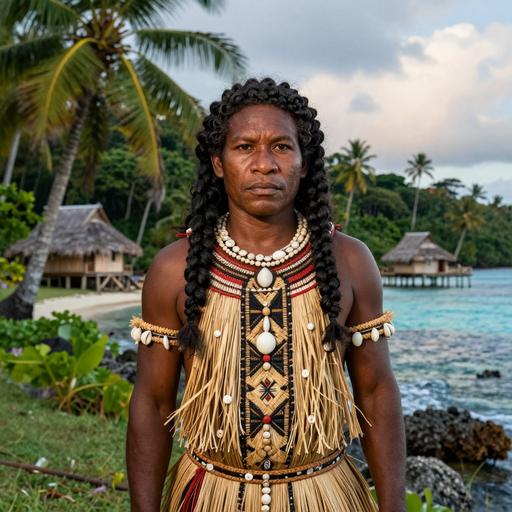
P1D2 is principally associated with populations of Sahul and adjacent island zones. Empirical sampling and reasonable inference from the parent P1D distribution indicate the highest frequencies and strongest continuity in Papuan populations (both coastal and some highland groups) and Melanesian island populations (e.g., parts of the Bismarck Archipelago, Solomon Islands, Vanuatu). There are also occurrences among Indigenous Australian groups at low to moderate frequencies in specific regions reflecting ancient shared ancestry predating Eurasian admixture events.
Lower but detectable frequencies occur in Wallacea and eastern Indonesian island groups (Moluccas, Timor and nearby islands), representing either survival of pre-Austronesian lineages or limited gene flow across island chains. Rare occurrences in Remote Oceanic/Polynesian groups can reflect Papuan-derived maternal input associated with Austronesian expansions rather than primary founding lineages of Remote Oceania.
Historical and Cultural Significance
P1D2, like other P subclades, is a genetic signature of deep pre-Neolithic occupation of Sahul and long-term demographic continuity in island and coastal settings. Its persistence into the Holocene indicates survival of maternal lineages through climatic shifts (including the LGM) and through cultural transitions such as the arrival of Austronesian languages and material culture. In archaeological contexts, P1-type lineages are informative about local continuity versus population replacement: presence of P1D2 in ancient samples is strong evidence for maternal continuity from Pleistocene/early Holocene inhabitants of Near Oceania.
The haplogroup thus helps reconstruct early maritime dispersal routes along coastal New Guinea, the Bismarcks and the Solomons, and informs models of contact between Papuan groups and incoming Austronesian-speaking colonists (including the Lapita cultural expansion), where Papuan maternal lineages were often retained while language and some cultural elements changed.
Conclusion
mtDNA haplogroup P1D2 is a regionally important maternal lineage rooted in the Sahul and adjacent island environment. It represents an example of deep continuity of maternal ancestry in Near Oceania, shaped by island microevolutionary processes and later admixture events. Improved geographic sampling and whole-mitogenome sequencing—especially from ancient remains—will refine the branching pattern and timing of P1D2, but current evidence supports its role as a long-standing indigenous Sahul maternal lineage with localized substructure and modest reach into neighboring island populations.
关键点
- Origins and Evolution
- Subclades
- Geographical Distribution
- Historical and Cultural Significance
- Conclusion