部门背景
mtDNA 谱系分支 U4A2C 的历史背景
Origins and Evolution
mtDNA haplogroup U4A2C is a downstream branch of U4A2, itself part of the broader U4 lineage associated with post-glacial northern Eurasian hunter-gatherers. Given the parent clade U4A2 is estimated to have arisen around ~13 kya, U4A2C most plausibly emerged later in the Late Glacial to Early Holocene (roughly ~9 kya) as populations re-expanded into northern forest and tundra zones after the Last Glacial Maximum. The lineage represents a modest-size maternal lineage that reflects continuity of maternal ancestry in northern Eurasian refugia and subsequent re-expansion corridors.
Evidence from modern population surveys and a small number of ancient DNA (aDNA) detections supports a pattern of persistence in northern and eastern European hunter-gatherer-descended groups and in some indigenous Siberian populations. The subclade shows the demographic signal expected for a lineage that remained regionally restricted with periodic north–south and east–west gene flow over the Holocene.
Subclades
As a subclade of U4A2, U4A2C is one of several derived lineages that partition the diversity of U4 across northern Eurasia. At present U4A2C is a terminal or near-terminal branch in published phylogenies and aDNA datasets, with limited internal structure reported in public databases — consistent with a low-frequency lineage that has not undergone a large, continent-spanning expansion. Additional sequencing of ancient and under-sampled modern populations may reveal further internal substructure.
Geographical Distribution
Modern distribution: U4A2C is predominantly recorded at low to moderate frequencies in Northern and Eastern Europe (including parts of Scandinavia, Finland and northwestern Russia) and among some indigenous Siberian groups (for example, Nenets and Evenks in published surveys). Isolated low-frequency occurrences are reported from parts of Central Asia and the Caucasus, and very rare finds occur in South Asia, likely reflecting long-distance drift, episodic gene flow, or historical migration events.
Ancient DNA: The clade appears in a small number (four, as noted) of ancient samples in the referenced database, reinforcing its status as a lineage present in Holocene northern Eurasia rather than a widespread Neolithic farmer-associated lineage.
Historical and Cultural Significance
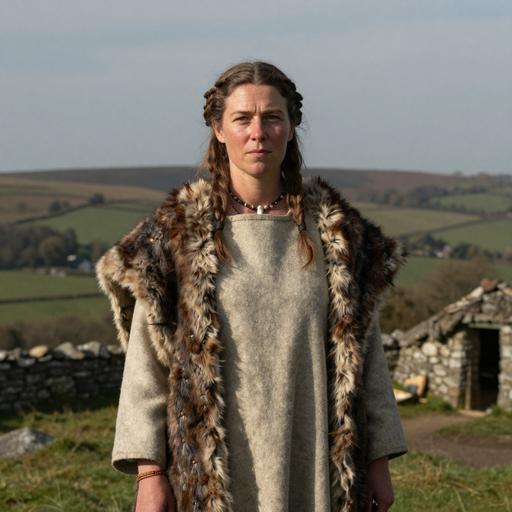
U4 lineages in general are tied to Mesolithic and post-glacial hunter-gatherer populations across northern and eastern Europe and western Siberia. U4A2C, as a derived branch, likely reflects maternal continuity among those groups. Archaeological associations are most consistent with Mesolithic/Microlithic and early forest-steppe adaptations (hunting, fishing and foraging economies) and with later regionally restricted populations that interacted with incoming Neolithic farmers and Bronze Age pastoralists.
Because U4A2C did not undergo broad, high-frequency expansions in the way some lineages associated with major demographic events did (for example, some Neolithic farmer mtDNA lineages or steppe pastoralist-associated lineages), its cultural significance is primarily as a marker of regional continuity and local maternal ancestry in northern Eurasia.
Conclusion
U4A2C is best interpreted as a regional, low-frequency maternal lineage that originated in Northern Eurasia during the early Holocene and persisted among hunter-gatherer-descended populations in northern Europe and western Siberia. Its limited modern and ancient frequency emphasizes the value of targeted aDNA and dense modern sampling in northern and under-sampled Asian populations to fully characterize the lineage's history and internal diversity.
Note: Age estimates and geographic inferences are based on the phylogenetic position of U4A2C within U4A2 and the broader published literature on U4 lineages; small sample sizes and uneven geographic sampling mean some distributional details remain provisional.
关键点
- Origins and Evolution
- Subclades
- Geographical Distribution
- Historical and Cultural Significance
- Conclusion