部门背景
mtDNA 谱系分支 U4A5 的历史背景
Origins and Evolution
Haplogroup U4A5 is a downstream subclade of mtDNA haplogroup U4A, itself part of the broader U4 lineage associated with European Mesolithic hunter-gatherers and post-glacial recolonization of northern latitudes. U4A5 likely arose in Northern Eurasia during the early Holocene (on the order of several thousand years after the Last Glacial Maximum), as small, geographically structured hunter-gatherer groups diversified their mitochondrial lineages. Its phylogenetic position within U4A links it to maternal lineages that persisted in high-latitude refugia and subsequently recolonized much of Scandinavia, the Baltic region, and parts of northwestern Russia.
Subclades (if applicable)
U4A5 is itself a narrow subclade and, in current databases, appears at low frequency with limited evidence for deep internal branching; any downstream sublineages (e.g., U4A5a/b) are rare or poorly sampled. Because U4A5 is uncommon in both modern and ancient datasets, robust resolution of internal subclades depends on additional high-quality mitogenomes from northern Eurasian populations and ancient remains.
Geographical Distribution
Modern occurrences of U4A5 are concentrated in northern and eastern Europe, with secondary low-frequency occurrences in parts of Siberia and Central Asia. Typical observations include isolated cases among Scandinavians, Finns, and Russian populations, and occasional detections among indigenous north Eurasian groups (for example, Nenets or Evenki) and populations from the Altai region. Frequencies are generally low (often <<1% in large population surveys) but the lineage's presence in high-latitude populations reflects continuity with Mesolithic maternal ancestry.
Historical and Cultural Significance
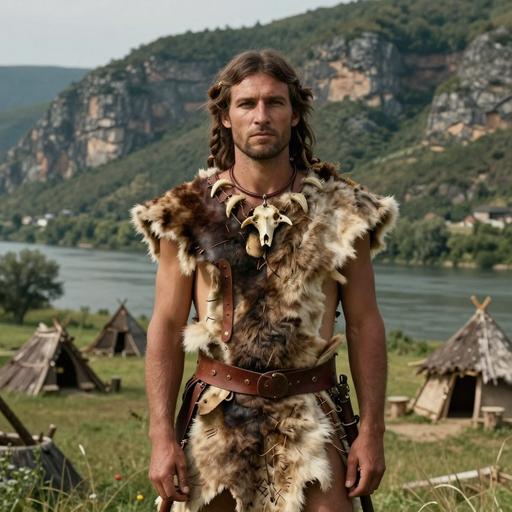
Because U4 lineages are strongly associated with Mesolithic hunter-gatherer communities in Europe, U4A5 is most plausibly interpreted as part of that hunter-gatherer mitochondrial legacy. In regions where U4A5 is observed today, it may signal maternal continuity from pre-Neolithic occupants or later gene flow from neighboring groups that retained Mesolithic-derived lineages. U4A5 can therefore be informative in studies of post-glacial recolonization, persistence of hunter-gatherer ancestry during the Neolithic transition, and the genetic structure of northern Eurasian populations through the Holocene.
In broader prehistoric contexts, U4A5 may co-occur with Y-chromosome lineages common in Mesolithic or early Neolithic northern Europe (for example, I2 and, later, R1a in some communities), but the low frequency and patchy distribution mean associations with specific archaeological cultures are tentative without direct ancient-DNA confirmation.
Conclusion
U4A5 is a low-frequency, regionally important mitochondrial lineage that traces to the U4A branch associated with Mesolithic northern Eurasian populations. Its presence in modern northern and some central Asian groups preserves a signal of ancient maternal ancestry; however, the haplogroup is sparsely sampled and understudied, so further mitogenomic and ancient-DNA data are needed to clarify its detailed history and internal structure.
关键点
- Origins and Evolution
- Subclades (if applicable)
- Geographical Distribution
- Historical and Cultural Significance
- Conclusion