跳转到主内容
mtDNA · 母亲 lineage

U5A2B2

mtDNA Haplogroup U5A2B2

一个家族分支的参考简介 。 共享haplogroups 无法建立家庭关系或文化认同 。

参考简介

部门背景

mtDNA 谱系分支 U5A2B2 的历史背景

Origins and Evolution

mtDNA haplogroup U5A2B2 is a downstream branch of U5A2B, itself part of the broader U5 clade that represents one of the deepest and most enduring maternal lineages in post-glacial Europe. Based on its phylogenetic position under U5A2B and the temporal pattern of related U5A lineages recovered in ancient DNA, U5A2B2 most likely emerged in Northern/Eastern Europe during the Late Mesolithic (after the Last Glacial Maximum), roughly around ~11 kya. This timing and geography are consistent with continuity from Mesolithic hunter-gatherer populations that repopulated northern Europe as the ice sheets retreated.

The lineage exhibits limited but detectable downstream diversity consistent with a regional founder-effect history: a small number of branches have been observed in modern and ancient samples, indicating localized expansions and long-term persistence rather than wide, rapid dispersal.

Subclades (if applicable)

U5A2B2 currently shows restricted downstream diversity compared with older U5 subclades. While larger U5 branches (e.g., U5A, U5B) have many named subclades, U5A2B2 appears to have only a few private or locally derived branches recorded in targeted sequencing studies and ancient genomes. In ancient DNA databases U5A2B2 has been directly observed in a small number of archaeological samples (five entries in the referenced dataset), demonstrating continuity from Mesolithic contexts into later periods in certain regions.

Geographical Distribution

The modern and ancient distribution of U5A2B2 is concentrated in northern and northeastern Europe. It is most frequent and confident in populations with strong Mesolithic ancestry and in groups that experienced founder effects in northern latitudes. Key geographic features of its distribution include:

  • High prevalence in Scandinavia and Fennoscandia, with elevated representation among some regional groups and in ancient Scandinavian hunter-gatherers.
  • Notable frequencies among Saami and some Finnish populations, where drift and founder events have amplified Mesolithic maternal lineages.
  • Presence across the Baltic region and northwestern Russia, consistent with persistence from Mesolithic and early postglacial communities.
  • Lower, intermittent frequencies in Western and Central Europe, reflecting retention of Mesolithic ancestry or later admixture.
  • Low-frequency occurrences in the Caucasus, parts of Central Asia, and sporadic reports from North Africa, which are likely due to later gene flow, rare long-distance migration events, or sampling of historically mixed populations.

Overall, spatial patterns indicate a northern European origin with limited diffusion beyond adjacent regions.

Historical and Cultural Significance

U5A2B2 is best interpreted as part of the maternal signature of postglacial Mesolithic hunter-gatherers in northern Europe. Its persistence into later periods highlights several processes:

  • Continuity through the Mesolithic–Neolithic transition in northern latitudes, where incoming early farmers had a smaller demographic impact and indigenous hunter-gatherer maternal lineages remained common.
  • Regional founder effects and genetic drift, especially in isolated or bottlenecked populations such as the Saami, which increased the local frequency of Mesolithic-derived mtDNA lineages.
  • Intermittent presence in later archaeological cultures, where U5A2B2 appears in some Neolithic and Bronze Age contexts, typically at lower frequencies than in Mesolithic contexts, reflecting admixture between local hunter-gatherers and incoming farming or pastoralist groups.

Because mtDNA traces only the maternal line, U5A2B2 should be interpreted alongside other uniparental and autosomal data to reconstruct detailed demographic events. Nonetheless, its distribution is a useful marker for northern European Mesolithic ancestry and subsequent regional continuity.

Conclusion

U5A2B2 is a geographically focused mtDNA lineage tied to the deep European U5 maternal radiation and the Mesolithic repopulation of northern and eastern Europe. It shows limited downstream branching, persistence in modern northern populations (notably Scandinavians and the Saami), and occasional appearances outside its core range due to later movements and admixture. As with other U5 subclades, U5A2B2 helps illuminate patterns of postglacial recolonization, regional continuity, and the complex interactions between hunter-gatherers and incoming agricultural populations.

关键点

  • Origins and Evolution
  • Subclades (if applicable)
  • Geographical Distribution
  • Historical and Cultural Significance
  • Conclusion
参考简介

树形关系( N)

phylgenetic 上下文和子拼写

进化路径

沿已记录的上级分支追溯至 U5A2B2。年代为估计值,可能随参考数据更新而调整。

步骤 单倍群 年龄估计 考古时代 时间流逝 直系后裔 被测试的现代后裔 古代连接
1 U5A2B2 当前 ~11,000 years ago Neolithic 11,000 years 1 3 0
2 U5A2B ~13,000 years ago Mesolithic 13,000 years 5 45 44
3 U5A2 ~18,000 years ago Mesolithic 18,000 years 5 128 0
4 U5a ~17,000 years ago Mesolithic 17,000 years 2 659 110
5 U5A'B - - - 2 1,339 0
6 U5 ~35,000 years ago Paleolithic 35,000 years 1 1,339 142
7 U ~46,000 years ago Paleolithic 46,000 years 5 5,557 110
8 R ~55,000 years ago Paleolithic 55,000 years 17 22,830 57
9 NA - - - 1 22,830 0
10 N ~60,000 years ago Paleolithic 60,000 years 16 26,150 13
11 L3 ~70,000 years ago Paleolithic 70,000 years 7 30,162 6
12 L3'4 - - - 2 30,212 0
13 L3'4'6 - - - 2 30,216 0
14 L2'3'4'6 - - - 2 31,333 0
15 L2'3'4'5'6'7 - - - 2 31,349 0
16 L1'2'3'4'5'6'7 - - - 2 31,852 0
17 L ~160,000 years ago Paleolithic 160,000 years 2 32,236 5

Siblings (4)

来自同一父分支的分支( oplogroup)

参考简介

哪里是这个世界

地理分布和现代存在

记录来源

Northern and Eastern Europe

现代发行

The populations where mtDNA haplogroup U5A2B2 is found include:

  1. Northern Europeans (Scandinavia, Finland)
  2. Saami people of Fennoscandia
  3. Eastern Europeans (Baltic states, northwestern Russia)
  4. Western and Central Europeans at lower to moderate frequencies
  5. Populations in the Caucasus at low frequencies
  6. Isolated occurrences in North Africa and Central Asia (low frequency)
  7. Ancient European hunter-gatherer populations (Mesolithic archaeological contexts)
历史背景

分枝穿越时间

大致历史时间范围内的估计形成情况:周期标志提供了背景,并不意味着与特定文化的联系。

  1. ~11k 年前

    Haplogroup U5A2B2

    此 mtDNA 分支的形成时间为推定值,日期和地点仅作参考。

    这个分支
  2. ~10k 年前

    新石器革命

    农业开始,定居社区形成

  3. ~5k 年前

    青铜时代

    金属加工、书写和早期文明

  4. ~3k 年前

    铁器时代

    铁工具,扩大贸易网络

  5. ~2.5k 年前

    古典时代

    希腊和罗马文明蓬勃发展

  6. 现

    现日

    现代时代

参考简介

考古学背景

已记录的 mtDNA 分支 U5A2B2 考古关联

有记录的协会

这些标签描述与 U5A2B2 相关的参考样本所处的考古背景。仅凭这种关联,无法判断所有携带者都属于某种文化或沿同一路线迁徙。

Don-Mariupol Culture Ertebølle Kongemose Murzikha Northern Don Culture Russia_Ivanovo_Eneolithic_Volosovo_Lyalovo Russia_Voronezh_N Serednii Stih Yazykovo Culture
文化任务基于古代DNA样本的考古背景,可能代表特定时期的区域协会.
参考简介

样本目录

单倍群 U5A2B2 的直接携带者 6 名,子分支携带者 4 名

10 显示 ^ 10 匹配样本

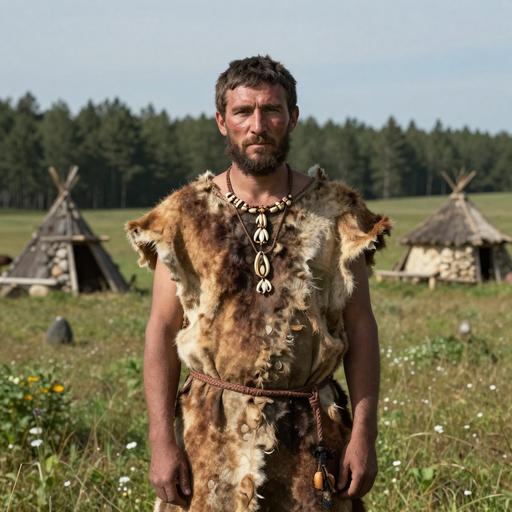
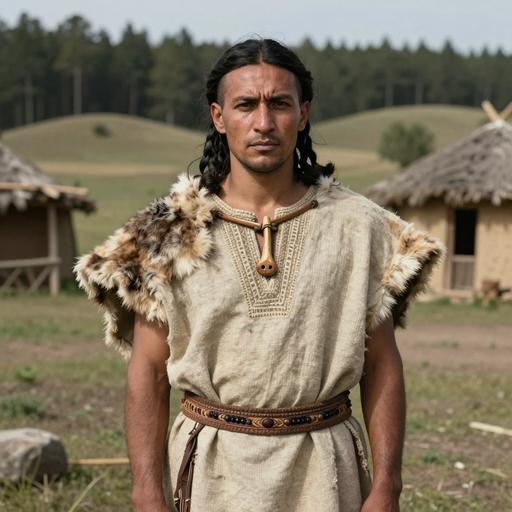
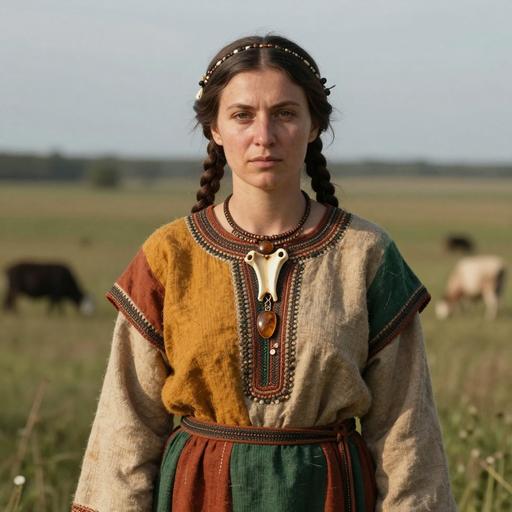
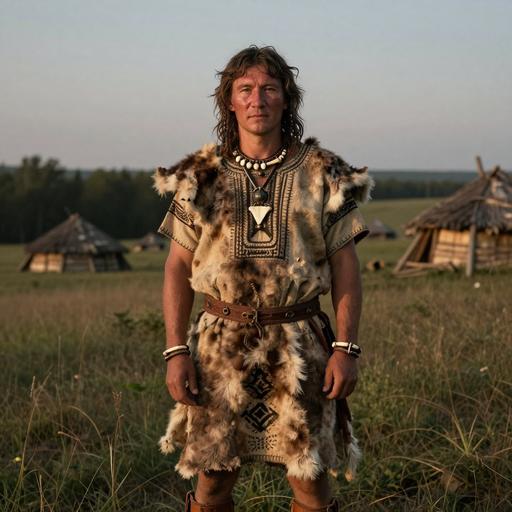
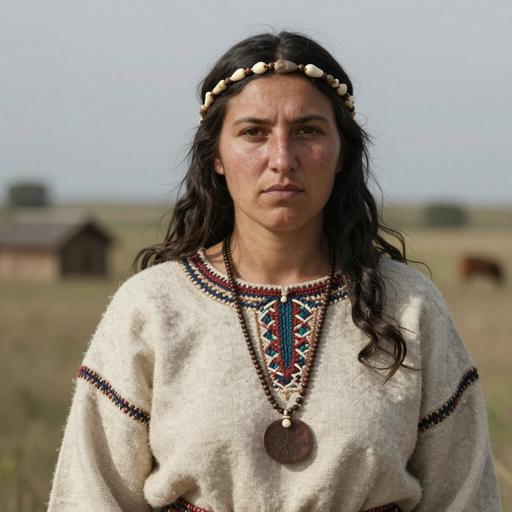
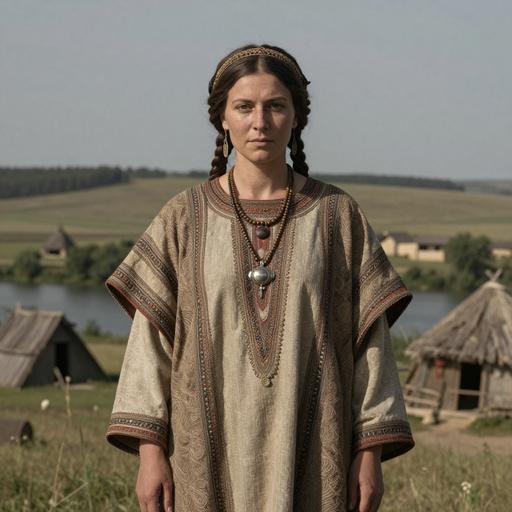
Portraits是AI生成的插图,样本标签和加入ID识别参考记录.

纵向 样本 国家 大纪元 日期 文化 mtDNA 匹配
AI生成的示例性肖像 Proto-Uralic individual, Murzikha-2 (Tatarstan, Alexeyevsky District, Mokrye Kurnali Village), Russia (4,543-4,405 BCE)
Sample ID: MUR017
Russia Murzikha Eneolithic Culture 4543 BCE - 4405 BCE Murzikha U5a2b2 Direct
AI生成的示例性肖像 Tatarstan Eneolithic individual, Murzikha-2 (Tatarstan, Alexeyevsky District, Mokrye Kurnali Village), Russia (4,543-4,405 BCE)
Sample ID: MUR005
Russia Murzikha Eneolithic Culture 4550-4400 BCE Murzikha U5a2b2 Direct
AI生成的示例性肖像 Eneolithic Serednii Stih Don individual, Ksizovo-6 (Lipetsk Oblast, Zadonsky District), Russia (4,719-4,545 BCE)
Sample ID: NEO173
Russia Serednii Stih culture 4719-4545 calBCE (5789±34 BP, UBA-39985) Serednii Stih U5a2b2 Direct
AI生成的示例性肖像 Lipetsk N Don individual, Ksizovo-6 (Lipetsk Oblast, Zadonsky District), Russia (5,296-4,998 BCE)
Sample ID: NEO172
Russia Northern Don Culture 5296-4998 calBCE (6181±47 BP, UBA-39984) Northern Don Culture U5a2b2 Direct
AI生成的示例性肖像 Ulyanovsk EN individual, Yazykovo (Ulyanovsk Oblast, Karsunsky District, Yazykovo Village), Russia (5,365-5,217 BCE)
Sample ID: JAZ001
Russia Yazykovo Neolithic Culture 5365-5217 calBCE (6329±21 BP, MAMS-37910) Yazykovo Culture U5a2b2 Direct
AI生成的示例性肖像 Ivanovo Eneolithic Volosovo Lyalovo individual, Sakhtysh-2a (Ivanovo Oblast, Teykovsky District, Sakhtysh Village), Russia (5,646-3,454 BCE)
Sample ID: I12498
Russia Russia Ivanovo Eneolithic Volosovo Lyalovo 5500-3600 BCE Russia_Ivanovo_Eneolithic_Volosovo_Lyalovo U5a2b2 Direct
AI生成的示例性肖像 Late Avar individual, Békés County. Orosháza-BónumTéglagyár, Hungary (600-800 CE)
Sample ID: OBT-108
Hungary Hungary LateAvar 600-800 CE Avar Culture U5a2b2a 下游分支
AI生成的示例性肖像 Elite individual, Pest County. Bugyi-Kisványpuszta, Hungary (950-1,000 CE)
Sample ID: BK-2
Hungary Conqueror Elite Hungary 950-1000 CE Magyar Elite Culture U5a2b2a 下游分支
AI生成的示例性肖像 Medieval Jewish individual, Ackerhof (Thüringen, Thüringen, Erfurt-Kreisfreie Stadt), Germany (1,250-1,400 CE)
Sample ID: I14900
Germany Germany Medieval Jewish 1250-1400 CE German Jewish U5a2b2a 下游分支
AI生成的示例性肖像 Omsk Eneolithic Chernoozersky individual, Chernoozerye-1 (Omsk Oblast, Sargatsky District, Chernoozerye Village), Russia (2,921-2,877 BCE)
Sample ID: I6787
Russia Russia Omsk Eneolithic Chernoozersky 2916-2884 calBCE (4285±20 BP, PSUAMS-2920) Russia_Omsk_Eneolithic_Chernoozersky U5a2b2a 下游分支
MATERNAL LINEAGE · ANCIENT DNA

古代世系证据地图

跟随母舰飞向这个分支 探索古代载体的发现地点

正在装入古老的观测...

标记是考古发现地点。一个破碎的连接器是连续分支之间一种不确定的、拟议中的地理过渡,辅以多个日期的观察;它不是一个准确的旅行路线、出生地或直接血统的证明。父系样本可能属于其他后代分支。在证据不足的地方,差距依然存在。样本日期与随机群形成日期不同。

参考简介

载体分布图

10 个古代 DNA 样本的地理分布,涵盖 U5A2B2 及其下游分支的携带者

直接承运人 子舱载体
时间段过滤器
所有时间段
显示全部样本
参考简介

时间分布

载体在考古时期的分布

参考简介

地理分布

按有记录的抽样国家计算,反映的是现有的参考选择,而不是人口频率。

参考简介

国家 × 大纪元发行

比较各国和考古时期记录的样本数量。选择一个人口密集的细胞来检查样本。

数据

数据证明( P)

来源信息和数据质量

上次更新 2026-02-16
信心分数 50/100
覆盖范围 Low

数据来源

分类、估计日期和地理背景反映了所记录的参考数据,随着证据的修订而可能发生变化,样本覆盖范围不均匀;所记录的地点和考古协会没有确定个人出身或文化特征。