部门背景
mtDNA 谱系分支 U5A2F 的历史背景
Origins and Evolution
U5A2F is a downstream branch of mitochondrial haplogroup U5A2, itself a daughter of the broader European hunter‑gatherer lineage U5a. U5 lineages are among the oldest well‑documented European maternal clades and expanded in Europe during and after the Last Glacial Maximum. Based on the phylogenetic position of U5A2F beneath U5A2 and the archaeological distribution of related clades, U5A2F most plausibly originated in Northern or Northeastern Europe in the Late Paleolithic to early Mesolithic (roughly the period after ~18 kya for U5A2, with U5A2F forming somewhat later, estimated here around 12 kya). Its emergence reflects diversification of maternal lineages as hunter‑gatherer groups re‑expanded into newly habitable northern territories following glacial retreat.
Subclades (if applicable)
As a named terminal or near‑terminal subclade of U5A2, U5A2F may be represented by a small set of private mutations that define it relative to sibling branches of U5A2. Published haplogroup catalogs and ancient DNA surveys sometimes record low‑frequency, population‑restricted subclades like U5A2F; where present, these subclades often have limited modern diversity and are most informative for regional maternal continuity. Further high‑coverage mitogenomes and targeted phylogenetic analyses are needed to robustly resolve internal substructure beneath U5A2F and to identify any serial subclades.
Geographical Distribution
The observed and inferred distribution of U5A2F mirrors the broader pattern of U5A2 but at lower, more localized frequencies. Modern and ancient DNA evidence indicates persistence in:
- Fennoscandia and adjacent northern European regions, where many U5a/U5A2 lineages are concentrated.
- Saami and other northern Scandinavian populations, which retain elevated frequencies of U5 sublineages due to long‑term regional continuity and relative isolation.
- Baltic and northwestern Russian populations, reflecting Mesolithic and post‑Mesolithic presence in northeastern Europe.
- Lower frequencies across western and central Europe, where U5A2 branches appear sporadically due to gene flow and later population movements.
- Isolated occurrences in the Caucasus, Central Asia, or North Africa are occasionally reported for related U5 lineages and likely reflect complex historical contacts and low‑frequency drift events rather than a primary homeland.
Regional concentrations and reported ancient samples consistently indicate that U5A2F is principally a northern European/more specifically Fennoscandian‑Baltic lineage with reduced frequency elsewhere.
Historical and Cultural Significance
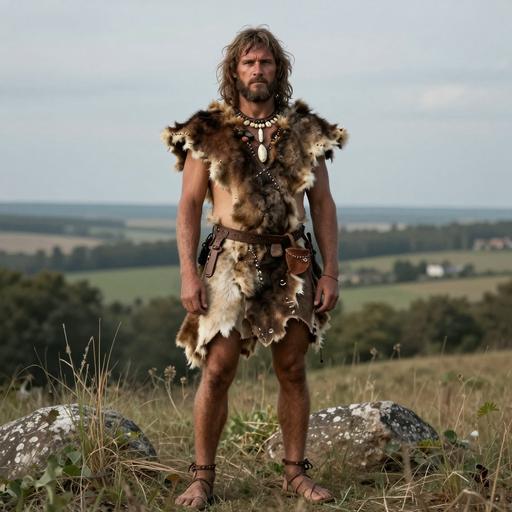
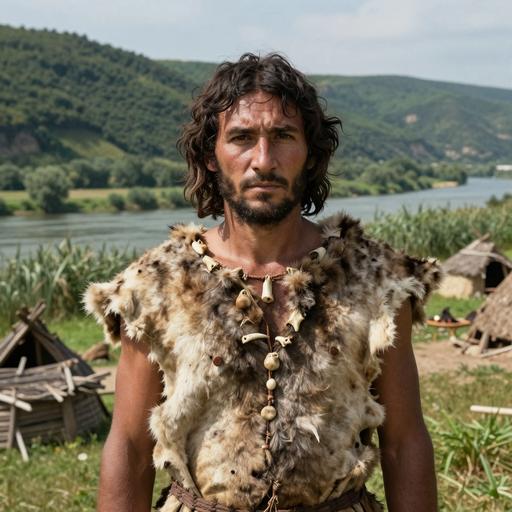
U5A2F should be interpreted within the context of post‑glacial hunter‑gatherer continuity in northern Europe. U5 and its subclades are hallmark maternal markers in Mesolithic archaeological contexts across Europe; therefore, U5A2F likely reflects maternal continuity from Mesolithic groups that recolonized northern landscapes after the Last Glacial Maximum. In later periods, low‑level continuity of U5A2F into populations described historically (for example, speakers and cultural groups in Fennoscandia) suggests survival of some Mesolithic maternal lines through the Neolithic, Bronze Age, and into present populations such as the Saami and certain Scandinavian communities. U5A2F itself does not indicate major agricultural expansions (which are typically associated with farmer‑derived mtDNA lineages) but instead documents the persistence and local influence of indigenous forager maternal ancestry.
Conclusion
U5A2F is best viewed as a geographically focused, low‑to‑moderate frequency descendant of the Mesolithic European maternal heritage represented by U5A2. It is most informative for studies of regional continuity in northern Europe, the genetic history of Saami and Scandinavian populations, and fine‑scale phylogeographic reconstructions that aim to track survival and diffusion of ancient maternal lineages across the Holocene. Additional whole mitogenome sequencing and incorporation of ancient samples from northern Europe will clarify its precise age, internal branching, and historical dynamics.
关键点
- Origins and Evolution
- Subclades (if applicable)
- Geographical Distribution
- Historical and Cultural Significance
- Conclusion