部门背景
mtDNA 谱系分支 U5B1B1A3 的历史背景
Origins and Evolution
U5B1B1A3 is a downstream branch of U5B1B1A, itself a subclade of the deeper European hunter-gatherer-associated haplogroup U5. The parent clade (U5B1B1A) has been estimated to arise in northern/central Europe in the late Bronze Age to Iron Age (around 3.5 kya). Given that phylogenetic position, U5B1B1A3 plausibly represents a more recent split within that lineage, forming roughly in the last ~2,500 years (late Iron Age / early historic period) in northern or central parts of Europe. The mutational divergence and its restricted geographic pattern suggest a localized origin and subsequent continuity rather than a wide early dispersal.
U5 lineages more broadly trace to European Mesolithic hunter-gatherers, but many downstream branches (including U5B1B1A and its derivatives) show signals of regional continuity and later regional differentiation during the Bronze and Iron Ages.
Subclades (if applicable)
At present, U5B1B1A3 is documented as a specific downstream marker within U5B1B1A with limited internal diversity reported in published datasets and public sequence repositories. Because sampling of modern and ancient mtDNA in northern Fennoscandia is still incomplete, additional minor sub-branches may exist but remain unsampled or unpublished. The small number of confirmed sequences and a single identified ancient DNA occurrence indicate a lineage that is rare overall but can be persistent in localized populations.
Geographical Distribution
The distribution of U5B1B1A3 is strongly concentrated in northern Europe with sporadic low-frequency occurrences further afield. Highest relative representation is among populations of northern Scandinavia (Saami and nearby groups) and in broader Scandinavian populations. Low-frequency occurrences reported in parts of the British Isles, the Iberian Peninsula, central/eastern Europe, and isolated reports from North Africa and the Caucasus are consistent with either historic mobility (trade, Viking-era movements, later migrations) or secondary gene flow from northern European sources.
Because this clade is rare outside northern Europe and often observed in small sample numbers, frequency estimates outside Scandinavia are low and should be interpreted with caution pending broader sampling and additional ancient DNA confirmation.
Historical and Cultural Significance
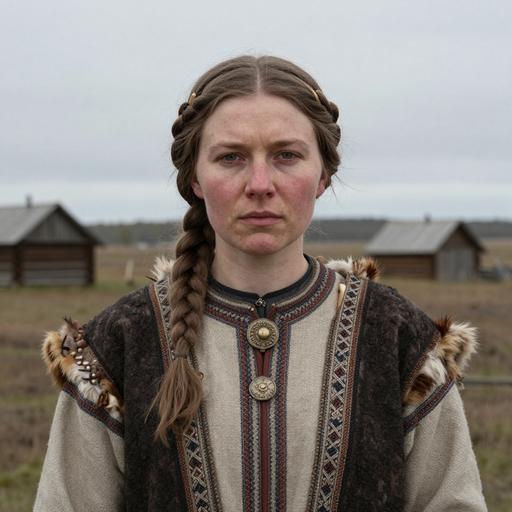
U5B1B1A3 reflects a pattern often seen for some U5-derived lineages: deep Mesolithic roots for the major haplogroup family (U5), followed by later regional differentiation and persistence through the Bronze Age and Iron Age into historic times. The association of the parent clade with Saami maternal continuity in northern Fennoscandia suggests that U5B1B1A3 may participate in that same pattern of long-term maternal lineage persistence in Arctic/subarctic hunter-gatherer and mixed-economy communities.
The presence of this mtDNA clade in Scandinavian and British Isles contexts can also be read alongside archaeological and historical evidence for mobility in the Viking Age and earlier Iron Age contacts; such contacts provide plausible routes for low-frequency dispersal of maternal lineages from northern Scandinavia to western and southern Europe.
Conclusion
U5B1B1A3 is a recently derived, geographically focused maternal lineage descended from an Iron Age northern/central European branch of U5. It is most informative for studies of regional maternal continuity in northern Fennoscandia (notably Saami populations) and for tracking low-frequency north-to-west dispersal events into the British Isles, Iberia and neighboring regions. Continued dense sampling of modern populations and further ancient DNA recovery from northern Europe will clarify its exact age, internal structure, and historical dynamics.
关键点
- Origins and Evolution
- Subclades (if applicable)
- Geographical Distribution
- Historical and Cultural Significance
- Conclusion