部门背景
mtDNA 谱系分支 U5B3F 的历史背景
Origins and Evolution
mtDNA haplogroup U5B3F is a downstream branch of U5B3, itself a derivative of the wider U5b/U5 maternal cluster. The broader U5 lineage is one of the oldest European mitochondrial lineages, associated with Paleolithic and Mesolithic hunter-gatherer populations. U5B3 appears to be a postglacial European clade that likely emerged in southern or western European refugia after the Last Glacial Maximum (LGM). U5B3F, as a further subclade, most plausibly coalesced later than its parent (U5B3) during the later Neolithic to Bronze Age timeframe, consistent with limited diversity and its restricted geographic signal.
Coalescence estimates for U5B3 place its origin at roughly ~7 kya in southern/western Europe; U5B3F's more recent divergence (here estimated at ~4.5 kya) is consistent with a Bronze Age origin or late Neolithic diversification from a small, localized maternal pool.
Subclades (if applicable)
At present U5B3F is described as a terminal/near-terminal subclade with very few or no robustly defined downstream lineages in public phylogenies and databases. Because U5B3F is rare and often only identified through full mitochondrial genome sequencing, additional downstream diversity may be discovered with larger datasets and targeted ancient DNA sampling. For confident assignment and discovery of substructure, whole mitogenome sequencing (not just control-region typing) is recommended.
Geographical Distribution
U5B3F shows a concentrated Mediterranean / southern European distribution with scattered, low-frequency occurrences elsewhere in Europe and occasional outliers beyond Europe. Modern and ancient DNA evidence indicates the haplogroup is most often detected in:
- Southern Europe (notably Italy and the Iberian Peninsula) where U5B3 overall is best represented.
- Western and Central Europe at low-to-moderate frequency, typically as rare singletons in population surveys.
- Northern and Eastern Europe as sporadic, low-frequency occurrences — sometimes observed in contexts influenced by later mobility (Bronze Age and historic movements).
- The Caucasus and North Africa as very rare occurrences, likely reflecting either ancient cross-Mediterranean connections or later historical gene flow.
Three ancient samples in the referenced database carry U5B3-related lineages, supporting continuity of U5B3-derived lineages in European archaeological contexts; at least some of these ancient occurrences date to Neolithic/Bronze Age intervals, consistent with the inferred time depth.
Historical and Cultural Significance
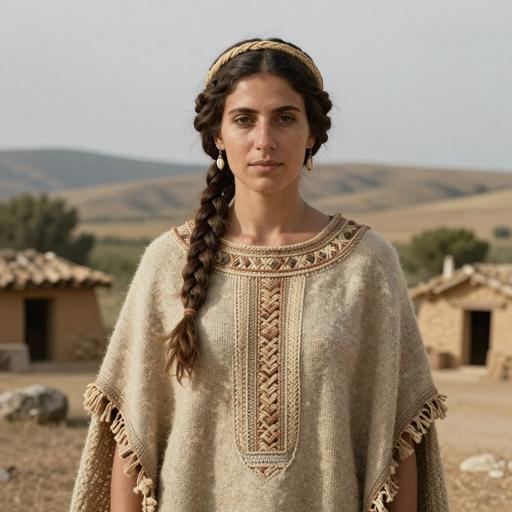
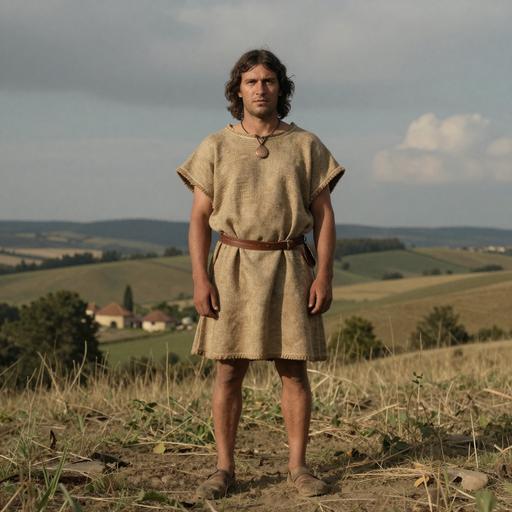
Because U5B3F is rare and localized, it does not define a broad archaeological culture on its own. However, its time depth and geography mean it plausibly participated in several cultural processes in southern Europe:
- Persistence in post-LGM/Mesolithic refugial populations in the Mediterranean region and survival through the Neolithic transition.
- Low-frequency transmission into Neolithic farming and later Bronze Age communities in Italy, Iberia and adjacent regions, producing sporadic occurrences in archaeological assemblages.
- Possible presence in Bronze Age mobility networks (including coastal and inland routes) that redistributed maternal lineages at modest frequencies.
The haplogroup's rarity makes it most useful for fine-scale maternal lineage tracing and for identifying localized continuity or micro-dispersals rather than for labeling major migration waves.
Conclusion
U5B3F represents a narrow, regionally focused branch of the ancient European U5 family, with an origin likely in southern/western Europe after the LGM and a probable coalescence in the late Neolithic to Bronze Age period. Its low frequency and limited geographic spread reflect a history of survival in localized maternal lineages, occasional participation in prehistoric mobility, and limited expansion compared with more common European mitochondrial haplogroups. Continued full mitogenome sequencing of modern and ancient samples is likely to refine its phylogeny and geographic history.
关键点
- Origins and Evolution
- Subclades (if applicable)
- Geographical Distribution
- Historical and Cultural Significance
- Conclusion