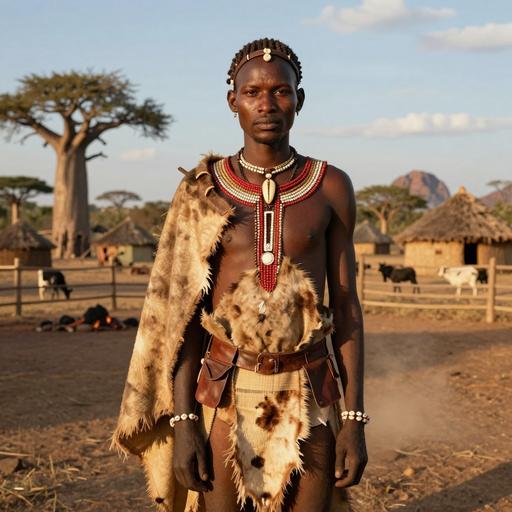
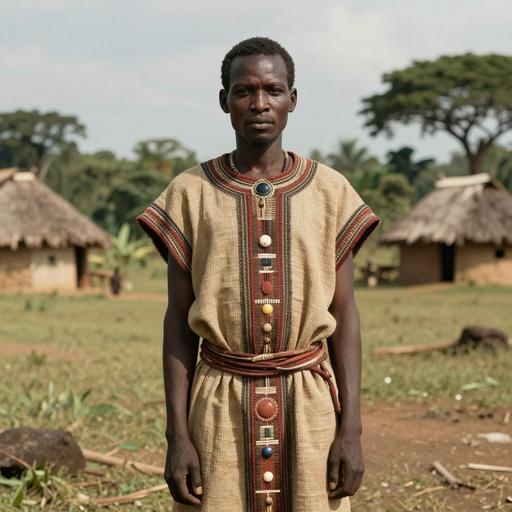
部门背景
Y-DNA 谱系分支 E1 的历史背景
Origins and Evolution
Y-DNA haplogroup E1 sits as an early branching lineage within haplogroup E (M96), which itself descended from DE. Based on phylogenetic position and coalescence estimates for downstream E lineages, E1 likely arose in East Africa in the Late Pleistocene (~50 kya) and represents an intermediate clade from which the principal African sublineages later diversified. Climatic shifts during the Late Pleistocene and the early Holocene (e.g., changes in the Sahara and expansion/contraction of habitable corridors) provided ecological contexts that shaped population structure and facilitated subsequent demographic expansions of descendant E lineages.
Subclades (if applicable)
E1 is best understood as an ancestral node that leads to the well-known descendant clades commonly reported in population studies, notably the major branches that are often labeled in the literature by their defining markers (for example, lineages commonly reported today as E-M2 and E-M35 and other downstream branches). These descendant branches diversified at different times and under different demographic processes: some expanded widely with the Bantu-speaking dispersals across sub-Saharan Africa, others became frequent in the Horn of Africa and North Africa and later spread into the Near East and southern Europe.
Geographical Distribution
The modern geographical distribution of lineages derived from E1 is concentrated in Africa with notable presence beyond the continent due to prehistoric and historic migrations. High frequencies are found in West, Central, Eastern and Southern Africa (through descendant clades), while moderate frequencies occur in the Horn of Africa and among Berber populations of North Africa. Lower but detectable frequencies appear in parts of the Levant and southern Europe, reflecting past gene flow between North Africa/the Near East and Europe, and historic movements. The Atlantic slave trade is responsible for the presence of E-derived lineages at appreciable frequencies in the Americas and the Caribbean among populations of African descent.
Historical and Cultural Significance
Although E1 itself represents an early phylogenetic node rather than a single modern, geographically-localized lineage, its descendant branches have been central to several major demographic events: the Holocene expansions of pastoralist and agricultural populations in eastern and northern Africa, and the Bantu expansion that reshaped central, eastern and southern Africa starting roughly 3–5 kya. Later historical contacts — including trans-Saharan trade, the Arab expansions, Mediterranean exchange and the transatlantic slave trade — redistributed descendant E lineages beyond Africa. Thus, E1 as an ancestral grouping helps link deep African population structure to multiple archaeological and historical processes across the Holocene.
Conclusion
E1 is an important intermediate clade in the Y-chromosome phylogeny because it anchors the ancestry of several dominant African paternal lineages. Its East African origin in the Late Pleistocene and subsequent diversification into regionally dominant subclades explains much of the paternal genetic landscape of Africa today and the footprint of African paternal lineages in adjacent regions of Eurasia and the Americas through both prehistoric dispersals and historic migrations.
关键点
- Origins and Evolution
- Subclades (if applicable)
- Geographical Distribution
- Historical and Cultural Significance
- Conclusion