部门背景
Y-DNA 谱系分支 R1A1A1B1A3 的历史背景
Origins and Evolution
Y-DNA haplogroup R1A1A1B1A3 is a downstream paternal branch within R1a, part of the broader lineage that expanded widely across Eurasia during and after the Bronze Age steppe demographic horizon. Because it is an intermediate subclade nested under a relatively recent branch of R1a, its formation is best understood as the product of local diversification and founder effects rather than a single deep prehistoric migration event on its own.
The most likely origin for this lineage is somewhere in Eastern Europe or the Eurasian Steppe, within populations carrying R1a that had already spread widely from earlier steppe-associated ancestry. A reasonable time depth for the origin of this subclade is around 3 kya, though the exact age depends on future high-resolution phylogenetic resolution and sampling. Like many R1a derivatives, its present-day distribution reflects repeated expansions, bottlenecks, and regional branching across eastern and central Eurasia.
Subclades
As an intermediate clade, R1A1A1B1A3 connects broader parent lineages to more terminal descendant branches. In practical terms, this means it may contain one or more younger regional offshoots that have accumulated in specific populations through male-line inheritance and demographic growth.
Because public phylogenetic resolution can vary by database and nomenclature scheme, the exact downstream structure may continue to be refined. However, its placement under R1a strongly indicates affinity with lineages that participated in the historical spread of steppe-related paternal ancestry.
Geographical Distribution
This haplogroup is expected to be found at low to moderate frequency across a broad Eurasian belt, with stronger representation in regions where R1a lineages are historically common. Its distribution likely includes:
- Eastern Europe, especially Slavic and Baltic-speaking populations
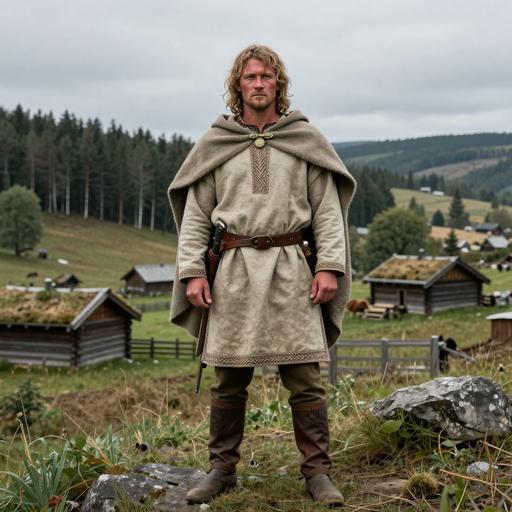
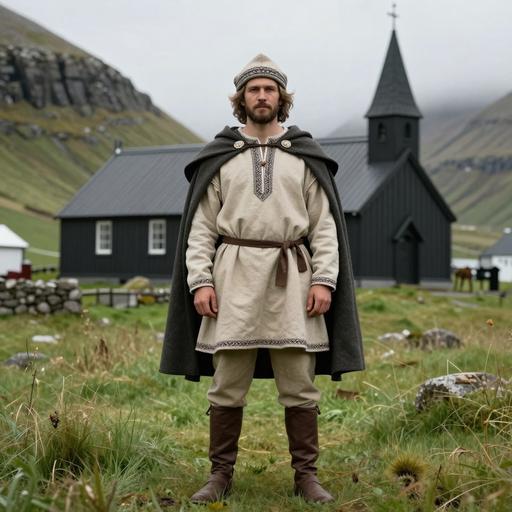
- Scandinavia, where R1a subclades occur at lower but noticeable levels
- Central Asia, including Turkic and Iranian-contact populations
- South Asia, particularly among some Indo-Aryan-speaking groups
- The western Eurasian forest-steppe and adjacent regions
- Selected Siberian and Uralic-speaking populations
The most common pattern for a lineage like R1A1A1B1A3 is a patchwork distribution: present across several regions but concentrated in certain local founder clusters rather than being uniformly frequent everywhere.
Historical and Cultural Significance
Lineages within R1a have been repeatedly associated in population genetics with major prehistoric and historic expansions tied to the Eurasian steppe, including the movements that shaped the genetic landscape of Eastern Europe, Central Asia, and parts of South Asia. While a haplogroup cannot be assigned to a single language or archaeological culture with certainty, R1a subclades are often discussed in relation to Corded Ware, Sintashta, Andronovo, and later Slavic and Indo-Iranian demographic expansions.
For R1A1A1B1A3 specifically, the key significance lies in illustrating how an older widespread paternal lineage became further structured into regionally distinctive sub-branches. Such subclades are important for reconstructing founder events, elite male-line continuity, and historical population interactions across Eurasia.
Relationship to Other Haplogroups
R1A1A1B1A3 belongs to the broader R1a family and is therefore genetically close to other R1a-derived lineages found in Eastern Europe, South Asia, and Central Asia. Its nearest relationships are to sibling and upstream R1a branches rather than to unrelated haplogroups such as R1b, though both are major branches of haplogroup R and share very deep prehistoric ancestry.
In population studies, R1a subclades often co-occur with haplogroups such as I1, R1b, N1c, J2, and E1b1b depending on region, reflecting the complex population history of Eurasia.
Conclusion
R1A1A1B1A3 is a relatively downstream R1a paternal lineage that most likely formed in the context of post-steppe diversification in Eastern Europe or the Eurasian Steppe around 3 thousand years ago. Its presence across Eastern Europe, Central Asia, Scandinavia, and parts of South Asia reflects the long-term movement and regional branching of steppe-associated male lineages in Eurasian history.
关键点
- Origins and Evolution
- Subclades
- Geographical Distribution
- Historical and Cultural Significance
- Relationship to Other Haplogroups