部门背景
Y-DNA 谱系分支 R1B1A1B1A1A2E2 的历史背景
Origins and Evolution
Y-DNA haplogroup R1b1a1b1a1a2e2 is a rare subclade within the broader R1b paternal lineage, one of the most important Y-chromosome branches in western Eurasia. Based on its placement below R1b1a1b1a1a2e, this lineage likely arose in West Eurasia during the late Upper Paleolithic or early post-glacial period, around 14 thousand years ago. Its position in the phylogeny suggests that it is not part of the major Neolithic or Bronze Age founder expansions that made other R1b branches common across Europe, but instead reflects a more localized survival of an older paternal line.
The very low modern frequency of this clade is consistent with a history shaped by genetic drift, regional bottlenecks, and founder effects. Like many rare Y-chromosome lineages, it may have persisted in small, semi-isolated populations that were later absorbed into larger demographic systems during the Neolithic, Chalcolithic, Bronze Age, and Iron Age.
Subclades
As an intermediate downstream branch, R1b1a1b1a1a2e2 sits within a nested lineage structure that helps connect older and younger branches of the R1b tree. Available public phylogenies indicate that such rare subclades often have limited internal resolution because they are represented by few sampled individuals. Where further downstream branches are identified, they are usually geographically localized and can provide fine-grained signals of regional paternal continuity.
Geographical Distribution
The present-day distribution of R1b1a1b1a1a2e2 is expected to be patchy and low-frequency across western Eurasia. It is most plausibly found in:
- Atlantic and northwestern Europe, where deep R1b diversity is highest in some populations
- The Mediterranean, including parts of Iberia, Italy, and the Balkans
- The Caucasus and Anatolia, where ancient West Eurasian paternal diversity has been preserved in pockets
- The Levant and North Africa, likely reflecting later gene flow and regional continuity
- Some Central Asian or steppe-related populations, probably due to historic admixture and migration
Because this lineage is rare, its distribution should be interpreted cautiously: in many regions it may appear only in isolated families or small clusters rather than as a population-wide marker.
Historical and Cultural Significance
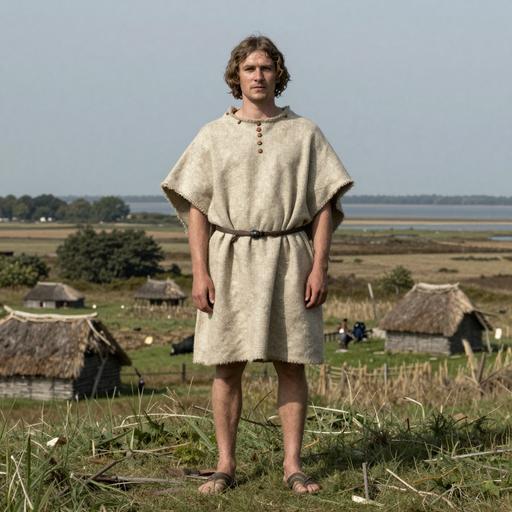
This haplogroup is not strongly tied to a single famous archaeological culture in the way that some more common Y lineages are associated with Yamnaya, Corded Ware, or Bell Beaker expansions. Instead, its significance lies in showing that some pre-Bronze Age paternal lines survived within later European and West Eurasian populations.
If present in ancient DNA, a clade like R1b1a1b1a1a2e2 would be especially informative for reconstructing the persistence of early West Eurasian males across major cultural transitions. Its rare modern occurrence may reflect the demographic replacement of many local lineages during the spread of agriculture and later steppe-derived societies, with only a few surviving in geographically or socially isolated groups.
Conclusion
R1b1a1b1a1a2e2 is a rare, deeply rooted West Eurasian Y-DNA lineage whose value to population genetics comes from its ability to reveal hidden layers of paternal continuity. Rather than marking a broad migration wave, it likely represents the long-term survival of an ancient local lineage that endured through repeated episodes of population change.
关键点
- Origins and Evolution
- Subclades
- Geographical Distribution
- Historical and Cultural Significance
- Conclusion