Agarak: Echoes of Early Medieval Armenia

下载的 PDF 是图像副本。如需可选中文本及更好的辅助技术支持,请使用打印功能。

Agarak: Echoes of Early Medieval Armenia

揭开一个失落的文明

正在加载考古记录……

正在收集古代记录

跳转到主内容
Agarak: Echoes of Early Medieval Armenia
文明焦点

Agarak: Echoes of Early Medieval Armenia

A small genetic and archaeological window into life in the Armenian highlands (1100–1379 CE).

1100 CE - 1379 CE
Agarak, Armenia (Caucasus)
3 Ancient Samples
滚动开始
Chapter I

剧情

了解 Agarak: Echoes of Early Medieval Armenia 文化

Archaeological deposits at Agarak, Armenia (1100–1379 CE) yield three ancient individuals whose mitochondrial DNA (U, R6b, T) offer a tentative glimpse into Early Medieval Armenian maternal lineages. Limited samples mean conclusions are preliminary; archaeological context suggests continuity and regional connections.

Time Period

1100–1379 CE

Region

Agarak, Armenia (Caucasus)

Common Y-DNA

Undetermined (no robust Y data; n=3, limited)

Common mtDNA

U, R6b, T (each observed once; n=3)

Chapter II

时间线

这种文化历史上的关键时刻

1100 CE

Agarak burials (archaeological context)

Burial contexts at Agarak yielding the three sampled individuals are dated to the Early Medieval period, anchoring genetic data between 1100–1379 CE.

Chapter III

Origins & Emergence

Beneath the high, wind-swept terraces around Agarak lie traces of communities that lived through a turbulent medieval landscape. Archaeological data indicates funerary activity and settlement layers dated between 1100 and 1379 CE, a period when the Armenian highlands were a crossroads of local polities and transregional pressures. The material record at Agarak — funerary contexts, scattered domestic debris and architecture typical of Early Medieval Armenia — paints a picture of resilient rural lifeways.

Limited evidence suggests these communities persisted through waves of political change rather than being entirely replaced. The three sampled individuals come from that same chronological window and therefore capture only a narrow slice of population history. With only three genomes, any reconstruction of demographic origins must be cautious: archaeological continuity at the site hints at local persistence, but broader patterns of mobility, trade and episodic migration across the Caucasus could also have introduced new lineages. The interplay of archaeological strata and radiocarbon-calibrated dates anchors these samples in a dynamic era when regional connections (by trade, marriage, or conflict) were plausible vectors of genetic exchange.

  • Agarak deposits dated 1100–1379 CE reflect Early Medieval occupation
  • Archaeology indicates local continuity within a dynamic regional context
  • Small sample size means origin hypotheses remain provisional
Chapter IV

Daily Life & Society

Imagine a courtyard garden beside mudbrick walls, the smoke of hearths rising over terraced fields — such evocative scenes are reconstructed from the durable traces left in soil and pottery fragments. Archaeological indicators from Early Medieval Armenia suggest a mixed agrarian economy: cereal cultivation, pastoralism, and craft production connected villages to nearby market towns. Funerary practices at Agarak, as preserved in burials and associated grave goods, reflect social identities expressed through burial position, clothing accessories and occasionally imported objects, although the small excavation sample limits broad generalizations.

Seasonal rhythms and social networks likely structured life: kinship ties linked households, while long-distance contacts — merchants, pilgrims, or military movements — could intermittently reshape material culture. Environmental factors, such as mountain microclimates and water availability, influenced settlement patterns and mobility. Archaeology can reconstruct aspects of everyday practice, but when tied to genetics, even modest datasets provide a more intimate picture: maternal lineages recorded in mtDNA speak directly to family histories, migration events, and patterns of female mobility that are otherwise invisible in pottery sherds alone.

  • Rural agrarian lifeways with craft and market ties inferred from site finds
  • Burial practices at Agarak reflect household and possibly regional identities
Chapter V

Genetic Profile

The genetic signal from Agarak is a fragile but evocative thread. Three individuals produced mitochondrial haplogroups U (n=1), R6b (n=1) and T (n=1). Haplogroup U is widespread across Eurasia in both ancient and modern populations and is consistent with deep maternal lineages present in the Caucasus and surrounding regions. Haplogroup T is likewise found in the Near East and the Caucasus and appears in many medieval and modern West Eurasian populations. R6b is relatively rare in published ancient West Eurasian datasets and has stronger associations in parts of South and Southwest Asia; its presence here may indicate long-range connections or under-sampled local diversity.

No robust Y-DNA signal is available from these three samples, so paternal lineages and patrilineal continuity cannot be assessed. Because the dataset is very small (n=3), any inference about population continuity, admixture, or migration must be regarded as preliminary. Archaeogenetic comparisons with larger medieval and modern Caucasus datasets could in future clarify whether these maternal lineages represent common local ancestries, sporadic immigrant lineages, or survival of older gene pools. For now, the data suggest a mosaic: persistent local maternal haplogroups alongside rarer lineages that hint at mobility across the broader Near East and South Caucasus.

  • mtDNA: U, R6b, T observed (each n=1); reflects maternal diversity
  • Y-DNA: undetermined in this small sample; patrilineal patterns unresolved
Chapter VI

Legacy & Modern Connections

The mitochondrial lineages detected at Agarak offer tentative bridges to the present. Haplogroups U and T continue to be found among modern populations of the Caucasus and Anatolia, suggesting some degree of maternal continuity in the region through the medieval period into modernity. The rarer R6b lineage, observed once, cautions us that pockets of unexpected genetic diversity existed — perhaps reflecting individual travel, marriage ties, or under-sampled regional variation.

Because only three individuals were analyzed, these connections must be framed as hypotheses rather than firm genealogical threads. Future sampling across more graves at Agarak and comparative studies with contemporary Armenian and neighboring populations will be essential to assess whether these lineages represent local persistence, episodic influx, or both. Even in small numbers, ancient DNA humanizes the archaeological record: each haplotype is a voice from the past that, when joined by more data, will help compose a richer hymn to Armenia’s medieval peoples.

  • Some mtDNA lineages (U, T) align with haplogroups present in modern Caucasus populations
  • R6b’s rarity underscores the need for broader sampling to clarify regional connections
Chapter VII

样本目录

3 份与 Agarak: Echoes of Early Medieval Armenia 文化相关的古 DNA 样本,为研究该时期的人群提供遗传线索。

3 / 3 samples
纵向 样本 国家 大纪元 日期 文化 性别 Y-DNA mtDNA
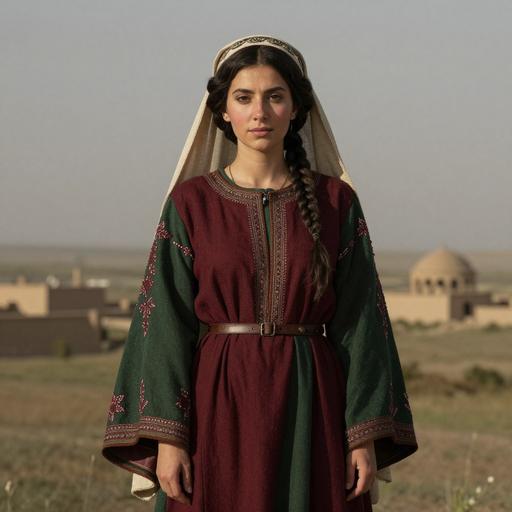
重建的肖像画 Agarak Town Stadium Medieval individual, Armenia
Agarak Town Stadium Medieval individual, Armenia
Armenia Armenia_EarlyMedieval 1100-1300 CE Byzantine Empire F - U3b1
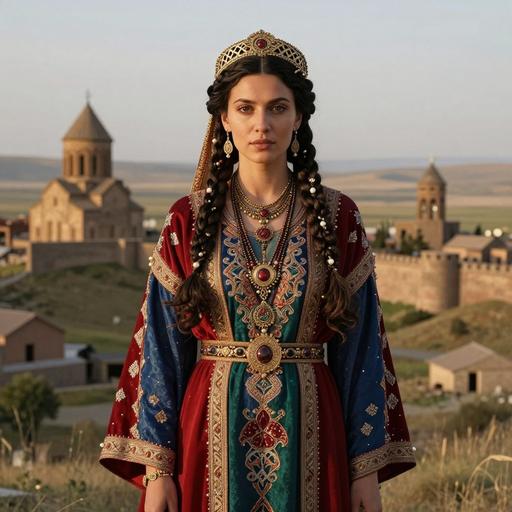
重建的肖像画 Agarak Town Stadium Medieval individual, Armenia
Agarak Town Stadium Medieval individual, Armenia
Armenia Armenia_EarlyMedieval 1100-1300 CE Byzantine Empire F - T
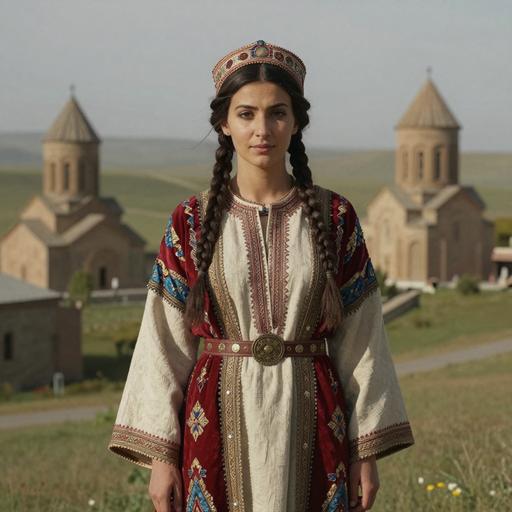
重建的肖像画 Agarak Town Stadium Medieval individual, Armenia
Agarak Town Stadium Medieval individual, Armenia
Armenia Armenia_EarlyMedieval 1271-1379 calCE (795±33 BP, OxA-31675) Byzantine Empire F - R6b
AI 电源

AI 助手

就 Agarak: Echoes of Early Medieval Armenia 文化提问

AI 助手 由DNAGENICS公司制作

解锁此特性
Ask questions about the Agarak: Echoes of Early Medieval Armenia culture. Our AI assistant can explain genetic findings, historical context, archaeological evidence, and modern connections.

AI 样本分析

Agarak: Echoes of Early Medieval Armenia 文化是人类历史中值得了解的一章……

遗传分析揭示了与早期种群的联系,同时显示了独特的适应和文化创新的证据。 古代DNA样本提供了对迁徙模式、社会结构以及古代种群之间的生物关系的深刻见解。

这是人工智能分析的预览。 解锁全AI 助手, 以探索关于:

  • 遗传组成和祖先
  • 移徙模式和起源
  • 日常生活和文化习俗
  • 现代遗传遗产

探索更古老的文化

揭开古代世界文明的故事

使用优惠码 可减免 35% • 11月12日 到期