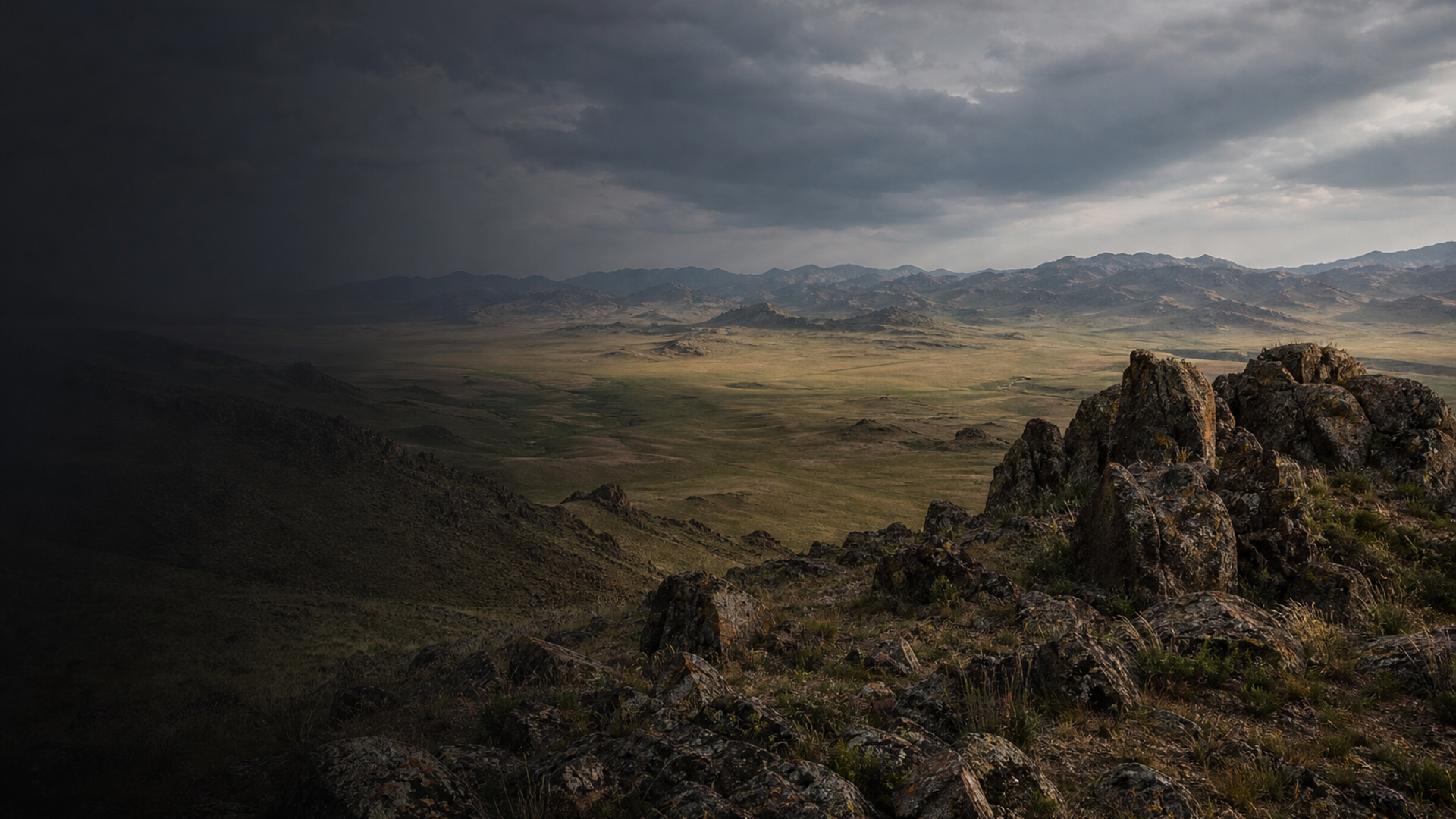
Aktogai Mid–Late Bronze Horizon

下载的 PDF 是图像副本。如需可选中文本及更好的辅助技术支持,请使用打印功能。

Aktogai Mid–Late Bronze Horizon

揭开一个失落的文明

正在加载考古记录……

正在收集古代记录

跳转到主内容
Aktogai Mid–Late Bronze Horizon
文明焦点

Aktogai Mid–Late Bronze Horizon

A steppe enclave in eastern Kazakhstan where burials and genomes meet

1750 CE - 1500 BCE
Aktogai, East Kazakhstan
滚动开始
Chapter I

剧情

了解 Aktogai Mid–Late Bronze Horizon 文化

Archaeological and genomic data from five Mid–Late Bronze Age individuals at Aktogai (1750–1500 BCE) suggest a steppe pastoral community dominated by Y haplogroup R and diverse maternal lineages. Small sample size makes conclusions tentative but evocative of wider Eurasian Bronze Age dynamics.

Time Period

1750–1500 BCE

Region

Aktogai, East Kazakhstan

Common Y-DNA

R (predominant, 4/5)

Common mtDNA

U (2), T (1), N (1), J (1)

Chapter II

时间线

这种文化历史上的关键时刻

1750 BCE

Earliest sampled burials at Aktogai

Burials dated to ~1750 BCE mark the sampled Mid–Late Bronze Age horizon at Aktogai; genetic data begin to reveal steppe-affiliated ancestry patterns.

Chapter III

Origins & Emergence

The Aktogai assemblage belongs to a Mid–Late Bronze Age horizon (1750–1500 BCE) in eastern Kazakhstan. Archaeological data indicates ephemeral settlements and funerary traces typical of steppe pastoral groups in the broader Andronovo-Sintashta cultural milieu. Excavations at Aktogai have produced a small cluster of burials and associated artifacts that tie this locality into long-distance networks of metallurgy, animal husbandry, and mobility.

Limited evidence suggests these communities coalesced from earlier Bronze Age traditions on the Kazakh steppe, absorbing influences from eastern forest-steppe and western steppe populations. The landscape that cradled Aktogai—open grasslands punctuated by river valleys—favored mobile pastoralism and episodic aggregation at seasonal camps. Material culture (metalworking debris, ornaments, and portable pastoral tools reported in broader region studies) implies participation in a regional economy shaped by herding, horse use, and exchange of bronze goods.

Because the current sample set is small (five individuals), interpretations of population origins remain provisional. Archaeological context combined with genetic signals, however, points toward a community embedded in Bronze Age steppe dynamics rather than an isolated local phenomenon.

  • Situated in Aktogai, eastern Kazakhstan (1750–1500 BCE)
  • Links to Andronovo–Sintashta steppe interactions
  • Conclusions preliminary due to small sample size (n=5)
Chapter IV

Daily Life & Society

Daily life at Aktogai can be imagined as a rhythm of herding, seasonal movement, and metallurgy. Archaeological indicators across the region suggest households organized around livestock—sheep, goats, cattle and increasingly horses—whose mobility shaped settlement patterns. Pastoral camps seasonally concentrated near watercourses and pastures, becoming nodes for exchange in times of aggregation.

Burial practices in the Mid–Late Bronze steppe often featured kurgan or flat grave contexts; at Aktogai the funerary record is limited but consistent with regional forms emphasizing individual interment with personal ornaments and occasional metal tools. Such objects speak to social identities linked to craft, mobility, and status. Craft specialists—metalworkers and possibly horse handlers—would have held important roles in a community where bronze objects and horse harness technology mattered far beyond simple utility.

Archaeological evidence indicates a world of long-distance connections: raw materials, finished bronze, and stylistic motifs moved across the steppe. This material mobility would have accompanied gene flow, marriage alliances, and cultural exchange, forming the lived backdrop to the genomes sampled at Aktogai.

  • Pastoral economy centered on herd mobility and seasonal camps
  • Burials reflect individual status and links to regional craft and exchange
Chapter V

Genetic Profile

Genomic screening of five Aktogai individuals (1750–1500 BCE) reveals a striking paternal consistency alongside maternal diversity. Four of five males carry haplogroup R, a lineage broadly associated with Bronze Age steppe populations across Eurasia. On the maternal side, mtDNA lineages include U (2 individuals), T (1), N (1), and J (1), reflecting a mix of deep Eurasian maternal ancestry often seen in both hunter-gatherer derived and early farming-descended lineages across the steppe corridor.

These genetic signals align with archaeological expectations for a mobile pastoral society that participated in large-scale demographic processes during the Bronze Age. The predominance of Y haplogroup R suggests patrilineal continuity or social structures favoring male lineage transmission, while diverse mtDNA points to exogamous marriage networks bringing women from varied maternal backgrounds. Such a pattern—stable paternal lines with heterogeneous maternal origins—has been documented elsewhere on the steppe.

Caution is essential: with only five genomes, statistical power is limited and subclade resolution is often uncertain. Thus, while the data evoke steppe-affiliated ancestry and social practices consistent with patrilocality and long-distance female mobility, these conclusions must be treated as preliminary until larger samples are analyzed.

  • Y-DNA dominated by R (4/5), suggesting steppe paternal continuity
  • mtDNA diversity (U, T, N, J) indicates varied maternal origins and exogamy
Chapter VI

Legacy & Modern Connections

Aktogai's genomes offer a cinematic glimpse into processes that shaped modern Eurasian genetic landscapes. The predominance of haplogroup R ties Aktogai to wider Bronze Age steppe expansions that contributed ancestry components now widespread across Eurasia. Maternal diversity hints at long-standing social strategies—marriage networks and mobility—that helped knit vast territories together.

Archaeological and genetic threads from Aktogai feed into larger narratives about the rise of mobile pastoralism, the spread of bronze technologies, and the demographic pulses of the second millennium BCE. Because the sample size is small, these connections remain hypotheses: further excavation and additional ancient genomes from Aktogai and neighboring sites are needed to trace more precisely how this community interacted with contemporaneous cultures and how its ancestry fed into later Kazakh and Central Asian populations.

  • Connects to broader Bronze Age steppe contributions to Eurasian ancestry
  • Further sampling required to clarify impacts on later Central Asian populations
AI 电源

AI 助手

就 Aktogai Mid–Late Bronze Horizon 文化提问

AI 助手 由DNAGENICS公司制作

解锁此特性
Ask questions about the Aktogai Mid–Late Bronze Horizon culture. Our AI assistant can explain genetic findings, historical context, archaeological evidence, and modern connections.
AI 样本分析

Aktogai Mid–Late Bronze Horizon 文化是人类历史中值得了解的一章……

遗传分析揭示了与早期种群的联系,同时显示了独特的适应和文化创新的证据。 古代DNA样本提供了对迁徙模式、社会结构以及古代种群之间的生物关系的深刻见解。

这是人工智能分析的预览。 解锁全AI 助手, 以探索关于:

  • 遗传组成和祖先
  • 移徙模式和起源
  • 日常生活和文化习俗
  • 现代遗传遗产

探索更古老的文化

揭开古代世界文明的故事

使用优惠码 可减免 35% • 11月12日 到期