Altai Echoes: Mongolia Late Bronze Burials

下载的 PDF 是图像副本。如需可选中文本及更好的辅助技术支持,请使用打印功能。

Altai Echoes: Mongolia Late Bronze Burials

揭开一个失落的文明

正在加载考古记录……

正在收集古代记录

跳转到主内容
Altai Echoes: Mongolia Late Bronze Burials
文明焦点

Altai Echoes: Mongolia Late Bronze Burials

Three kurgan burials in Khovd and Bayan-Ölgii illuminate landscape, lifeways, and early East Asian ancestry.

1259 CE - 917 BCE
Mongolia (Khovd, Bayan-Ölgii)
滚动开始
Chapter I

剧情

了解 Altai Echoes: Mongolia Late Bronze Burials 文化

Late Bronze Age burials (1259–917 BCE) from Khovd and Bayan-Ölgii show funerary kurgans and predominantly East Asian maternal lineages (mtDNA D, C). With only three samples the genetic picture is preliminary but points to regional continuity within the Altai steppe.

Time Period

1259–917 BCE

Region

Mongolia (Khovd, Bayan-Ölgii)

Common Y-DNA

O (1)

Common mtDNA

D (2), C (1)

Chapter II

时间线

这种文化历史上的关键时刻

1259 BCE

Earliest dated burial in the dataset

Radiocarbon evidence places a Khudzhirtyn gol burial at 1259 BCE, marking the earliest of the three sampled interments.

Chapter III

Origins & Emergence

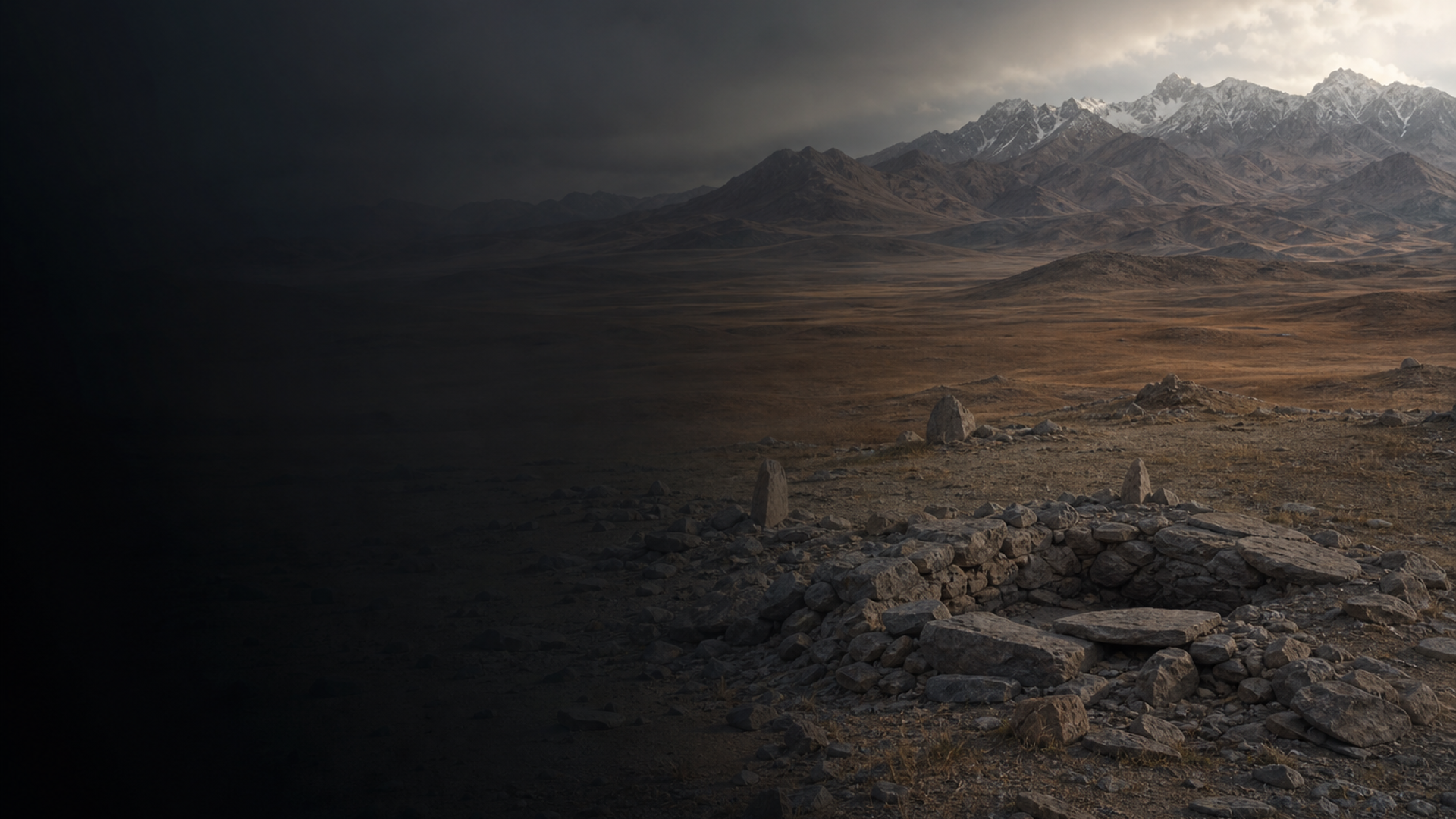
Across the stony shoulders of the Altai, the Late Bronze Age Center West horizon takes shape in the archaeological record as a pattern of raised earthworks and clustered barrows. The three dated burials associated with this dataset—Khudzhirtyn gol I kurgan 2 (Khovd), Biluut 2 barrow 3 (Tsengel, Bayan-Ölgii), and Khudzhirtyn-gol-1 (Üyench District)—fall between 1259 and 917 BCE. Archaeological data indicates these interments were part of a landscape of seasonal movement and territorial markers: low-profile kurgans and isolated barrows often sited on valley margins and river terraces.

Material culture evidence from the broader region suggests continuity of pastoral lifeways in the Late Bronze Age Center West sphere, but explicit artifact links for these specific graves are limited. Radiocarbon dates place these individuals firmly in the later second and early first millennium BCE, a period when highland and valley networks connected the Mongolian Altai with neighboring steppe zones. Limited evidence suggests social display through burial architecture, yet the small sample size and uneven excavation records mean that larger regional patterns remain tentative.

  • Three burials dated 1259–917 BCE from Khovd and Bayan-Ölgii
  • Interments are kurgans/barrows on valley and river terraces
  • Evidence suggests pastoral seasonal mobility; social signals are tentative
Chapter IV

Daily Life & Society

The visual of family herds against bleak mountain passes is supported by archaeological inference rather than abundant grave inventory for these specific sites. Across the Mongolian Altai, faunal assemblages and toolkits in comparable Late Bronze Age contexts point to sheep, goats and horses as economic staples; pollen and sediment studies from nearby valleys record grazing landscapes and seasonal occupation zones. For the individuals from Khudzhirtyn gol and Biluut, burial in low mounds implies a society where mobile pastoral groups used funerary monuments as anchors in a shifting world.

Archaeological data indicates a society organized around kin-based herding units with fluctuating camp sites and community focal points at river crossings or sheltered basins. Craft specialization and long-distance exchange are visible in the wider region, but the direct evidence from these three graves is limited, so models of hierarchy or political organization must be cautious. Burial treatment may reflect both family identity and territorial claims along pastoral routes that threaded the Altai ranges.

  • Pastoral economy inferred from regional archaeological patterns
  • Kurgan tombs function as durable landmarks for mobile groups
Chapter V

Genetic Profile

The genetic dataset for Mongolia_LBA_CenterWest_5 comprises three individuals—an extremely small sample that requires conservative interpretation. Mitochondrial haplogroups are dominated by East Asian lineages (D in two individuals, C in one), while the single male Y-chromosome is assigned to haplogroup O. These lineages are common across modern and ancient East Asian and Siberian populations, and their presence here suggests maternal continuity with regional East Asian maternal gene pools during the Late Bronze Age.

Notably, the absence of clearly West Eurasian paternal or maternal markers among these three samples contrasts with contemporaneous mixed ancestries documented in other steppe pockets; however, with n = 3 this could reflect sampling bias. Archaeogenetic patterns in Mongolia are complex: other Late Bronze Age and Iron Age contexts show varying degrees of east–west admixture. For this Center West cluster, the preliminary signal points toward predominant East Asian ancestry in both maternal and paternal lines, but further sampling is required to test hypotheses about population continuity, migration, or localized admixture dynamics.

  • mtDNA: D (2) and C (1) — East Asian/Siberian maternal lineages
  • Y-DNA: O (1) — single male sample; evidence is preliminary
Chapter VI

Legacy & Modern Connections

These burials offer a whisper of continuity across millennia. The predominance of mtDNA D and C and the presence of Y haplogroup O echo the genetic profile seen widely across modern Mongolic and neighboring Siberian groups, suggesting at least partial maternal continuity in the Altai highlands. Culturally, the use of kurgans and barrows as territorial anchors resonates with later steppe funerary traditions that persisted into the Iron Age and beyond.

Archaeological data indicates that mobility, pastoral economies, and local landmarking strategies were long-standing features of life on these high pastures. Still, with only three samples the genetic connections to present-day populations are suggestive rather than conclusive; continued sampling, especially from contemporaneous cemeteries and settlement sites, is vital to transform these whispers into a robust narrative of ancestral continuity and change.

  • Maternal lineages (D, C) align with broad East Asian/Siberian affinities
  • Kurgan traditions anticipate persistent steppe funerary and territorial practices
AI 电源

AI 助手

就 Altai Echoes: Mongolia Late Bronze Burials 文化提问

AI 助手 由DNAGENICS公司制作

解锁此特性
Ask questions about the Altai Echoes: Mongolia Late Bronze Burials culture. Our AI assistant can explain genetic findings, historical context, archaeological evidence, and modern connections.
AI 样本分析

Altai Echoes: Mongolia Late Bronze Burials 文化是人类历史中值得了解的一章……

遗传分析揭示了与早期种群的联系,同时显示了独特的适应和文化创新的证据。 古代DNA样本提供了对迁徙模式、社会结构以及古代种群之间的生物关系的深刻见解。

这是人工智能分析的预览。 解锁全AI 助手, 以探索关于:

  • 遗传组成和祖先
  • 移徙模式和起源
  • 日常生活和文化习俗
  • 现代遗传遗产

探索更古老的文化

揭开古代世界文明的故事

使用优惠码 可减免 35% • 11月12日 到期




